
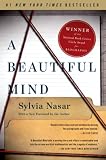
A Beautiful Mind
The Life of Mathematical Genius and Novel Laureate John Nash
by Sylvia Nasar
Reading Profile
Should I read this?
Starts as a readable life story tied to Princeton and scientific circles, full of campus anecdotes, archival detail, and scenes that humanize an eccentric subject. What works best is those granular portraits and the context they provide for why the person's life mattered within academic culture. The main limitation is that the narrative often slows for technical exposition and institutional history, so readers wanting tight pacing or minimal background detail may find stretches tedious.
Read this if...
- •a graduate student in history of science preparing a seminar or paper who needs vivid archival anecdotes and institutional color to illustrate mid-20th-century academic life
- •a university faculty member or administrator curious about campus culture and departmental politics who wants readable background material and memorable scenes to share or reflect on
- •an avid longform nonfiction reader with several free evenings who appreciates character-driven biographies that mix reportage and historical context rather than quick summaries
Skip this if...
- •you'll likely put it down when the narrative shifts into dense technical explanations or long institutional-history digressions that interrupt the personal story
- •annoying if you prefer brisk, plot-forward biographies or pop-science treatments without heavy archival detail
- •lose interest if you want hands-on explanations or practical takeaways—this is descriptive narrative, not a how-to or a book with exercises
Stories of famously eccentric Princetonians abound?such as that of chemist Hubert Alyea, the model for The AbsentMinded Professor, or Ralph Nader, said to have had his own key to the library as an undergraduate. Or the "Phantom of Fine Hall," a figure many students had seen shuffling around the corridors of the math and physics building wearing pu...
Before You Buy
Reading Specifications
Difficulty:hard
Audience Fit
- a graduate student in history of science preparing a seminar or paper who needs vivid archival anecdotes and institutional color to illustrate mid-20th-century academic life
- a university faculty member or administrator curious about campus culture and departmental politics who wants readable background material and memorable scenes to share or reflect on
- an avid longform nonfiction reader with several free evenings who appreciates character-driven biographies that mix reportage and historical context rather than quick summaries
- you'll likely put it down when the narrative shifts into dense technical explanations or long institutional-history digressions that interrupt the personal story
- annoying if you prefer brisk, plot-forward biographies or pop-science treatments without heavy archival detail
- lose interest if you want hands-on explanations or practical takeaways—this is descriptive narrative, not a how-to or a book with exercises
Check formats, pricing, and availability options for Kindle, physical print, or audiobooks directly.
View available editions on AmazonKey themes
Why recommended
appears in Biography, Best Biographies, and Psychology.
Recommendation Signals
Recommendation proof is sourced from public posts, interviews, reading lists, and cited references.
No verified recommendation proof available yet.
Appears In
Not sure if this is the right fit?
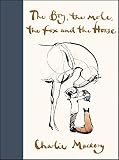
Consider The Boy, the Mole, the Fox and the Horse by Charlie Mackesy. Recommended by 8 sources.
“Soft-spoken, heavily illustrated fable built from short dialogues and watercolor sketches. Each spread pairs a spare line of text with a loose drawing, so the pleasure is visual and aphoristic rather than narrative; readers collect felt-true sentences more than plot. Most useful when you want quick consolations, a prompt for conversation with a child, or a pause during a rough day. Limiting if you want sustained argument, concrete advice, or tightly plotted storytelling: the repetition of gentleness can feel sentimental or thin after a while.”
Similar books
The Boy, the Mole, the Fox and the Horse
Charlie Mackesy
The World as It Is
Ben Rhodes
Out of Control
Kevin Kelly
The Bully Pulpit
Doris Kearns Goodwin
The Seven Spiritual Laws of Success
Deepak Chopra
Billions and Billions
Carl Sagan
Anger
Gary ChapmanFactfulness
Hans RoslingHow recommendation signals are reviewed
Each recommendation is collected from a public source — interviews, articles, or curated lists — and linked to its original URL. Books with many verifiable recommendations from respected people rank higher.