
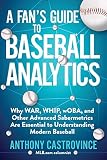
A Fan's Guide to Baseball Analytics
Why WAR, WHIP, wOBA, and Other Advanced Sabermetrics Are Essential to Understanding Modern Baseball
by Anthony Castrovince
Reading Profile
Should I read this?
Castrovince writes in a breezy, conversational tone that makes advanced box-score ideas approachable for fans familiar with batting average and ERA. Sections on pitching, fielding, and hitting use real-game examples and plain-language definitions so you can tell which metrics matter and why. The limitation is limited technical depth: formulae and modeling are explained at a conceptual level rather than worked out step-by-step, so experienced sabermetricians may find parts repetitive or shallow. Useful for game-day decisions and explaining stats to others; not a data lab.
Read this if...
- •high-school baseball coach prepping a season who wants straightforward ways to explain on-base percentage, ERA estimators, and defensive measures without getting lost in equations.
- •fantasy-baseball manager finalizing draft picks over a weekend who needs quick, usable guidance on which modern stats to favor in short-term roster decisions.
- •local sports reporter writing game previews and postgame pieces who must translate terms like FIP, WAR, or defensive metrics into language readers can actually use.
Skip this if...
- •you'll likely put it down when chapters introduce advanced metrics but only sketch the math — if you expected full derivations or step-by-step modeling the middle sections will feel thin.
- •annoying if you prefer clubhouse memoirs or player-driven storytelling rather than stat explanation; the focus stays on numbers and clarity over anecdote.
- •frustrating if you want hands-on practice: it lacks exercises, downloadable datasets, and step-by-step modeling tasks for tinkering.
Broken up into sections (pitching, fielding, hitting), this authoritative yet fun and easy guide will help readers young and old fully understand and comprehend the statistics that are the present and future of our national pastime. We all know what a .300 hitter looks like. The same with a 20game winner. Those numbers are ingrained in our brains...
Before You Buy
Reading Specifications
Difficulty:hard
Audience Fit
- high-school baseball coach prepping a season who wants straightforward ways to explain on-base percentage, ERA estimators, and defensive measures without getting lost in equations.
- fantasy-baseball manager finalizing draft picks over a weekend who needs quick, usable guidance on which modern stats to favor in short-term roster decisions.
- local sports reporter writing game previews and postgame pieces who must translate terms like FIP, WAR, or defensive metrics into language readers can actually use.
- you'll likely put it down when chapters introduce advanced metrics but only sketch the math — if you expected full derivations or step-by-step modeling the middle sections will feel thin.
- annoying if you prefer clubhouse memoirs or player-driven storytelling rather than stat explanation; the focus stays on numbers and clarity over anecdote.
- frustrating if you want hands-on practice: it lacks exercises, downloadable datasets, and step-by-step modeling tasks for tinkering.
Check formats, pricing, and availability options for Kindle, physical print, or audiobooks directly.
View available editions on AmazonKey themes
Why recommended
appears in Baseball, Sports, and Nonfiction.
Recommendation Signals
Recommendation proof is sourced from public posts, interviews, reading lists, and cited references.
No verified recommendation proof available yet.
Appears In
Not sure if this is the right fit?
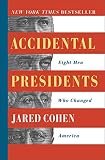
Consider Accidental Presidents by Jared Cohen. Recommended by 10 sources.
“Accidental Presidents offers eight narrative portraits of men who succeeded to the U.S. presidency without election, using anecdote-rich scenes and readable context to show how personality and circumstance interact with office power. It’s strongest as a set of self-contained stories that make succession stakes concrete for non-specialist readers; it does not prioritize dense archival argument or exhaustive methodology, so expect some interpretive generalizations and repeated themes across cases. Use it for fast historical orientation rather than scholarly deep-dives.”
Similar books


How recommendation signals are reviewed
Each recommendation is collected from a public source — interviews, articles, or curated lists — and linked to its original URL. Books with many verifiable recommendations from respected people rank higher.