
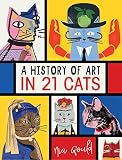
A History of Art in 21 Cats
by Nia Gould
Reading Profile
Should I read this?
Reading this is like flipping a picture book: each spread pairs a witty cat illustration with a one-paragraph primer on a movement. Main value is an accessible, entertaining visual shorthand that makes names and styles memorable; it's a breezy, giftable intro for casual readers or kids. Main limitation: explanations stay surface-level and lean on visual jokes, so anyone seeking serious context, timeline connections, or scholarly nuance will find it thin and occasionally repetitive.
Read this if...
- •elementary-school art teacher planning a short unit: use as a visual hook to introduce movement names and distinctive looks in a single lesson.
- •parent or caregiver buying a playful bedtime read: short captions and big images keep young attention while sparking curiosity about art.
- •undergraduate about to start an art-history survey and wanting quick memory hooks: helpful as a visual cheat-sheet before lectures, not a substitute for readings.
Skip this if...
- •you'll likely put it down when you realize entries are one-paragraph captions and the same joke-structure repeats—frustrating if you expected depth or chronology.
- •annoying if you dislike anthropomorphism or pun-heavy visuals; the cat angle is central and often prioritizes charm over precision.
- •not for readers wanting reference-level detail, timelines, or citations; no exercises and no scholarly apparatus, so it lacks practical depth for study.
Art history gets a fun feline makeover with 21 purrfectly cultured cats in the styles of ancient and modern masters.Become litterate in the basics of important art movements through a host of beautifully illustrated cats, each one inspired by a specific period in art hisstory: Surrealism, Cubism, Abstract Expressionism, Ancient Egyptian (of cour...
Before You Buy
Reading Specifications
Difficulty:hard
Audience Fit
- elementary-school art teacher planning a short unit: use as a visual hook to introduce movement names and distinctive looks in a single lesson.
- parent or caregiver buying a playful bedtime read: short captions and big images keep young attention while sparking curiosity about art.
- undergraduate about to start an art-history survey and wanting quick memory hooks: helpful as a visual cheat-sheet before lectures, not a substitute for readings.
- you'll likely put it down when you realize entries are one-paragraph captions and the same joke-structure repeats—frustrating if you expected depth or chronology.
- annoying if you dislike anthropomorphism or pun-heavy visuals; the cat angle is central and often prioritizes charm over precision.
- not for readers wanting reference-level detail, timelines, or citations; no exercises and no scholarly apparatus, so it lacks practical depth for study.
Check formats, pricing, and availability options for Kindle, physical print, or audiobooks directly.
View available editions on AmazonKey themes
Why recommended
appears in Art History, Art, and Nonfiction.
Recommendation Signals
Recommendation proof is sourced from public posts, interviews, reading lists, and cited references.
No verified recommendation proof available yet.
Appears In
Not sure if this is the right fit?
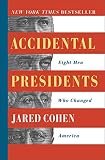
Consider Accidental Presidents by Jared Cohen. Recommended by 10 sources.
“Accidental Presidents offers eight narrative portraits of men who succeeded to the U.S. presidency without election, using anecdote-rich scenes and readable context to show how personality and circumstance interact with office power. It’s strongest as a set of self-contained stories that make succession stakes concrete for non-specialist readers; it does not prioritize dense archival argument or exhaustive methodology, so expect some interpretive generalizations and repeated themes across cases. Use it for fast historical orientation rather than scholarly deep-dives.”
Similar books

How recommendation signals are reviewed
Each recommendation is collected from a public source — interviews, articles, or curated lists — and linked to its original URL. Books with many verifiable recommendations from respected people rank higher.