
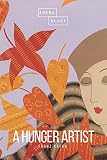
A Hunger Artist
by Franz Kafka
Recommended by Lex Fridman and David Blaine
Check price on AmazonProof-backed recommendation
Amazon availability
Reading Profile
Should I read this?
A Hunger Artist collects four terse, allegorical stories that favor mood and image over plot. Read as concentrated parables about spiritual poverty, asceticism, futility, and the modern artist’s alienation, the prose is spare and precise and invites slow rereading. Its useful part is turning a single striking situation—a public faster, a puzzled audience—into repeated, unsettling permutations of meaning. Its main limitation is emotional detachment and elliptical endings; readers seeking resolution or character warmth may find it cold and unsatisfying.
Read this if...
- •a graduate student writing a paper on modernist alienation who needs short primary texts for close reading and citation — because each story is compact and densely suggestive, ideal for paragraph-level analysis
- •a fiction writer practicing economical prose who wants models of image-driven storytelling — because the stories show how to sustain a mood with minimal description
- •a seminar teacher selecting short texts for in-class discussion about artist vs audience tensions — because each story is brief, conversation-friendly, and raises argument-ready questions
Skip this if...
- •readers who prefer plot-forward novels — you'll likely put it down by the second story when action gives way to repeated symbolic tableaux and narrative momentum evaporates, so it's a poor fit if you need a book to carry you through a long commute or an evening of steadily rising plot hooks
- •those looking for emotional consolation or likeable protagonists — you'll lose patience in the first half because the tone stays cool and distancing, characters read as sketched types rather than emotionally resonant people, and the ironic, observational voice resists sympathy; not the book to reach for when you want comfort or catharsis
- •people who want tidy moral closure or a clear authorial stance — you'll be frustrated in the final story/last third when endings remain elliptical, irony dominates, and the text refuses to give the explicit conclusions you might be trying to quote or rely on for a neat takeaway
The last book published during Kafka's lifetime, A Hunger Artist (1924) explores many of the themes that were close to him: spiritual poverty, asceticism, futility, and the alienation of the modern artist. He edited the manuscript just before his death, and these four stories are some of his best known and most powerful work, marking his maturity a...
Before You Buy
Reading Specifications
Difficulty:hard
Audience Fit
- a graduate student writing a paper on modernist alienation who needs short primary texts for close reading and citation — because each story is compact and densely suggestive, ideal for paragraph-level analysis
- a fiction writer practicing economical prose who wants models of image-driven storytelling — because the stories show how to sustain a mood with minimal description
- a seminar teacher selecting short texts for in-class discussion about artist vs audience tensions — because each story is brief, conversation-friendly, and raises argument-ready questions
- readers who prefer plot-forward novels — you'll likely put it down by the second story when action gives way to repeated symbolic tableaux and narrative momentum evaporates, so it's a poor fit if you need a book to carry you through a long commute or an evening of steadily rising plot hooks
- those looking for emotional consolation or likeable protagonists — you'll lose patience in the first half because the tone stays cool and distancing, characters read as sketched types rather than emotionally resonant people, and the ironic, observational voice resists sympathy; not the book to reach for when you want comfort or catharsis
- people who want tidy moral closure or a clear authorial stance — you'll be frustrated in the final story/last third when endings remain elliptical, irony dominates, and the text refuses to give the explicit conclusions you might be trying to quote or rely on for a neat takeaway
Check formats, pricing, and availability options for Kindle, physical print, or audiobooks directly.
View available editions on AmazonKey themes
Why recommended
Recommended by 4 sources and appears in Most Recommended Books and Fiction.
Recommended by notable people
People and public figures who have recommended this book.
Recommendation Signals
Recommendation proof is sourced from public posts, interviews, reading lists, and cited references.
Appears In
Not sure if this is the right fit?
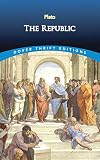
Consider The Republic by Plato. Recommended by 13 sources.
“Plato stages an extended Socratic conversation that moves from concrete questions about justice into broad proposals about an ideal city, the structure of the soul, and what counts as reality and knowledge. Reading alternates brisk question-and-answer snippets with long, cumulative demonstrations that reward careful attention and annotation. Main value: a wealth of thought experiments for testing political and ethical intuitions. Main limitation: repetitive refutations, long policy sketches and dense metaphysical passages can feel abstruse and slow; patience and some philosophical background help.”
Similar books
How recommendation signals are reviewed
Each recommendation is collected from a public source — interviews, articles, or curated lists — and linked to its original URL. Books with many verifiable recommendations from respected people rank higher.