
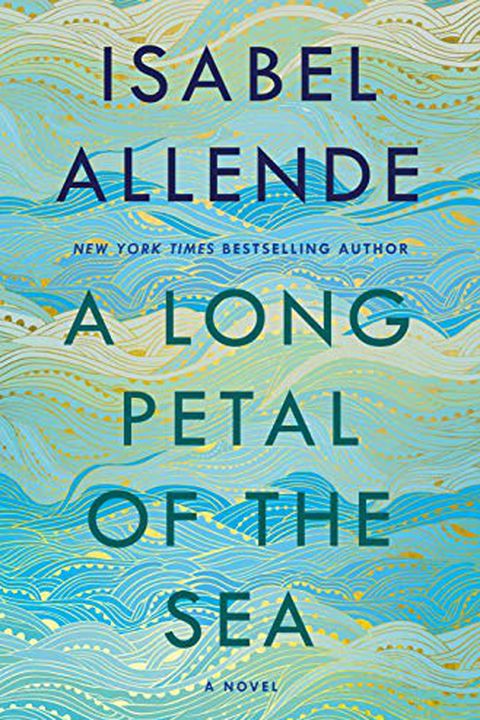
A Long Petal of the Sea
A Novel
by Isabel Allende
Reading Profile
Should I read this?
Allende's novel moves across decades and continents, following two young people who flee the Spanish Civil War in search of a home. The prose alternates intimate domestic moments with broad historical set pieces, so what works best is emotional immersion in characters forced to remake their lives. Its limitation is episodic pacing and occasional sentimentality that lengthen scenes without advancing plot. Best enjoyed with time to spare; readers who skim may find long historical detours wearisome.
Read this if...
- •a high-school or college history teacher assembling a reading list on 20th-century exile who wants a readable novel to humanize political events for students
- •a traveler facing multiple long flights or train rides who wants an immersive, multi-evening story with strong sense of place to carry them through long stretches
- •a book-club member preparing for a discussion on loyalty and compromise who wants a book that supplies both emotional arcs and political context to argue about
Skip this if...
- •you'll likely put it down when the narrative widens into long historical digressions and repeated emotional beats—if you need forward momentum, this is the book's weakest stretch
- •annoying if you dislike sentimental or melodramatic prose; the voice often leans warm and romantic and can feel overwrought in places
- •not for readers who want terse, experimental, or minimalist work—the novel favors lush description and steady storytelling over spare language
From the New York Times bestselling author of The House of the Spirits comes an epic novel spanning decades and crossing continents, following two young people as they flee the aftermath of the Spanish Civil War in search of a new place to call home.In the late 1930s, civil war gripped Spain. When General Franco and his Fascists succeed in overthro...
Before You Buy
Reading Specifications
Difficulty:hard
Audience Fit
- a high-school or college history teacher assembling a reading list on 20th-century exile who wants a readable novel to humanize political events for students
- a traveler facing multiple long flights or train rides who wants an immersive, multi-evening story with strong sense of place to carry them through long stretches
- a book-club member preparing for a discussion on loyalty and compromise who wants a book that supplies both emotional arcs and political context to argue about
- you'll likely put it down when the narrative widens into long historical digressions and repeated emotional beats—if you need forward momentum, this is the book's weakest stretch
- annoying if you dislike sentimental or melodramatic prose; the voice often leans warm and romantic and can feel overwrought in places
- not for readers who want terse, experimental, or minimalist work—the novel favors lush description and steady storytelling over spare language
Check formats, pricing, and availability options for Kindle, physical print, or audiobooks directly.
View available editions on AmazonKey themes
Why recommended
appears in Historical Fiction and Fiction.
Recommendation Signals
Recommendation proof is sourced from public posts, interviews, reading lists, and cited references.
No verified recommendation proof available yet.
Appears In
Not sure if this is the right fit?
Consider The Pillars of the Earth by Ken Follett. Recommended by 5 sources.
“This sprawling, detail-rich historical novel follows cathedral builders, nobles, and townspeople across decades, delivering immersive scene-setting and a steady accumulation of plotlines. Its useful part is the sustained attention to craft—architecture, politics, rivalry—that makes the medieval world tangible. The main limitation is repetitive melodrama and swings in pacing: long, satisfying set pieces sit beside stretches that feel slow or contrived. Better read slowly rather than skimmed; readers who stick it out will find payoff in the concluding convergences.”
Similar books

How recommendation signals are reviewed
Each recommendation is collected from a public source — interviews, articles, or curated lists — and linked to its original URL. Books with many verifiable recommendations from respected people rank higher.