
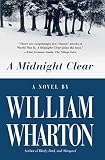
A Midnight Clear
A Novel
by William Wharton
Reading Profile
Should I read this?
A Midnight Clear reads like an intimate, small-cast war fable: spare, character-focused prose that keeps action minimal while squeezing tension from oddball interactions among six GIs isolated in a chateau on Christmas Eve. Main value lies in human detail—the idle rituals, dark humor, and fragile camaraderie that expose moral uncertainty and the absurdity of orders. Main limitation is pacing and repetition: readers seeking spectacle or steady plot momentum will find long passages of reflection and quiet scenes that slow the narrative.
Read this if...
- •high-school history teacher preparing a WWII unit who wants a short, readable text to show how ordinary soldiers cope with fear, boredom, and moral choices during one night of the war
- •independent bookseller curating a small Christmas-themed display seeking a melancholic, wartime title that pairs holiday setting with quiet tension rather than cheer
- •literature graduate student writing about intimacy and ritual in war fiction, needing concentrated scenes of camaraderie, small-group dynamics, and understated moral dilemmas to cite
Skip this if...
- •you'll likely put it down when long stretches of reflection and repeated routines replace action—annoying if you prefer plot-driven momentum or frequent set-piece scenes
- •annoying if you prefer broad battlefield panoramas and tactical detail; this is narrowly focused on character moments, not marching armies
- •lose interest if you dislike melancholic, understatement-heavy prose or stories that depend on implication and atmosphere rather than explicit resolution
Set in the Ardennes Forest on Christmas Eve 1944, Sergeant Will Knott and five other GIs are ordered close to the German lines to establish an observation post in an abandoned chateau. Here they play at being soldiers in what seems to be complete isolation. That is, until the Germans begin revealing their whereabouts and leaving signs of their pres...
Before You Buy
Reading Specifications
Difficulty:hard
Audience Fit
- high-school history teacher preparing a WWII unit who wants a short, readable text to show how ordinary soldiers cope with fear, boredom, and moral choices during one night of the war
- independent bookseller curating a small Christmas-themed display seeking a melancholic, wartime title that pairs holiday setting with quiet tension rather than cheer
- literature graduate student writing about intimacy and ritual in war fiction, needing concentrated scenes of camaraderie, small-group dynamics, and understated moral dilemmas to cite
- you'll likely put it down when long stretches of reflection and repeated routines replace action—annoying if you prefer plot-driven momentum or frequent set-piece scenes
- annoying if you prefer broad battlefield panoramas and tactical detail; this is narrowly focused on character moments, not marching armies
- lose interest if you dislike melancholic, understatement-heavy prose or stories that depend on implication and atmosphere rather than explicit resolution
Check formats, pricing, and availability options for Kindle, physical print, or audiobooks directly.
View available editions on AmazonKey themes
Why recommended
appears in World War 2 and Fiction.
Recommendation Signals
Recommendation proof is sourced from public posts, interviews, reading lists, and cited references.
No verified recommendation proof available yet.
Appears In
Not sure if this is the right fit?
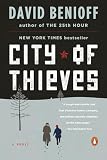
Consider City of Thieves by David Benioff. Recommended by 6 sources.
“City of Thieves reads like a compact survival buddy tale set during the siege of Leningrad: brisk plotting, bleak conditions, and a running thread of dark, often gallows humor as two young men hunt for a dozen eggs. Its useful part is the human-sized adventure—small missions expose moral choices under extreme scarcity. The main limitation is tonal whiplash: comic camaraderie and sudden violence can jar, frustrating readers who prefer consistently sober or documentary-style wartime fiction.”
Similar books
How recommendation signals are reviewed
Each recommendation is collected from a public source — interviews, articles, or curated lists — and linked to its original URL. Books with many verifiable recommendations from respected people rank higher.