
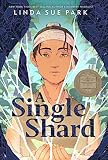
A Single Shard
by Linda Sue Park
Reading Profile
Should I read this?
A Single Shard follows Tree-ear, a 13-year-old orphan in a 12th-century Korean potters' village whose fascination with celadon drives a quiet coming-of-age. The prose is spare and tactile; scenes of throwing, glazing, and the kiln are rendered with patient clarity so craft becomes a moral test. Useful when you want a short, character-first historical read that privileges skill and small sacrifices. Limiting when you expect fast plot or many interpersonal subplots — extended technical or village-life passages can feel repetitive and slow-paced.
Read this if...
- •middle-school English teacher prepping a weeklong unit on empathy and craft: short chapters and clear language make it easy to assign and to lead discussions about responsibility and patience.
- •13–16-year-old reader who prefers quiet, character-driven stories and wants a single-book historical tale focused on skill rather than romance or action.
- •adult commuter or parent who wants a calm, short historical read to finish over a few evenings: tactile descriptions and modest stakes make it relaxing rather than demanding.
Skip this if...
- •you'll likely put it down when the narrative slows into long kiln- and technique-focused passages — those sections test patience and pacing tolerance.
- •annoying if you prefer fast plots, twisty suspense, or contemporary dialogue; the voice is plain and deliberate rather than snappy.
- •lose interest if you want multiple character arcs or romantic subplots; the focus stays narrowly on Tree-ear's apprenticeship and moral choices.
In this Newbery Medalwinning book set in 12th century Korea, Treeear, a 13yearold orphan, lives under a bridge in Ch?ulp?o, a potters' village famed for delicate celadon ware. He has become fascinated with the potter?s craft; he wants nothing more than to watch master potter Min at work, and he dreams of making a pot of his own someday. When Mi...
Before You Buy
Reading Specifications
Difficulty:hard
Audience Fit
- middle-school English teacher prepping a weeklong unit on empathy and craft: short chapters and clear language make it easy to assign and to lead discussions about responsibility and patience.
- 13–16-year-old reader who prefers quiet, character-driven stories and wants a single-book historical tale focused on skill rather than romance or action.
- adult commuter or parent who wants a calm, short historical read to finish over a few evenings: tactile descriptions and modest stakes make it relaxing rather than demanding.
- you'll likely put it down when the narrative slows into long kiln- and technique-focused passages — those sections test patience and pacing tolerance.
- annoying if you prefer fast plots, twisty suspense, or contemporary dialogue; the voice is plain and deliberate rather than snappy.
- lose interest if you want multiple character arcs or romantic subplots; the focus stays narrowly on Tree-ear's apprenticeship and moral choices.
Check formats, pricing, and availability options for Kindle, physical print, or audiobooks directly.
View available editions on AmazonKey themes
Why recommended
appears in About Korea and Fiction.
Recommendation Signals
Recommendation proof is sourced from public posts, interviews, reading lists, and cited references.
No verified recommendation proof available yet.
Appears In
Not sure if this is the right fit?
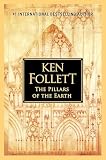
Consider The Pillars of the Earth by Ken Follett. Recommended by 5 sources.
“This sprawling, detail-rich historical novel follows cathedral builders, nobles, and townspeople across decades, delivering immersive scene-setting and a steady accumulation of plotlines. Its useful part is the sustained attention to craft—architecture, politics, rivalry—that makes the medieval world tangible. The main limitation is repetitive melodrama and swings in pacing: long, satisfying set pieces sit beside stretches that feel slow or contrived. Better read slowly rather than skimmed; readers who stick it out will find payoff in the concluding convergences.”
Similar books
How recommendation signals are reviewed
Each recommendation is collected from a public source — interviews, articles, or curated lists — and linked to its original URL. Books with many verifiable recommendations from respected people rank higher.