

A Thousand Small Sanities
The Moral Adventure of Liberalism
by Adam Gopnik
Reading Profile
Should I read this?
A Thousand Small Sanities arrives as a sequence of readable, essay-length arguments that defend liberal institutions against contemporary dogmatisms. Its useful part is temperate, historically informed prose that supplies rhetorical language and anecdotes useful for arguing why deliberative norms matter. Its main limitation is scope and tone: the book favors literary example and moral reasoning over data-driven policy or grassroots strategy, and some readers will find recurring positions reiterated rather than advanced. Best used as thoughtful provocation, not a handbook.
Read this if...
- •a college-level civics instructor preparing a spring seminar on democratic norms who needs short, self-contained essays to assign as weekly readings and to spark 50–90 minute class discussions — the chapters provide historical anecdotes and phrasing you can use to frame debate this term
- •a mid-career public servant (policy analyst or program manager) about to argue for preserving deliberative review during an internal reorganization who needs calm, historically grounded language to use in an upcoming meeting and in internal memos — this book supplies portable rhetorical examples you can quote
- •a local parent who moderates a school-board Facebook group and is preparing remarks for a town-hall or board hearing, wanting calmer vocabulary and wider civic context to push back on polarized comments without escalating — the tone helps rehearse steadier arguments now before the event
Skip this if...
- •you'll likely put it down when the same defense of deliberation is retold through fresh anecdotes — if repetition or long-form rumination bores you, that is the usual drop-off point
- •annoying if you prefer brisk, data-heavy policy manuals or concrete action plans — the book leans literary and moral rather than technical or tactical
- •you'll lose interest if you want partisan affirmation or snappy, one-liners — the tone is deliberative and sometimes hortatory, which frustrates readers seeking quick validation
A stirring defense of liberalism against the dogmatisms of our time from an awardwinning and New York Times bestselling author. Not since the early twentieth century has liberalism, and liberals, been under such relentless attack, from both right and left. The crisis of democracy in our era has produced a crisis of faith in liberal institutions an...
Before You Buy
Reading Specifications
Difficulty:hard
Audience Fit
- a college-level civics instructor preparing a spring seminar on democratic norms who needs short, self-contained essays to assign as weekly readings and to spark 50–90 minute class discussions — the chapters provide historical anecdotes and phrasing you can use to frame debate this term
- a mid-career public servant (policy analyst or program manager) about to argue for preserving deliberative review during an internal reorganization who needs calm, historically grounded language to use in an upcoming meeting and in internal memos — this book supplies portable rhetorical examples you can quote
- a local parent who moderates a school-board Facebook group and is preparing remarks for a town-hall or board hearing, wanting calmer vocabulary and wider civic context to push back on polarized comments without escalating — the tone helps rehearse steadier arguments now before the event
- you'll likely put it down when the same defense of deliberation is retold through fresh anecdotes — if repetition or long-form rumination bores you, that is the usual drop-off point
- annoying if you prefer brisk, data-heavy policy manuals or concrete action plans — the book leans literary and moral rather than technical or tactical
- you'll lose interest if you want partisan affirmation or snappy, one-liners — the tone is deliberative and sometimes hortatory, which frustrates readers seeking quick validation
Check formats, pricing, and availability options for Kindle, physical print, or audiobooks directly.
View available editions on AmazonKey themes
Why recommended
Recommended by 1 source and appears in Politics, Philosophy, and History.
Recommended by notable people
People and public figures who have recommended this book.
Recommendation Signals
Recommendation proof is sourced from public posts, interviews, reading lists, and cited references.
Adam Wagner
“Happy #WorldBookDay! Here are some books human rights and liberalism which I have enjoyed over the past few years”
Appears In
Not sure if this is the right fit?
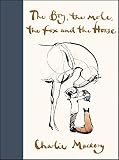
Consider The Boy, the Mole, the Fox and the Horse by Charlie Mackesy. Recommended by 8 sources.
“Soft-spoken, heavily illustrated fable built from short dialogues and watercolor sketches. Each spread pairs a spare line of text with a loose drawing, so the pleasure is visual and aphoristic rather than narrative; readers collect felt-true sentences more than plot. Most useful when you want quick consolations, a prompt for conversation with a child, or a pause during a rough day. Limiting if you want sustained argument, concrete advice, or tightly plotted storytelling: the repetition of gentleness can feel sentimental or thin after a while.”
Similar books
The Boy, the Mole, the Fox and the Horse
Charlie Mackesy
The World as It Is
Ben Rhodes
Out of Control
Kevin Kelly
The Bully Pulpit
Doris Kearns Goodwin
The Seven Spiritual Laws of Success
Deepak Chopra
Billions and Billions
Carl Sagan
Anger
Gary ChapmanFactfulness
Hans RoslingHow recommendation signals are reviewed
Each recommendation is collected from a public source — interviews, articles, or curated lists — and linked to its original URL. Books with many verifiable recommendations from respected people rank higher.