
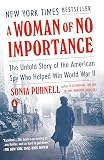
A Woman of No Importance
The Untold Story of the American Spy Who Helped Win World War II
by Sonia Purnell
Reading Profile
Should I read this?
Starts as a cinematic biographical narrative that follows one American woman's secret wartime career, mixing mission reconstructions with personal setbacks and institutional slights. What works best is the day-to-day texture of clandestine work and the way sexism shapes access and risk, which makes the subject's resourcefulness tangible. The main limitation is pacing: mission-by-mission reconstruction and repeated emphasis on gender obstacles can feel repetitive, and readers who want macro-level strategic context may find the scope narrowly focused.
Read this if...
- •a history podcast producer scripting a feature on wartime espionage — wants vivid, scene-based reconstructions and quotable episodes to dramatize.
- •a gender-studies graduate student assembling case studies of women excluded from formal roles during WWII — needs concrete incidents showing how sexism redirected careers into covert channels.
- •an armchair reader taking a long trip who enjoys cinematic biography and spycraft detail — wants to binge vivid missions and human moments rather than military doctrine.
Skip this if...
- •you'll likely put it down when the narrative bogs down in mission-by-mission operational detail and long logistical passages — that’s the common drop-off point.
- •annoying if you prefer big-picture strategic history or careful historiographical debate — the book narrows to individual episodes rather than broad campaigns.
- •annoying if you want a dispassionate academic tone; narrative drama and authorial color may feel like hagiography to some readers.
The neverbeforetold story of one woman's heroism that changed the course of the Second World War In 1942, the Gestapo sent out an urgent transmission: "She is the most dangerous of all Allied spies. We must find and destroy her."This spy was Virginia Hall, a young American womanrejected from the foreign service because of her gender and her pro...
Before You Buy
Reading Specifications
Difficulty:hard
Audience Fit
- a history podcast producer scripting a feature on wartime espionage — wants vivid, scene-based reconstructions and quotable episodes to dramatize.
- a gender-studies graduate student assembling case studies of women excluded from formal roles during WWII — needs concrete incidents showing how sexism redirected careers into covert channels.
- an armchair reader taking a long trip who enjoys cinematic biography and spycraft detail — wants to binge vivid missions and human moments rather than military doctrine.
- you'll likely put it down when the narrative bogs down in mission-by-mission operational detail and long logistical passages — that’s the common drop-off point.
- annoying if you prefer big-picture strategic history or careful historiographical debate — the book narrows to individual episodes rather than broad campaigns.
- annoying if you want a dispassionate academic tone; narrative drama and authorial color may feel like hagiography to some readers.
Check formats, pricing, and availability options for Kindle, physical print, or audiobooks directly.
View available editions on AmazonKey themes
Why recommended
appears in World War 2, History, and Nonfiction.
Recommendation Signals
Recommendation proof is sourced from public posts, interviews, reading lists, and cited references.
No verified recommendation proof available yet.
Appears In
Not sure if this is the right fit?
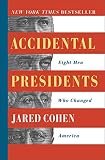
Consider Accidental Presidents by Jared Cohen. Recommended by 10 sources.
“Accidental Presidents offers eight narrative portraits of men who succeeded to the U.S. presidency without election, using anecdote-rich scenes and readable context to show how personality and circumstance interact with office power. It’s strongest as a set of self-contained stories that make succession stakes concrete for non-specialist readers; it does not prioritize dense archival argument or exhaustive methodology, so expect some interpretive generalizations and repeated themes across cases. Use it for fast historical orientation rather than scholarly deep-dives.”
Similar books

How recommendation signals are reviewed
Each recommendation is collected from a public source — interviews, articles, or curated lists — and linked to its original URL. Books with many verifiable recommendations from respected people rank higher.