
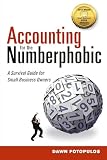
Accounting for the Numberphobic
A Survival Guide for Small Business Owners
by Dawn Fotopulos
Reading Profile
Should I read this?
Accounting for the Numberphobic delivers a conversational, no-jargon primer aimed at owners who avoid the numbers. Fotopulos breaks down which statements matter, how to spot cash-flow trouble, and simple habits to stop outsourcing every decision to an accountant. The usefulness is immediate: clear examples and sensible priorities for making financials less scary. The limitation is scope—expect simplification, some repetition, and little deep technical or industry-specific detail, so advanced readers will want supplemental sources.
Read this if...
- •a solo retail owner (for example, an independent bookstore) approaching the holiday season who has always handed bookkeeping to someone else but now must set margins and reorder stock; good because the book explains which simple numbers and statements to check so you can set pricing and cash targets this quarter
- •the founder of a 2–10 person local service firm facing seasonal cash shortfalls who needs to decide whether to pause hiring before next month's payroll; good because the book focuses on cash-flow basics and a straightforward monthly dashboard you can implement immediately to avoid surprises
- •a freelance creative (graphic designer or photographer) with a pipeline of new contracts who is planning to raise rates and possibly hire a subcontractor; good because the tone lowers intimidation around profit-and-loss and highlights the specific line items you'll need to adjust to see if higher rates cover added costs
Skip this if...
- •annoying if you prefer deep, technical accounting or tax-law detail—the book favors plain language over rules and precise mechanics
- •you'll likely put it down when the same practical point is restated several ways; readers who want a fast, tightly edited primer can feel stalled by repetition
- •not helpful for accountants, CFOs, or analysts who need advanced spreadsheets, industry-specific accounting rules, or modeling techniques—the material is intentionally elementary
Why do so many business owners dread looking at the numbers They make excuses...They don't have time...That's what the accountant is for....But the simple truth is that no one else will ever be as invested in their company as they areand they need to take control. As a smallbusiness owner, financial statements are your most important toolsand...
Before You Buy
Reading Specifications
Difficulty:hard
Audience Fit
- a solo retail owner (for example, an independent bookstore) approaching the holiday season who has always handed bookkeeping to someone else but now must set margins and reorder stock; good because the book explains which simple numbers and statements to check so you can set pricing and cash targets this quarter
- the founder of a 2–10 person local service firm facing seasonal cash shortfalls who needs to decide whether to pause hiring before next month's payroll; good because the book focuses on cash-flow basics and a straightforward monthly dashboard you can implement immediately to avoid surprises
- a freelance creative (graphic designer or photographer) with a pipeline of new contracts who is planning to raise rates and possibly hire a subcontractor; good because the tone lowers intimidation around profit-and-loss and highlights the specific line items you'll need to adjust to see if higher rates cover added costs
- annoying if you prefer deep, technical accounting or tax-law detail—the book favors plain language over rules and precise mechanics
- you'll likely put it down when the same practical point is restated several ways; readers who want a fast, tightly edited primer can feel stalled by repetition
- not helpful for accountants, CFOs, or analysts who need advanced spreadsheets, industry-specific accounting rules, or modeling techniques—the material is intentionally elementary
Check formats, pricing, and availability options for Kindle, physical print, or audiobooks directly.
View available editions on AmazonKey themes
Why recommended
appears in Business Finance, Accounting, and Business.
Recommendation Signals
Recommendation proof is sourced from public posts, interviews, reading lists, and cited references.
No verified recommendation proof available yet.
Appears In
Not sure if this is the right fit?
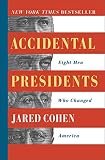
Consider Accidental Presidents by Jared Cohen. Recommended by 10 sources.
“Accidental Presidents offers eight narrative portraits of men who succeeded to the U.S. presidency without election, using anecdote-rich scenes and readable context to show how personality and circumstance interact with office power. It’s strongest as a set of self-contained stories that make succession stakes concrete for non-specialist readers; it does not prioritize dense archival argument or exhaustive methodology, so expect some interpretive generalizations and repeated themes across cases. Use it for fast historical orientation rather than scholarly deep-dives.”
Similar books



How recommendation signals are reviewed
Each recommendation is collected from a public source — interviews, articles, or curated lists — and linked to its original URL. Books with many verifiable recommendations from respected people rank higher.