
Agent Sonya
Moscow's Most Daring Wartime Spy
by Ben Macintyre
Reading Profile
Should I read this?
Agent Sonya follows an unassuming woman whose domestic life masked a role in wartime espionage. Ben Macintyre blends neighborhood color, archival reporting, and episode-driven suspense to deliver vivid scenes where family routines and clandestine work collide. The book's useful part is its human-scale portrait and the way small moments illuminate larger covert networks. Its limitation is an episodic structure and frequent context-setting that can feel repetitive; readers seeking nonstop momentum or technical analysis of spying techniques may feel slowed down.
Read this if...
- •a history podcaster preparing a single episode on WWII espionage who needs vivid anecdotes and scene-setting details to dramatize a story
- •a secondary-school history teacher designing a class unit on civilian roles in wartime who wants human-scale examples to spark discussion
- •a mid-career intelligence analyst interested in tradecraft history who wants to understand the personal costs and everyday practices behind historical operations
Skip this if...
- •you'll likely put it down when long context-setting passages interrupt forward motion; the book can stall in archival digressions
- •annoying if you prefer strict thriller pacing—expect episodic chapters and a steady accumulation of detail rather than non-stop action
- •skip it if you want technical, theory-heavy analysis of intelligence methods—the narrative focuses on biography and anecdotes, not procedural deep dives
In 1942, in a quiet village in the leafy English Cotswolds, a thin, elegant woman lived in a small cottage with her three children and her husband, who worked as a machinist nearby. Ursula Burton was friendly but reserved, and spoke English with a slight foreign accent. By all accounts, she seemed to be living a simple, unassuming life. Her neighbo...
Before You Buy
Reading Specifications
Difficulty:hard
Audience Fit
- a history podcaster preparing a single episode on WWII espionage who needs vivid anecdotes and scene-setting details to dramatize a story
- a secondary-school history teacher designing a class unit on civilian roles in wartime who wants human-scale examples to spark discussion
- a mid-career intelligence analyst interested in tradecraft history who wants to understand the personal costs and everyday practices behind historical operations
- you'll likely put it down when long context-setting passages interrupt forward motion; the book can stall in archival digressions
- annoying if you prefer strict thriller pacing—expect episodic chapters and a steady accumulation of detail rather than non-stop action
- skip it if you want technical, theory-heavy analysis of intelligence methods—the narrative focuses on biography and anecdotes, not procedural deep dives
Check formats, pricing, and availability options for Kindle, physical print, or audiobooks directly.
View available editions on AmazonKey themes
Why recommended
Recommended by 1 source and appears in History and Nonfiction.
Recommended by notable people
People and public figures who have recommended this book.
Recommendation Signals
Recommendation proof is sourced from public posts, interviews, reading lists, and cited references.
John Sipher
“@yogabykate @mojaveb @alexrblackwell Ok, here we go. There are so many good books. I'll focus on the ones that are good/accurate and fun to read. There are a bunch that are good but not really enjoyable. First, Ben McIntyre's books are fun reads Agent Sonya, The Spy and Traitor, Op Mincemeat, Zigzag...”
Ready to read Agent Sonya?
Check formats, pricing, and availability options directly on Amazon.
Appears In
Not sure if this is the right fit?
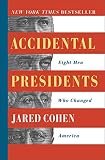
Consider Accidental Presidents by Jared Cohen. Recommended by 10 sources.
“Accidental Presidents offers eight narrative portraits of men who succeeded to the U.S. presidency without election, using anecdote-rich scenes and readable context to show how personality and circumstance interact with office power. It’s strongest as a set of self-contained stories that make succession stakes concrete for non-specialist readers; it does not prioritize dense archival argument or exhaustive methodology, so expect some interpretive generalizations and repeated themes across cases. Use it for fast historical orientation rather than scholarly deep-dives.”
Similar books

How recommendation signals are reviewed
Each recommendation is collected from a public source — interviews, articles, or curated lists — and linked to its original URL. Books with many verifiable recommendations from respected people rank higher.