
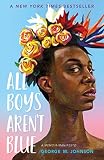
All Boys Aren't Blue
A Memoir-Manifesto
by George M. Johnson
Recommended by Halse Anderson and Laurie Halse Anderson
Check price on AmazonProof-backed recommendation
Amazon availability
Reading Profile
Should I read this?
Johnson writes in a direct, conversational first person, presenting linked personal essays about growing up Black and queer in New Jersey and Virginia. it reads as intimate and immediate: short narrative scenes, recollected dialogue, and sharp emotional beats that swing between cruelty (bullying, trauma) and small domestic tenderness. Most useful as a readable mirror for young people and an accessible entry into queer Black coming-of-age life. Limitation: episodic structure can feel uneven—readers wanting a continuous plot or deeper analysis may find it fragmentary.
Read this if...
- •High-school English teacher building a unit on identity who needs short, accessible essays to spark classroom discussion about race and sexuality.
- •A 17-year-old in a conservative hometown trying to find language for queer experience and looking for frank, lived accounts rather than theory.
- •Public-librarian curating a YA display for teens seeking representation, wanting readable personal stories that open doorways for conversation.
Skip this if...
- •You’ll likely put it down when the narrative jumps between essays start to interrupt forward momentum — if you want a single sustained plot, this will feel episodic.
- •Annoying if you prefer scholarly context or policy discussion: the book is memoir and personal anecdote, not academic analysis.
- •Troubling if you dislike frank accounts of sexuality and childhood trauma — candid scenes and upsetting moments recur and are described directly.
In a series of personal essays, prominent journalist and LGBTQIA activist George M. Johnson explores his childhood, adolescence, and college years in New Jersey and Virginia. From the memories of getting his teeth kicked out by bullies at age five, to flea marketing with his loving grandmother, to his first sexual relationships, this youngAdult, m...
Before You Buy
Reading Specifications
Difficulty:hard
Audience Fit
- High-school English teacher building a unit on identity who needs short, accessible essays to spark classroom discussion about race and sexuality.
- A 17-year-old in a conservative hometown trying to find language for queer experience and looking for frank, lived accounts rather than theory.
- Public-librarian curating a YA display for teens seeking representation, wanting readable personal stories that open doorways for conversation.
- You’ll likely put it down when the narrative jumps between essays start to interrupt forward momentum — if you want a single sustained plot, this will feel episodic.
- Annoying if you prefer scholarly context or policy discussion: the book is memoir and personal anecdote, not academic analysis.
- Troubling if you dislike frank accounts of sexuality and childhood trauma — candid scenes and upsetting moments recur and are described directly.
Check formats, pricing, and availability options for Kindle, physical print, or audiobooks directly.
View available editions on AmazonKey themes
Why recommended
Recommended by 2 sources and appears in Most Recommended Books, Fiction, and Nonfiction.
Recommended by notable people
People and public figures who have recommended this book.
Recommendation Signals
Recommendation proof is sourced from public posts, interviews, reading lists, and cited references.
Laurie Halse Anderson
“All Boys Aren?t Blue by @IamGMJohnson is powerful, stunning and vitally important. I love this book so much! It needs to be in every library public and high school in the country. Can we make that happen, @aasl & @yalsa @GraceKendallLit @MacKidsSL”
Appears In
Not sure if this is the right fit?
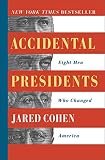
Consider Accidental Presidents by Jared Cohen. Recommended by 10 sources.
“Accidental Presidents offers eight narrative portraits of men who succeeded to the U.S. presidency without election, using anecdote-rich scenes and readable context to show how personality and circumstance interact with office power. It’s strongest as a set of self-contained stories that make succession stakes concrete for non-specialist readers; it does not prioritize dense archival argument or exhaustive methodology, so expect some interpretive generalizations and repeated themes across cases. Use it for fast historical orientation rather than scholarly deep-dives.”
Similar books


How recommendation signals are reviewed
Each recommendation is collected from a public source — interviews, articles, or curated lists — and linked to its original URL. Books with many verifiable recommendations from respected people rank higher.