
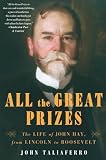
All the Great Prizes
The Life of John Hay, from Lincoln to Roosevelt
by John Taliaferro
Reading Profile
Should I read this?
Granular, old-school biography that follows a long-serving American statesman through a broad career in Washington. what works best is steady archival detail and social color that assemble a textured portrait of public duties and private life. The narrative often slows into administrative records, correspondence, and appointment-by-appointment reporting, which can feel repetitive or plodding. Readers who stick with it gain clearer timelines and contextual episodes useful for teaching or citation; readers wanting a tight interpretive argument may feel shortchanged.
Read this if...
- •a graduate student in history writing a dissertation chapter on late 19th-century American diplomacy who needs precise dates, quoted letters, and sequence-of-events detail to footnote and situate an argument — useful now while drafting a literature review or primary-source background section
- •an AP U.S. History teacher building a two-week Gilded Age unit who wants concrete classroom-ready episodes and social anecdotes to turn into lecture slides and primary-source handouts — helpful now while assembling lessons and in-class documents
- •a regional historical-society exhibit label writer putting together captions about Washington political life who needs verifiable appointments, correspondence excerpts, and institutional routines to fill timelines and small-panel text — practical now during exhibit scripting and caption editing
Skip this if...
- •you'll likely put it down when long stretches of official correspondence, appointments, and bureaucratic minutiae pile up — those sequences are common drop-off points
- •annoying if you prefer clean, argument-first histories: the emphasis on records and sequence leaves interpretive threads thin and can feel unsatisfying if you want a tight thesis
- •not for weekend or casual readers who expect brisk storytelling or tidy anecdotes; the slow, archival tone and dense detail make it a poor fit for single-sitting, light reading
From secretary to Abraham Lincoln to secretary of state for Theodore Roosevelt, John Hay remained a major figure in American history for more than half a century. His private life was as glamorous and romantic as it was privileged. This first fullscale biography since 1934 is a reflection of American history from the Civil War to the emergence of ...
Before You Buy
Reading Specifications
Difficulty:hard
Audience Fit
- a graduate student in history writing a dissertation chapter on late 19th-century American diplomacy who needs precise dates, quoted letters, and sequence-of-events detail to footnote and situate an argument — useful now while drafting a literature review or primary-source background section
- an AP U.S. History teacher building a two-week Gilded Age unit who wants concrete classroom-ready episodes and social anecdotes to turn into lecture slides and primary-source handouts — helpful now while assembling lessons and in-class documents
- a regional historical-society exhibit label writer putting together captions about Washington political life who needs verifiable appointments, correspondence excerpts, and institutional routines to fill timelines and small-panel text — practical now during exhibit scripting and caption editing
- you'll likely put it down when long stretches of official correspondence, appointments, and bureaucratic minutiae pile up — those sequences are common drop-off points
- annoying if you prefer clean, argument-first histories: the emphasis on records and sequence leaves interpretive threads thin and can feel unsatisfying if you want a tight thesis
- not for weekend or casual readers who expect brisk storytelling or tidy anecdotes; the slow, archival tone and dense detail make it a poor fit for single-sitting, light reading
Check formats, pricing, and availability options for Kindle, physical print, or audiobooks directly.
View available editions on AmazonKey themes
Why recommended
appears in Best Biographies, History, and Nonfiction.
Recommendation Signals
Recommendation proof is sourced from public posts, interviews, reading lists, and cited references.
No verified recommendation proof available yet.
Appears In
Not sure if this is the right fit?
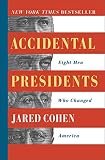
Consider Accidental Presidents by Jared Cohen. Recommended by 10 sources.
“Accidental Presidents offers eight narrative portraits of men who succeeded to the U.S. presidency without election, using anecdote-rich scenes and readable context to show how personality and circumstance interact with office power. It’s strongest as a set of self-contained stories that make succession stakes concrete for non-specialist readers; it does not prioritize dense archival argument or exhaustive methodology, so expect some interpretive generalizations and repeated themes across cases. Use it for fast historical orientation rather than scholarly deep-dives.”
Similar books

How recommendation signals are reviewed
Each recommendation is collected from a public source — interviews, articles, or curated lists — and linked to its original URL. Books with many verifiable recommendations from respected people rank higher.