
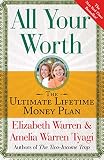
All Your Worth
The Ultimate Lifetime Money Plan
by Elizabeth Warren
Reading Profile
Should I read this?
Reading All Your Worth feels like getting a clear, values-centered budget laid out by an author comfortable with practical advice. It gives a small set of concrete budgeting rules, household-focused examples, and actionable starting steps so you leave with something to try rather than abstract theory. The main limitation is a prescriptive moral tone and some repetition of the same planning point, which can feel judgmental or simplistic if your finances are unusually complex. No hands-on exercises — mostly guidance and examples.
Read this if...
- •a junior software engineer on a startup salary juggling student loans and shared housing who needs a no-friction budget to break the paycheck-to-paycheck cycle this quarter; fits because the book offers simple percentage rules and example allocations you can apply immediately without building detailed spreadsheets
- •one partner in a cohabiting couple negotiating how to split rent, bills, and savings before moving in together who wants neutral language and concrete categories to start the conversation; fits because the book supplies plain templates and scripts for household budgeting decisions you can use in that first meeting
- •a mid-career project manager recovering financial control after a life change (promotion, breakup, or new child) who must rebuild saving habits quickly; fits because the book provides stepwise behavioural rules and clear priorities that act as short-term scaffolding while you reset tracking and automation
Skip this if...
- •you'll likely put it down when the author shifts into repeated prescriptive rules and moralizing examples — that midbook repetition is the common drop-off point
- •annoying if you prefer income-specific models, detailed tax or investment calculations, or planning that adapts to very irregular cash flows
- •not a fit if you want hands-on exercises or worksheets — the book provides guidance and examples but lacks structured interactive tools
This personal finance guide from 2020 Democratic presidential candidate and Massachusetts senator Elizabeth Warren, offers a new way of thinking about and managing your money that will allow you lifelong emotional peace and financial wellbeing.You work hard and try to save money, so why is there never enough to cover all the bills, to put some awa...
Before You Buy
Reading Specifications
Difficulty:hard
Audience Fit
- a junior software engineer on a startup salary juggling student loans and shared housing who needs a no-friction budget to break the paycheck-to-paycheck cycle this quarter; fits because the book offers simple percentage rules and example allocations you can apply immediately without building detailed spreadsheets
- one partner in a cohabiting couple negotiating how to split rent, bills, and savings before moving in together who wants neutral language and concrete categories to start the conversation; fits because the book supplies plain templates and scripts for household budgeting decisions you can use in that first meeting
- a mid-career project manager recovering financial control after a life change (promotion, breakup, or new child) who must rebuild saving habits quickly; fits because the book provides stepwise behavioural rules and clear priorities that act as short-term scaffolding while you reset tracking and automation
- you'll likely put it down when the author shifts into repeated prescriptive rules and moralizing examples — that midbook repetition is the common drop-off point
- annoying if you prefer income-specific models, detailed tax or investment calculations, or planning that adapts to very irregular cash flows
- not a fit if you want hands-on exercises or worksheets — the book provides guidance and examples but lacks structured interactive tools
Check formats, pricing, and availability options for Kindle, physical print, or audiobooks directly.
View available editions on AmazonKey themes
Why recommended
appears in Finance, Personal Finance, and Finance.
Recommendation Signals
Recommendation proof is sourced from public posts, interviews, reading lists, and cited references.
No verified recommendation proof available yet.
Appears In
Not sure if this is the right fit?
Consider The Undoing Project by Michael Lewis. Recommended by 18 sources.
“Michael Lewis chronicles the friendship and intellectual partnership of Daniel Kahneman and Amos Tversky, who championed the idea that cognitive biases shape our choices. The narrative reads like a buddy story, weaving their discoveries into personal anecdotes and the drama of their collaboration. You'll grasp key ideas—loss aversion, framing—through their story, but the book focuses on biography, not application. Helpful for understanding behavioral economics' origins; less useful if you want actionable advice. The emotional arc of their relationship can overshadow the science.”
Similar books
The Undoing Project
Michael Lewis
The Little Book of Common Sense Investing
John C. Bogle
Financial Shenanigans
Howard Schilit
Scale
Geoffrey West
Poor Numbers
Morten Jerven
The Great Illusion
Norman Angell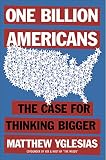
One Billion Americans
Matthew Yglesias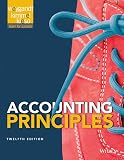
Accounting Principles Standalone book
Jerry J. WeygandtHow recommendation signals are reviewed
Each recommendation is collected from a public source — interviews, articles, or curated lists — and linked to its original URL. Books with many verifiable recommendations from respected people rank higher.