
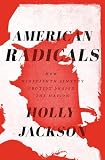
American Radicals
How NineteenthCentury Protest Shaped the Nation
by Holly Jackson
Reading Profile
Should I read this?
American Radicals moves through the Civil War era as a fast-paced collection of episodes about freethinkers, socialists, abolitionists and vigilantes. Its useful part is the color and immediacy it gives to lesser-known actors, turning neglected moments into readable scenes. Its main limitation is breadth over depth: the narrative often hops between groups and incidents instead of drilling deeply into archival evidence or a single thesis. Expect readable, occasionally polemical history rather than exhaustive academic detail.
Read this if...
- •a college student writing a seminar paper on Civil War–era social movements who needs vivid case studies and quotable scenes to illustrate arguments
- •a high-school history teacher building a unit on 19th‑century reformers who wants short, readable episodes to spark classroom discussion
- •a community organizer researching historical precedents who wants illustrative examples of past tactics, networks, and rhetorical moves to inform modern strategy
Skip this if...
- •not for someone who wants exhaustive archival footnotes or a methodical academic monograph; you’ll likely put it down when the narrative skims many groups without sustained sourcing
- •annoying if you prefer an even‑handed, neutral tone — the prose can tilt polemical or moralizing in places
- •skip if you want a strict chronological political history; the episodic structure jumps between local flashpoints and national themes and can feel fragmented
A dynamic, timely history of nineteenthcentury activistsfreelovers and socialists, abolitionists and vigilantesand the social revolution they sparked in the turbulent Civil War eraOn July 4, 1826, as Americans lit firecrackers to celebrate the country's fiftieth birthday, both John Adams and Thomas Jefferson were on their deathbeds. They woul...
Before You Buy
Reading Specifications
Difficulty:easy
Audience Fit
- a college student writing a seminar paper on Civil War–era social movements who needs vivid case studies and quotable scenes to illustrate arguments
- a high-school history teacher building a unit on 19th‑century reformers who wants short, readable episodes to spark classroom discussion
- a community organizer researching historical precedents who wants illustrative examples of past tactics, networks, and rhetorical moves to inform modern strategy
- not for someone who wants exhaustive archival footnotes or a methodical academic monograph; you’ll likely put it down when the narrative skims many groups without sustained sourcing
- annoying if you prefer an even‑handed, neutral tone — the prose can tilt polemical or moralizing in places
- skip if you want a strict chronological political history; the episodic structure jumps between local flashpoints and national themes and can feel fragmented
Check formats, pricing, and availability options for Kindle, physical print, or audiobooks directly.
View available editions on AmazonKey themes
Why recommended
appears in History, Politics, and History.
Recommendation Signals
Recommendation proof is sourced from public posts, interviews, reading lists, and cited references.
No verified recommendation proof available yet.
Appears In
Not sure if this is the right fit?
Consider The Boy, the Mole, the Fox and the Horse by Charlie Mackesy. Recommended by 8 sources.
“Soft-spoken, heavily illustrated fable built from short dialogues and watercolor sketches. Each spread pairs a spare line of text with a loose drawing, so the pleasure is visual and aphoristic rather than narrative; readers collect felt-true sentences more than plot. Most useful when you want quick consolations, a prompt for conversation with a child, or a pause during a rough day. Limiting if you want sustained argument, concrete advice, or tightly plotted storytelling: the repetition of gentleness can feel sentimental or thin after a while.”
Similar books
The Boy, the Mole, the Fox and the Horse
Charlie Mackesy
The World as It Is
Ben Rhodes
Out of Control
Kevin Kelly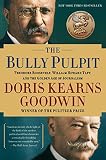
The Bully Pulpit
Doris Kearns Goodwin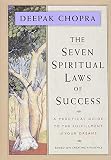
The Seven Spiritual Laws of Success
Deepak Chopra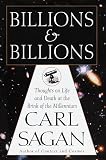
Billions and Billions
Carl Sagan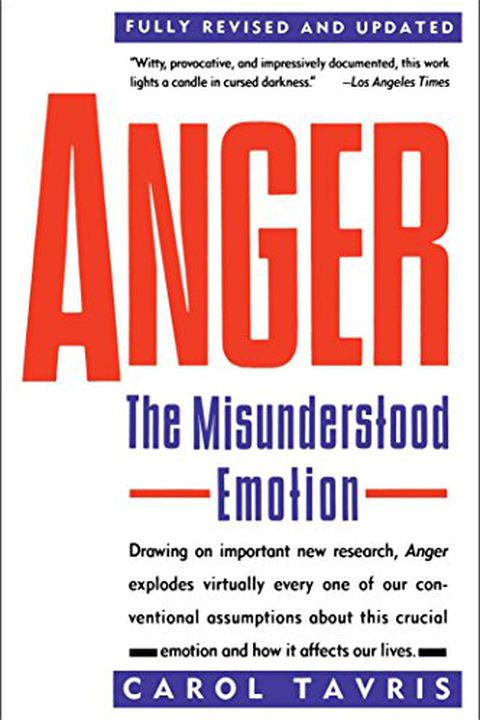
Anger
Gary ChapmanFactfulness
Hans RoslingHow recommendation signals are reviewed
Each recommendation is collected from a public source — interviews, articles, or curated lists — and linked to its original URL. Books with many verifiable recommendations from respected people rank higher.