
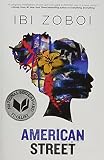
American Street
by Ibi Zoboi
Reading Profile
Should I read this?
A voice-driven coming-of-age novel that drops you into a young Haitian immigrant's first months in Detroit after her mother is detained by U.S. immigration. The strength lies in tight first-person perspective, vivid neighborhood scenes, and family dynamics that make the cultural friction feel immediate; it's most useful for readers who want character and atmosphere over plot-heavy pacing. Limitations: repeating motifs and a sometimes-shortened subplot resolution can feel elliptical, so readers looking for tidy plot arcs may be frustrated.
Read this if...
- •a high-school English teacher building a unit on immigrant voices who needs an accessible, first-person YA text to spark class discussion about family, identity, and adaptation
- •a college student from a diasporic background wrestling with questions of home who wants a short, emotionally immediate novel that reflects cultural friction and household expectation
- •a YA librarian curating reads for teens in an urban school who wants contemporary coming-of-age fiction with a strong narrator and vivid neighborhood detail
Skip this if...
- •you'll likely put it down when the story lingers on atmosphere while important plot threads feel unresolved — annoying if you prefer forward-moving plots
- •annoying if you want multiple viewpoints or broad social analysis; the narrow, single-narrator focus can feel limiting
- •annoying if you wanted practical how-tos or clear problem-resolution — this is a character-driven novel that lacks hands-on exercises or step-by-step closure
On the corner of American Street and Joy Road, Fabiola Toussaint thought she would finally find une belle vie_x0097_a good life.But after they leave PortauPrince, Haiti, Fabiola_x0092_s mother is detained by U.S. immigration, leaving Fabiola to navigate her loud American cousins, Chantal, Donna, and Princess; the grittiness of Detroit_x0092_s west side; a new scho...
Before You Buy
Reading Specifications
Difficulty:hard
Audience Fit
- a high-school English teacher building a unit on immigrant voices who needs an accessible, first-person YA text to spark class discussion about family, identity, and adaptation
- a college student from a diasporic background wrestling with questions of home who wants a short, emotionally immediate novel that reflects cultural friction and household expectation
- a YA librarian curating reads for teens in an urban school who wants contemporary coming-of-age fiction with a strong narrator and vivid neighborhood detail
- you'll likely put it down when the story lingers on atmosphere while important plot threads feel unresolved — annoying if you prefer forward-moving plots
- annoying if you want multiple viewpoints or broad social analysis; the narrow, single-narrator focus can feel limiting
- annoying if you wanted practical how-tos or clear problem-resolution — this is a character-driven novel that lacks hands-on exercises or step-by-step closure
Check formats, pricing, and availability options for Kindle, physical print, or audiobooks directly.
View available editions on AmazonKey themes
Why recommended
appears in Coming of Age, Immigration, and Young Adult.
Recommendation Signals
Recommendation proof is sourced from public posts, interviews, reading lists, and cited references.
No verified recommendation proof available yet.
Appears In
Not sure if this is the right fit?
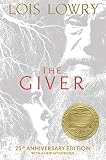
Consider The Giver by Lois Lowry. Recommended by 6 sources.
“Lois Lowry uses spare, plain prose to center a single conceit: a supposedly ideal community that controls emotion and memory. The story follows twelve-year-old Jonas as small revelations accumulate into a sharp ethical dilemma, which makes the book useful for conversation and classroom discussion. Its limitation is emotional restraint and deliberate vagueness—many details and characters stay underdefined—so readers who want rich sensory worldbuilding or a tidy conclusion may feel unsatisfied.”
Similar books

How recommendation signals are reviewed
Each recommendation is collected from a public source — interviews, articles, or curated lists — and linked to its original URL. Books with many verifiable recommendations from respected people rank higher.