
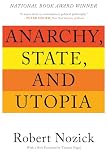
Anarchy, State, and Utopia
by Robert Nozick
Reading Profile
Should I read this?
Razor-sharp and argumentative, Nozick lays out a step-by-step defense of a minimal state using thought experiments, counterexamples, and detailed claims about rights and entitlements. Reading feels like following a law-school brief: precise premises, logical moves, and repeated objections aimed at patterned theories of redistribution. The most useful material tightens how you test intuitions about property, transfers, and consent; the main limitation is long stretches of abstraction and hair-splitting that exhaust readers wanting policy prescriptions or human stories. Expect patience and close reading to get the payoff.
Read this if...
- •A graduate student in political philosophy prepping for a seminar on distributive justice — helpful as close primary reading to engage entitlement arguments and rebut patterned-justice positions.
- •A policy analyst asked to summarize philosophical defenses of a limited state for a leadership memo — useful for compact, argument-driven lines you can distill into pros-and-cons for colleagues.
- •A reader who enjoys rigorous puzzles and philosophical debate, working through moral intuitions about property and rights in spare hours — best when you want to test and tighten your reasoning rather than consume anecdotes.
Skip this if...
- •You’ll likely put it down when the material shifts into long, technical defenses and repeated counterfactuals — the middle sections are dense and detail-heavy.
- •Annoying if you prefer narrative, case studies, or emotional appeals — the tone stays analytic and often detached.
- •Lose interest if you want step-by-step policy solutions or hands-on exercises — no hands-on exercises or implementation guidance are provided.
In this brilliant and widely acclaimed book, winner of the 1975 National Book Award, Robert Nozick challenges the most commonly held political and social positions of our age liberal, socialist, and conservative....
Before You Buy
Reading Specifications
Difficulty:hard
Audience Fit
- A graduate student in political philosophy prepping for a seminar on distributive justice — helpful as close primary reading to engage entitlement arguments and rebut patterned-justice positions.
- A policy analyst asked to summarize philosophical defenses of a limited state for a leadership memo — useful for compact, argument-driven lines you can distill into pros-and-cons for colleagues.
- A reader who enjoys rigorous puzzles and philosophical debate, working through moral intuitions about property and rights in spare hours — best when you want to test and tighten your reasoning rather than consume anecdotes.
- You’ll likely put it down when the material shifts into long, technical defenses and repeated counterfactuals — the middle sections are dense and detail-heavy.
- Annoying if you prefer narrative, case studies, or emotional appeals — the tone stays analytic and often detached.
- Lose interest if you want step-by-step policy solutions or hands-on exercises — no hands-on exercises or implementation guidance are provided.
Check formats, pricing, and availability options for Kindle, physical print, or audiobooks directly.
View available editions on AmazonKey themes
Why recommended
appears in Political Philosophy, Libertarianism, and Politics.
Recommendation Signals
Recommendation proof is sourced from public posts, interviews, reading lists, and cited references.
No verified recommendation proof available yet.
Appears In
Not sure if this is the right fit?
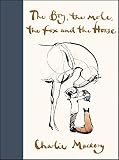
Consider The Boy, the Mole, the Fox and the Horse by Charlie Mackesy. Recommended by 8 sources.
“Soft-spoken, heavily illustrated fable built from short dialogues and watercolor sketches. Each spread pairs a spare line of text with a loose drawing, so the pleasure is visual and aphoristic rather than narrative; readers collect felt-true sentences more than plot. Most useful when you want quick consolations, a prompt for conversation with a child, or a pause during a rough day. Limiting if you want sustained argument, concrete advice, or tightly plotted storytelling: the repetition of gentleness can feel sentimental or thin after a while.”
Similar books
The Boy, the Mole, the Fox and the Horse
Charlie Mackesy
The World as It Is
Ben Rhodes
Out of Control
Kevin Kelly
The Bully Pulpit
Doris Kearns Goodwin
The Seven Spiritual Laws of Success
Deepak Chopra
Billions and Billions
Carl Sagan
Anger
Gary ChapmanFactfulness
Hans RoslingHow recommendation signals are reviewed
Each recommendation is collected from a public source — interviews, articles, or curated lists — and linked to its original URL. Books with many verifiable recommendations from respected people rank higher.