
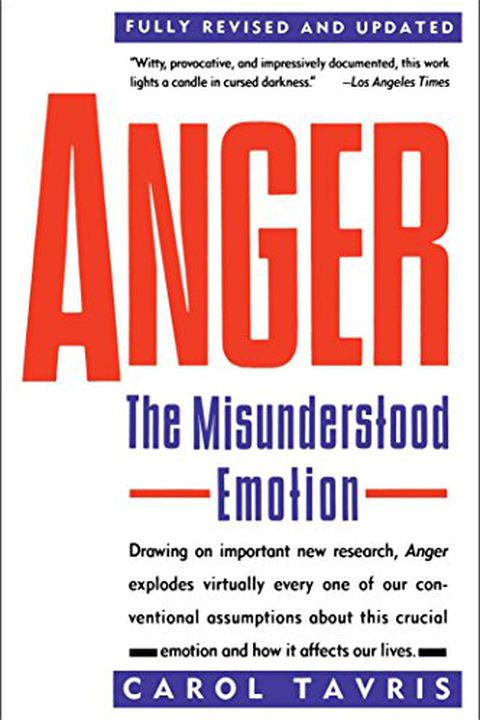
Anger
The Misunderstood Emotion
by Carol Tavris
Reading Profile
Should I read this?
Opens with sharp myth-busting about common beliefs on anger—when outward expression helps, when restraint is wiser, and how gender expectations shape perception. Carol Tavris uses case examples, cultural critique, and summaries of empirical work to sharpen distinctions between constructive and destructive anger. The useful part is clearer language for naming patterns of harm versus legitimate grievance. Limitations: occasional repetition and literature-heavy stretches that slow the reading; it also offers no hands-on exercises.
Read this if...
- •a mid-level manager mediating a heated team conflict who must decide whether an employee's anger signals a legitimate grievance or a breakdown in communication — useful for separating moral complaints from reactive outbursts.
- •an undergraduate or graduate student preparing a seminar paper on emotion and gender norms who needs concrete case examples and clearer distinctions to anchor class discussion.
- •someone trying to make sense of recurring resentment after a relationship rift who wants cultural and psychological framing rather than quick coping drills.
Skip this if...
- •you'll likely put it down when the chapters pile on studies and case details without new practical steps — the mid-book literature-heavy sections are a common drop-off point.
- •annoying if you prefer prescriptive, pep-talk self-help or quick behavioral checklists; this is analytic and explanatory rather than action-oriented and offers no hands-on exercises.
- •not for readers seeking an immediate how-to manual or a workbook of techniques; expect explanation and critique rather than guided practice.
"This landmark book" (San Francisco Chronicle) dispels the common myths about the causes and uses of anger? for example, that expressing anger is always good for you, that suppressing anger is always unhealthy, or that women have special "anger problems" that men do not. Dr. Carol Tavris expertly examines every facet of that fascinating emotion?fro...
Before You Buy
Reading Specifications
Difficulty:hard
Audience Fit
- a mid-level manager mediating a heated team conflict who must decide whether an employee's anger signals a legitimate grievance or a breakdown in communication — useful for separating moral complaints from reactive outbursts.
- an undergraduate or graduate student preparing a seminar paper on emotion and gender norms who needs concrete case examples and clearer distinctions to anchor class discussion.
- someone trying to make sense of recurring resentment after a relationship rift who wants cultural and psychological framing rather than quick coping drills.
- you'll likely put it down when the chapters pile on studies and case details without new practical steps — the mid-book literature-heavy sections are a common drop-off point.
- annoying if you prefer prescriptive, pep-talk self-help or quick behavioral checklists; this is analytic and explanatory rather than action-oriented and offers no hands-on exercises.
- not for readers seeking an immediate how-to manual or a workbook of techniques; expect explanation and critique rather than guided practice.
Check formats, pricing, and availability options for Kindle, physical print, or audiobooks directly.
View available editions on AmazonKey themes
Why recommended
appears in Anger Management, Psychology, and Personal Development.
Recommendation Signals
Recommendation proof is sourced from public posts, interviews, reading lists, and cited references.
No verified recommendation proof available yet.
Appears In
Not sure if this is the right fit?
Consider The Boy, the Mole, the Fox and the Horse by Charlie Mackesy. Recommended by 8 sources.
“Soft-spoken, heavily illustrated fable built from short dialogues and watercolor sketches. Each spread pairs a spare line of text with a loose drawing, so the pleasure is visual and aphoristic rather than narrative; readers collect felt-true sentences more than plot. Most useful when you want quick consolations, a prompt for conversation with a child, or a pause during a rough day. Limiting if you want sustained argument, concrete advice, or tightly plotted storytelling: the repetition of gentleness can feel sentimental or thin after a while.”
Similar books
The Boy, the Mole, the Fox and the Horse
Charlie Mackesy
The World as It Is
Ben Rhodes
Out of Control
Kevin Kelly
The Bully Pulpit
Doris Kearns Goodwin
The Seven Spiritual Laws of Success
Deepak Chopra
Billions and Billions
Carl SaganAnger
Gary ChapmanFactfulness
Hans RoslingHow recommendation signals are reviewed
Each recommendation is collected from a public source — interviews, articles, or curated lists — and linked to its original URL. Books with many verifiable recommendations from respected people rank higher.