
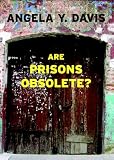
Are Prisons Obsolete
by Angela Y. Davis
Reading Profile
Should I read this?
Angela Y. Davis delivers a tight, argument-driven pamphlet making the case that the U.S. prison system should be dismantled. The prose moves briskly between historical context, moral insistence, and political provocation; its useful part is clarifying abolitionist language and stakes for activists and students. Its main limitation is practical: the book stays at critique and vision rather than supplying granular implementation plans or dense empirical backing, so policy-minded readers may feel it’s rhetorically strong but operationally thin.
Read this if...
- •community organizer running decarceration campaigns who needs a concise, rhetorically sharp text to use in trainings and meetings — because it supplies compact language and historical signposts for abolitionist arguments.
- •criminal-justice or sociology graduate student prepping a seminar on incarceration history and theory — because it’s short, readable, and frames abolition as a central debate to interrogate.
- •legislative staffer or policy analyst trying to understand abolitionist critiques in order to negotiate reform-minded compromises — because it maps the moral and historical stakes even if it won’t prescribe legislation.
Skip this if...
- •you’ll likely put it down when the argument stays at moral critique and vision without offering detailed policy roadmaps or implementation steps; the desire for concrete, step-by-step solutions is where many readers bounce.
- •annoying if you prefer neutral, technocratic writing or heavy empirical datasets — the tone is polemical and advocacy-focused rather than dispassionate research.
- •not helpful if you want hands-on tools or exercises — no hands-on exercises or operational playbooks are provided.
With her characteristic brilliance, grace and radical audacity, Angela Y. Davis has put the case for the latest abolition movement in American life: the abolition of the prison. As she quite correctly notes, American life is replete with abolition movements, and when they were engaged in these struggles, their chances of success seemed almost unthi...
Before You Buy
Reading Specifications
Difficulty:hard
Audience Fit
- community organizer running decarceration campaigns who needs a concise, rhetorically sharp text to use in trainings and meetings — because it supplies compact language and historical signposts for abolitionist arguments.
- criminal-justice or sociology graduate student prepping a seminar on incarceration history and theory — because it’s short, readable, and frames abolition as a central debate to interrogate.
- legislative staffer or policy analyst trying to understand abolitionist critiques in order to negotiate reform-minded compromises — because it maps the moral and historical stakes even if it won’t prescribe legislation.
- you’ll likely put it down when the argument stays at moral critique and vision without offering detailed policy roadmaps or implementation steps; the desire for concrete, step-by-step solutions is where many readers bounce.
- annoying if you prefer neutral, technocratic writing or heavy empirical datasets — the tone is polemical and advocacy-focused rather than dispassionate research.
- not helpful if you want hands-on tools or exercises — no hands-on exercises or operational playbooks are provided.
Check formats, pricing, and availability options for Kindle, physical print, or audiobooks directly.
View available editions on AmazonKey themes
Why recommended
Recommended by 1 source and appears in Sociology, Politics, and History.
Recommended by notable people
People and public figures who have recommended this book.
Recommendation Signals
Recommendation proof is sourced from public posts, interviews, reading lists, and cited references.
Matt McGorry
“Repost from @behindmirror_ . “Are Prisons Obsolete” by Angela Davis is a must read. All of her books are very important and worth reading!”
Appears In
Not sure if this is the right fit?
Consider Outliers by Malcolm Gladwell. Recommended by 31 sources.
“Outliers reads like a series of captivating magazine profiles, each unpacking a hidden factor behind extraordinary success. Gladwell’s storytelling makes complex social science accessible, but the book relies on memorable anecdotes rather than offering systematic analysis. The book explores the idea that individual brilliance rarely stands alone; success often hinges on birth dates, cultural legacies, and the 10,000-hour rule. While the narratives are strong, the book overgeneralizes from handpicked examples, leaving skeptical readers questioning the conclusions. It’s most useful as a conversation starter about luck and timing—annoying if you want a rigorous academic treatise or a how-to guide for your own life.”
Similar books

How recommendation signals are reviewed
Each recommendation is collected from a public source — interviews, articles, or curated lists — and linked to its original URL. Books with many verifiable recommendations from respected people rank higher.