
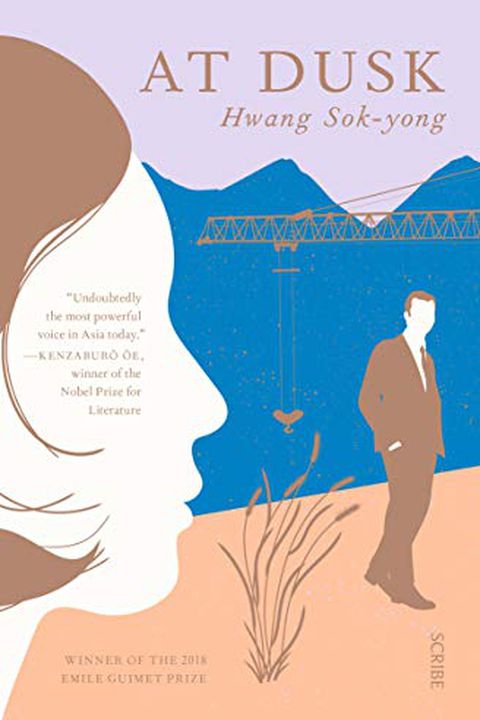
At Dusk
by Hwang SokYong
Reading Profile
Should I read this?
At Dusk follows Park Minwoo, a self-made architect confronting late-life unease about what his success cost him. Hwang SokYong writes in patient, observant prose that leans on memory, city detail, and moral interrogation rather than plot twists. What works best is its steady, intimate probe of regret against South Korea’s rapid modernization; the main limitation is a slow tempo and repeated rumination that some readers will find tedious. This is reflective fiction best read slowly, not for action seekers.
Read this if...
- •a 40‑something project architect at a large firm reassessing long hours and recent promotions after leading urban redevelopment projects — useful for its close portrait of a built-environment career meeting personal cost
- •a master's student in contemporary Korean studies or urban planning drafting a thesis on Seoul's redevelopment who needs human-scale scenes and everyday texture rather than policy summaries — helpful for its atmospheric detail and scenes of ordinary life in changing neighborhoods
- •a late-50s corporate manager planning retirement or a career pivot who wants fiction that sits with ambivalence about legacy and accomplishment — fitting because it slows the pace and leaves moral questions open instead of offering neat resolutions
Skip this if...
- •you'll likely put it down when the narrative settles into long stretches of memory and introspection with little new plot development; the middle can feel repetitious
- •annoying if you prefer plot-driven or fast-paced novels — momentum and dramatic action are not the focus here
- •frustrating if you want clear answers, practical lessons, or hands-on exercises — this is a reflective novel and offers no prescriptive takeaways
In the evening of his life, a wealthy man begins to wonder if he might have missed the point.Park Minwoo is, by every measure, a success story. Born into poverty in a miserable neighbourhood of Seoul, he has ridden the wave of development in a rapidly modernising society. Now the director of a large architectural firm, his hard work and ambition ha...
Before You Buy
Reading Specifications
Difficulty:hard
Audience Fit
- a 40‑something project architect at a large firm reassessing long hours and recent promotions after leading urban redevelopment projects — useful for its close portrait of a built-environment career meeting personal cost
- a master's student in contemporary Korean studies or urban planning drafting a thesis on Seoul's redevelopment who needs human-scale scenes and everyday texture rather than policy summaries — helpful for its atmospheric detail and scenes of ordinary life in changing neighborhoods
- a late-50s corporate manager planning retirement or a career pivot who wants fiction that sits with ambivalence about legacy and accomplishment — fitting because it slows the pace and leaves moral questions open instead of offering neat resolutions
- you'll likely put it down when the narrative settles into long stretches of memory and introspection with little new plot development; the middle can feel repetitious
- annoying if you prefer plot-driven or fast-paced novels — momentum and dramatic action are not the focus here
- frustrating if you want clear answers, practical lessons, or hands-on exercises — this is a reflective novel and offers no prescriptive takeaways
Check formats, pricing, and availability options for Kindle, physical print, or audiobooks directly.
View available editions on AmazonKey themes
Why recommended
appears in About Korea and Fiction.
Recommendation Signals
Recommendation proof is sourced from public posts, interviews, reading lists, and cited references.
No verified recommendation proof available yet.
Appears In
Not sure if this is the right fit?
Consider The Republic by Plato. Recommended by 13 sources.
“Plato stages an extended Socratic conversation that moves from concrete questions about justice into broad proposals about an ideal city, the structure of the soul, and what counts as reality and knowledge. Reading alternates brisk question-and-answer snippets with long, cumulative demonstrations that reward careful attention and annotation. Main value: a wealth of thought experiments for testing political and ethical intuitions. Main limitation: repetitive refutations, long policy sketches and dense metaphysical passages can feel abstruse and slow; patience and some philosophical background help.”
Similar books
How recommendation signals are reviewed
Each recommendation is collected from a public source — interviews, articles, or curated lists — and linked to its original URL. Books with many verifiable recommendations from respected people rank higher.