
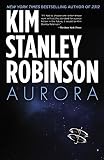
Aurora
by Kim Stanley Robinson
Reading Profile
Should I read this?
Aurora by Kim Stanley Robinson is a patient, idea-forward novel that treats an interstellar voyage as an ecological, engineering, and social experiment. Reading delivers immersive shipboard detail and sustained attention to maintenance, biology, and decision-making across generations; the useful part is the specificity of constraints and limitations. Its limits are its pacing and character distance: long technical and philosophical detours slow events, and many protagonists remain observed rather than deeply interiorized, so expect intellectual provocation more than propulsive plot or intimate portrait.
Read this if...
- •a systems engineer at a space company planning long-term life-support who wants a richly imagined portrayal of maintenance, failure modes, and governance trade-offs across decades.
- •a speculative-fiction writer drafting a generational-ship or closed-ecosystem story who needs a detailed, constraint-driven model to react against or borrow concrete technical and social details from.
- •a mid-career academic on sabbatical rethinking migration, stewardship, or ecological limits who prefers a sustained thought experiment about home and biological boundaries over quick entertainment.
Skip this if...
- •you'll likely put it down when long chapters pause the plot for dense expositions about ship ecology, maintenance schedules, and reproductive logistics — that recurring slowdown is the common drop-off point.
- •annoying if you prefer character-driven emotional arcs over idea-led narrative; many characters stay at arm's length because emphasis lands on systems and trade-offs.
- •not for readers seeking fast-paced action, light escapism, or short, plot-driven reads; pacing is contemplative and often didactic.
A major new novel from one of science fiction's most powerful voices, AURORA tells the incredible story of our first voyage beyond the solar system. Brilliantly imagined and beautifully told, it is the work of a writer at the height of his powers. Our voyage from Earth began generations ago.Now, we approach our new home.AURORA....
Before You Buy
Reading Specifications
Difficulty:hard
Audience Fit
- a systems engineer at a space company planning long-term life-support who wants a richly imagined portrayal of maintenance, failure modes, and governance trade-offs across decades.
- a speculative-fiction writer drafting a generational-ship or closed-ecosystem story who needs a detailed, constraint-driven model to react against or borrow concrete technical and social details from.
- a mid-career academic on sabbatical rethinking migration, stewardship, or ecological limits who prefers a sustained thought experiment about home and biological boundaries over quick entertainment.
- you'll likely put it down when long chapters pause the plot for dense expositions about ship ecology, maintenance schedules, and reproductive logistics — that recurring slowdown is the common drop-off point.
- annoying if you prefer character-driven emotional arcs over idea-led narrative; many characters stay at arm's length because emphasis lands on systems and trade-offs.
- not for readers seeking fast-paced action, light escapism, or short, plot-driven reads; pacing is contemplative and often didactic.
Check formats, pricing, and availability options for Kindle, physical print, or audiobooks directly.
View available editions on AmazonKey themes
Why recommended
Recommended by 1 source and appears in Science Fiction and Fiction.
Recommended by notable people
People and public figures who have recommended this book.
Recommendation Signals
Recommendation proof is sourced from public posts, interviews, reading lists, and cited references.
Aaron Bastani
“The subtext with KSR is always humanity?s relationship to nature & Technology, under capitalism but this is probably the best book I?ve read at the interface of science & climate fiction. Gives you a renewed perspective on our amazing planet. Really recommended. | The subtext with KSR is always humanity’s relationship to nature & Technology, under capitalism but this is probably the best book I’ve read at the interface of science & climate fiction. Gives you a renewed perspective on our amazing planet. Really recommended.”
Appears In
Not sure if this is the right fit?
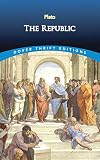
Consider The Republic by Plato. Recommended by 13 sources.
“Plato stages an extended Socratic conversation that moves from concrete questions about justice into broad proposals about an ideal city, the structure of the soul, and what counts as reality and knowledge. Reading alternates brisk question-and-answer snippets with long, cumulative demonstrations that reward careful attention and annotation. Main value: a wealth of thought experiments for testing political and ethical intuitions. Main limitation: repetitive refutations, long policy sketches and dense metaphysical passages can feel abstruse and slow; patience and some philosophical background help.”
Similar books

How recommendation signals are reviewed
Each recommendation is collected from a public source — interviews, articles, or curated lists — and linked to its original URL. Books with many verifiable recommendations from respected people rank higher.