

Baptism of Fire
The Witcher, Book 3
by Andrzej Sapkowski
Reading Profile
Should I read this?
Baptism of Fire follows a wounded Witcher as he moves through a continent unsettled by a coup, picking up allies and facing both monsters and political fallout. Strengths are the chemistry among the travelling party, sharp moments of dark humor, and memorable set-piece encounters that combine action with ethical friction. The main limitation is a slow, teeming middle where long travel passages and repeated conversational detours dilute forward momentum and restate themes rather than advancing them.
Read this if...
- •a returning-series reader who’s deciding whether to continue with the saga — you want follow-up on ongoing plotlines and relationship threads, and this volume rewards prior familiarity by advancing those arcs.
- •a tabletop-RPG gamemaster prepping a gritty campaign arc — you need scene-sized fights, unusual monsters, and brittle alliance dynamics you can drop into sessions or one-shots.
- •a weekday commuter with 30–60 minute rides who prefers clear stopping points — the book’s episodic set pieces and dialogue-heavy scenes fit well into short, repeatable sittings.
Skip this if...
- •you’ll likely put it down when the plot slows into long stretches of travel and extended conversations that rework the same doubts and politics; the middle can feel padded.
- •annoying if you prefer tight plotting, clear moral lines, or minimal 'talky' sections — this leans character-first and talk-heavy at times.
- •poor fit if you want a standalone entry with full orientation; the book assumes familiarity with characters and recent events and can feel confusing early on.
The New York Times bestselling series that inspired the international hit video game: The Witcher The Wizards Guild has been shattered by a coup and, in the uproar, Geralt was seriously injured. The Witcher is supposed to be a guardian of the innocent, a protector of those in need, a defender against powerful and dangerous monsters that prey on men...
Before You Buy
Reading Specifications
Difficulty:hard
Audience Fit
- a returning-series reader who’s deciding whether to continue with the saga — you want follow-up on ongoing plotlines and relationship threads, and this volume rewards prior familiarity by advancing those arcs.
- a tabletop-RPG gamemaster prepping a gritty campaign arc — you need scene-sized fights, unusual monsters, and brittle alliance dynamics you can drop into sessions or one-shots.
- a weekday commuter with 30–60 minute rides who prefers clear stopping points — the book’s episodic set pieces and dialogue-heavy scenes fit well into short, repeatable sittings.
- you’ll likely put it down when the plot slows into long stretches of travel and extended conversations that rework the same doubts and politics; the middle can feel padded.
- annoying if you prefer tight plotting, clear moral lines, or minimal 'talky' sections — this leans character-first and talk-heavy at times.
- poor fit if you want a standalone entry with full orientation; the book assumes familiarity with characters and recent events and can feel confusing early on.
Check formats, pricing, and availability options for Kindle, physical print, or audiobooks directly.
View available editions on AmazonKey themes
Why recommended
appears in Dark Fantasy, Fantasy, and Fiction.
Recommendation Signals
Recommendation proof is sourced from public posts, interviews, reading lists, and cited references.
No verified recommendation proof available yet.
Appears In
Not sure if this is the right fit?
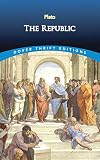
Consider The Republic by Plato. Recommended by 13 sources.
“Plato stages an extended Socratic conversation that moves from concrete questions about justice into broad proposals about an ideal city, the structure of the soul, and what counts as reality and knowledge. Reading alternates brisk question-and-answer snippets with long, cumulative demonstrations that reward careful attention and annotation. Main value: a wealth of thought experiments for testing political and ethical intuitions. Main limitation: repetitive refutations, long policy sketches and dense metaphysical passages can feel abstruse and slow; patience and some philosophical background help.”
Similar books


How recommendation signals are reviewed
Each recommendation is collected from a public source — interviews, articles, or curated lists — and linked to its original URL. Books with many verifiable recommendations from respected people rank higher.