
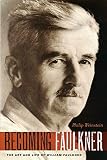
Becoming Faulkner
The Art and Life of William Faulkner
by Philip Weinstein
Reading Profile
Should I read this?
Philip Weinstein offers a focused portrait that frames a famed twentieth-century novelist’s career through recurring senses of professional and personal failure. The book's useful part is a clear through-line: military disappointment, a sibling's death, and other setbacks are linked to themes in the writer's major books, which helps readers see pattern and motive. Its limitation is a tendency toward interpretive repetition rather than expansive new documents, so those seeking dense archival apparatus or a complete life chronology may feel shortchanged.
Read this if...
- •graduate student writing a seminar paper on 20th-century American modernism who needs a concise account connecting life events to recurring themes in the fiction
- •literature instructor preparing a single lecture or module and wanting pointed biographical examples to illustrate how personal setbacks shaped narrative choices
- •avid reader working through mid-century novels who wants a readable companion that highlights psychological threads without heavy academic jargon
Skip this if...
- •you'll likely put it down when the author reasserts the same failure-driven thesis across chapters — repetitious analysis is the common dropout point
- •annoying if you prefer exhaustive archives or documentary minutiae rather than interpretation and thematic synthesis
- •lose interest if you want neutral distance: the book leans interpretive and can feel sympathetic or judgmental depending on taste
William Faulkner was the greatest American novelist of the twentieth century, yet he lived a life marked by a pervasive sense of failure. Throughout his career, he remained haunted by his inability to master a series of personal and professional challenges: his lessthanheroic military career; the loss of his brother in an airplane crash; a disapp...
Before You Buy
Reading Specifications
Difficulty:hard
Audience Fit
- graduate student writing a seminar paper on 20th-century American modernism who needs a concise account connecting life events to recurring themes in the fiction
- literature instructor preparing a single lecture or module and wanting pointed biographical examples to illustrate how personal setbacks shaped narrative choices
- avid reader working through mid-century novels who wants a readable companion that highlights psychological threads without heavy academic jargon
- you'll likely put it down when the author reasserts the same failure-driven thesis across chapters — repetitious analysis is the common dropout point
- annoying if you prefer exhaustive archives or documentary minutiae rather than interpretation and thematic synthesis
- lose interest if you want neutral distance: the book leans interpretive and can feel sympathetic or judgmental depending on taste
Check formats, pricing, and availability options for Kindle, physical print, or audiobooks directly.
View available editions on AmazonKey themes
Why recommended
Recommended by 2 sources and appears in Most Recommended Books and Nonfiction.
Recommended by notable people
People and public figures who have recommended this book.
Recommendation Signals
Recommendation proof is sourced from public posts, interviews, reading lists, and cited references.
David Brooks
“@jennfrey Not a philosopher but “Becoming Faulkner” by Phillip Weinstein is a profound book.”
Appears In
Not sure if this is the right fit?
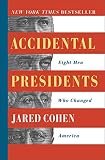
Consider Accidental Presidents by Jared Cohen. Recommended by 10 sources.
“Accidental Presidents offers eight narrative portraits of men who succeeded to the U.S. presidency without election, using anecdote-rich scenes and readable context to show how personality and circumstance interact with office power. It’s strongest as a set of self-contained stories that make succession stakes concrete for non-specialist readers; it does not prioritize dense archival argument or exhaustive methodology, so expect some interpretive generalizations and repeated themes across cases. Use it for fast historical orientation rather than scholarly deep-dives.”
Similar books

How recommendation signals are reviewed
Each recommendation is collected from a public source — interviews, articles, or curated lists — and linked to its original URL. Books with many verifiable recommendations from respected people rank higher.