
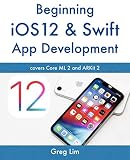
Beginning iOS 12 & Swift App Development
Develop iOS Apps with Xcode 10, Swift 4, Core ML 2, ARKit 2 and more
by Greg Lim
Reading Profile
Should I read this?
Reads like a brisk, hands-on primer that gets you building an iOS12 app in short, focused steps. The strength is practical immediacy: bite-sized instructions, screenshots, and runnable examples make it easy to follow when you have Xcode open. Main limitation is scope — it spends little time on higher-level app architecture, long-term maintenance patterns, or recent Swift/iOS changes, so it’s not a deep reference. Expect repetition across walkthroughs and occasional reliance on specific Xcode workflows.
Read this if...
- •an aspiring iOS developer with little or no Swift experience preparing for a take-home task — you want a working app fast and learn by doing, not by reading theory.
- •a product designer building an interactive prototype to demonstrate UX flows — you need tappable screens, navigation, and basic UI wiring without deep engineering detail.
- •a computer-science student who wants practical Xcode practice before an internship — short, checkpointed projects help you feel comfortable with toolchain and basic app lifecycle.
Skip this if...
- •you'll likely put it down during early setup and tooling friction — readers often stop when Xcode configuration or repeated step-by-step instructions slow progress.
- •annoying if you prefer conceptual depth or system design; the book focuses on how-to walkthroughs rather than explaining long-term architecture or best practices.
- •not ideal if you need instruction targeted at newer Swift or iOS versions or advanced topics like concurrency, modular architecture, or production-grade deployment.
In this book, we take you on a fun, handson and pragmatic journey to learning iOS12 application development using Swift. You'll start building your first iOS app within minutes. Every section is written in a bitesized manner and straight to the point as I don't want to waste your time (and most certainly mine) on the content you don't need. In th...
Before You Buy
Reading Specifications
Difficulty:easy
Audience Fit
- an aspiring iOS developer with little or no Swift experience preparing for a take-home task — you want a working app fast and learn by doing, not by reading theory.
- a product designer building an interactive prototype to demonstrate UX flows — you need tappable screens, navigation, and basic UI wiring without deep engineering detail.
- a computer-science student who wants practical Xcode practice before an internship — short, checkpointed projects help you feel comfortable with toolchain and basic app lifecycle.
- you'll likely put it down during early setup and tooling friction — readers often stop when Xcode configuration or repeated step-by-step instructions slow progress.
- annoying if you prefer conceptual depth or system design; the book focuses on how-to walkthroughs rather than explaining long-term architecture or best practices.
- not ideal if you need instruction targeted at newer Swift or iOS versions or advanced topics like concurrency, modular architecture, or production-grade deployment.
Check formats, pricing, and availability options for Kindle, physical print, or audiobooks directly.
View available editions on AmazonKey themes
Why recommended
appears in Swift.
Recommendation Signals
Recommendation proof is sourced from public posts, interviews, reading lists, and cited references.
No verified recommendation proof available yet.
Appears In
Not sure if this is the right fit?
Consider From Zero to iOS Hero by Etash Kalra.
“Reading feels like a steady, hands-on course: four clear sections that walk a beginner from zero to shipping six small iOS apps. Main value is the practical, step-by-step build-along approach that keeps instructions concrete and tasks achievable for newcomers. Main limitation is a recipe-heavy style that favors implementation over deeper computer-science or large-scale architecture discussion, and readers who don't code along may find much of the text repetitive. Best used as a follow-along learning path rather than a quick reference.”
Similar books
From Zero to iOS Hero
Etash Kalra
Game Development with Swift
Stephen Haney
Modern Concurrency in Swift
raywenderlich Tutorial Team, Marin Todorov
Data Structures & Algorithms in Swift
Raywenderlich Tutorial Team
Combine
Raywenderlich Tutorial Team
Classic Computer Science Problems in Swift
David Kopec
Coding iPhone Apps for Kids
Gloria Winquist
iOS 13 Programming, for Beginners
Ahmad SaharHow recommendation signals are reviewed
Each recommendation is collected from a public source — interviews, articles, or curated lists — and linked to its original URL. Books with many verifiable recommendations from respected people rank higher.