
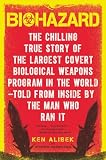
Biohazard
The Chilling True Story of the Largest Covert Biological Weapons Program in the World--Told from Inside by the Man Who Ran It
by Ken Alibek
Reading Profile
Should I read this?
Biohazard reads like a former insider's confessional about the Soviet biological-weapons program, mixing first-person memoir with technical descriptions and dramatic anecdotes. Its useful part is the operational detail and inside texture of labs, projects, and secrecy that typical histories often omit. Main limitation: the narrative sometimes drifts into lurid dramatization and long stretches of laboratory minutiae that tire readers looking for big-picture context or lighter pacing. Tone can feel urgent and partisan rather than dispassionate reportage.
Read this if...
- •a national-security analyst assembling an imminent threat brief for senior leadership who needs vivid Soviet-era operational anecdotes now to make hypothetical biothreat scenarios concrete in a short presentation
- •a science journalist on deadline producing an investigative feature about lab safety or dual-use research who wants first-person episodes and concrete specifics this week to enrich interviews and deadline-driven copy
- •a university history instructor designing a Cold War seminar for the coming term who wants dramatic primary-account material to spark classroom debate about secrecy, ethics, and state science in the next few classes
Skip this if...
- •you'll likely put it down when long, technical accounts of lab procedures or pathogen characteristics pile up with little narrative payoff — that midbook technical density is the common drop-off point
- •annoying if you prefer balanced, detached histories: the tone sometimes reads as self-justifying or urgent rather than even-handed
- •not for readers seeking policy synthesis or clear takeaways — the book offers memoir and episodic detail rather than systematic analysis or practical recommendations
Anthrax. Smallpox. Incurable and horrifying Ebolarelated fevers. For two decades, while a fearful world prepared for nuclear winter, an elite team of Russian bioweaponeers began to till a new killing field: a bleak tract sown with powerful seeds of mass destruction—by doctors who had committed themselves to creating a biological Armageddon. Biohaz...
Before You Buy
Reading Specifications
Difficulty:hard
Audience Fit
- a national-security analyst assembling an imminent threat brief for senior leadership who needs vivid Soviet-era operational anecdotes now to make hypothetical biothreat scenarios concrete in a short presentation
- a science journalist on deadline producing an investigative feature about lab safety or dual-use research who wants first-person episodes and concrete specifics this week to enrich interviews and deadline-driven copy
- a university history instructor designing a Cold War seminar for the coming term who wants dramatic primary-account material to spark classroom debate about secrecy, ethics, and state science in the next few classes
- you'll likely put it down when long, technical accounts of lab procedures or pathogen characteristics pile up with little narrative payoff — that midbook technical density is the common drop-off point
- annoying if you prefer balanced, detached histories: the tone sometimes reads as self-justifying or urgent rather than even-handed
- not for readers seeking policy synthesis or clear takeaways — the book offers memoir and episodic detail rather than systematic analysis or practical recommendations
Check formats, pricing, and availability options for Kindle, physical print, or audiobooks directly.
View available editions on AmazonKey themes
Why recommended
Recommended by 2 sources and appears in Most Recommended Books, Science, and History.
Recommended by notable people
People and public figures who have recommended this book.
Recommendation Signals
Recommendation proof is sourced from public posts, interviews, reading lists, and cited references.
Appears In
How recommendation signals are reviewed
Each recommendation is collected from a public source — interviews, articles, or curated lists — and linked to its original URL. Books with many verifiable recommendations from respected people rank higher.