
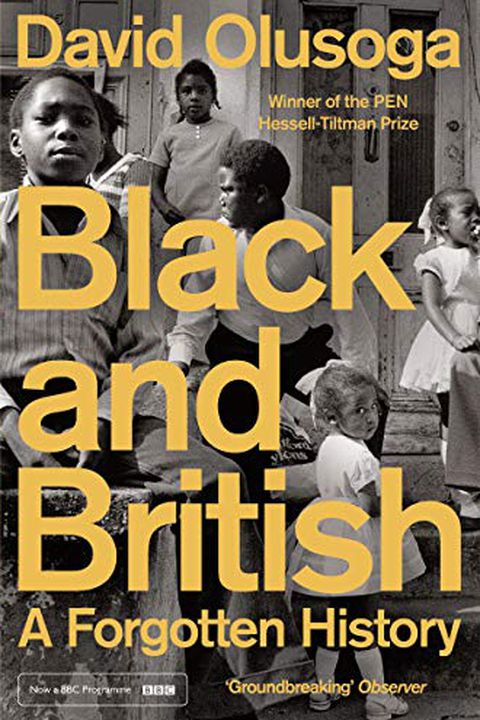
Black and British
A Forgotten History
by David Olusoga
Reading Profile
Should I read this?
Black and British traces centuries of Black presence in Britain using genetic research, archival records, and contemporary interviews. Its value is in joining family-level episodes to big national shifts so local stories illuminate imperial and industrial history. Vivid narrative patches and clear syntheses sit beside long, detail-heavy chapters on commerce, law and archives that slow the book’s momentum. Best read when you want documentary context and connective history rather than a breezy memoir.
Read this if...
- •a secondary-school history teacher in the UK updating an empire unit who needs dated case studies and archival episodes to challenge textbook omissions and spark classroom debate.
- •an amateur genealogist in Britain who has stalled tracing African ancestry and wants broader historical context and examples to make sense of migration records and genetic hints.
- •a museum curator or public-programme organiser preparing an exhibit on industrial-era Britain who needs documented links between slave-trading wealth, commerce, and local industry for labels and talks.
Skip this if...
- •you'll likely put it down when chapters settle into long economic-archive runs that demand sustained, detail-focused attention.
- •annoying if you prefer breezy, intimate memoir — the tone often leans documentary and panoramic rather than confessional.
- •not ideal if you wanted a hands-on genealogy manual or quick how-to; it supplies context and examples but no step-by-step tracing instructions.
Drawing on new genetic and genealogical research, original records, expert testimony and contemporary interviews, Black and British reaches back to Roman Britain, the medieval imagination and Shakespeare's Othello. It reveals that behind the South Sea Bubble was Britain's global slavetrading empire and that much of the great industrial boom of the...
Before You Buy
Reading Specifications
Difficulty:hard
Audience Fit
- a secondary-school history teacher in the UK updating an empire unit who needs dated case studies and archival episodes to challenge textbook omissions and spark classroom debate.
- an amateur genealogist in Britain who has stalled tracing African ancestry and wants broader historical context and examples to make sense of migration records and genetic hints.
- a museum curator or public-programme organiser preparing an exhibit on industrial-era Britain who needs documented links between slave-trading wealth, commerce, and local industry for labels and talks.
- you'll likely put it down when chapters settle into long economic-archive runs that demand sustained, detail-focused attention.
- annoying if you prefer breezy, intimate memoir — the tone often leans documentary and panoramic rather than confessional.
- not ideal if you wanted a hands-on genealogy manual or quick how-to; it supplies context and examples but no step-by-step tracing instructions.
Check formats, pricing, and availability options for Kindle, physical print, or audiobooks directly.
View available editions on AmazonKey themes
Why recommended
Recommended by 1 source and appears in About United Kingdom, History, and Nonfiction.
Recommended by notable people
People and public figures who have recommended this book.
Recommendation Signals
Recommendation proof is sourced from public posts, interviews, reading lists, and cited references.
Richard Coles
“The book of the year for me (though I was late to the party) was “Black and British” by @DavidOlusoga. I can’t remember when a book last made such an impression on me. It made me see the world differently and has changed my life.”
Appears In
Not sure if this is the right fit?
Consider Accidental Presidents by Jared Cohen. Recommended by 10 sources.
“Accidental Presidents offers eight narrative portraits of men who succeeded to the U.S. presidency without election, using anecdote-rich scenes and readable context to show how personality and circumstance interact with office power. It’s strongest as a set of self-contained stories that make succession stakes concrete for non-specialist readers; it does not prioritize dense archival argument or exhaustive methodology, so expect some interpretive generalizations and repeated themes across cases. Use it for fast historical orientation rather than scholarly deep-dives.”
Similar books

How recommendation signals are reviewed
Each recommendation is collected from a public source — interviews, articles, or curated lists — and linked to its original URL. Books with many verifiable recommendations from respected people rank higher.