
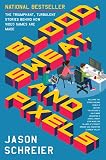
Blood, Sweat, and Pixels
The Triumphant, Turbulent Stories Behind How Video Games Are Made
by Jason Schreier
Reading Profile
Should I read this?
Schreier strings together tightly reported case studies of game projects; chapters read like cinematic production sagas mixing developer interviews, production logistics, and blow‑by‑blow crises. The book offers vivid, human portraits of how design choices, engine failures, and corporate decisions collide to delay or reshape titles, giving a sense of complexity rather than tidy prescriptions. The reporting favors scene‑driven narrative over checklists or stepwise advice. A recurring limitation is that the author revisits schedule crunch and interpersonal tension so often the pattern can feel repetitive, and practical how‑to guidance for makers is minimal.
Read this if...
- •an indie developer preparing their first commercial release who needs a reality check on common production pitfalls and how scope, engines, and staffing decisions play out in practice
- •a game-studies or business student researching industry labor and project risk who wants richly reported anecdotes to illustrate production culture and failure modes
- •a product manager or producer at a mid-sized studio trying to argue for realistic timelines to leadership, because the book supplies many concrete examples of the costs of unrealistic scheduling
Skip this if...
- •you'll likely put it down when chapters slip into repeated 'crunch' cycles and similar interpersonal dramas — the pattern can feel redundant after a few case studies
- •annoying if you prefer quantitative or prescriptive analysis rather than anecdotal, narrative reporting; the book leans story-first, not metrics-first
- •not a how-to: no hands-on development templates or step-by-step exercises for making games, so avoid this if you wanted practical instruction
Developing video gameshero's journey or fool's errand The creative and technical logistics that go into building today's hottest games can be more harrowing and complex than the games themselves, often seeming like an endless maze or a bottomless abyss. In Blood, Sweat, and Pixels, Jason Schreier takes readers on a fascinating odyssey behind the s...
Before You Buy
Reading Specifications
Difficulty:hard
Audience Fit
- an indie developer preparing their first commercial release who needs a reality check on common production pitfalls and how scope, engines, and staffing decisions play out in practice
- a game-studies or business student researching industry labor and project risk who wants richly reported anecdotes to illustrate production culture and failure modes
- a product manager or producer at a mid-sized studio trying to argue for realistic timelines to leadership, because the book supplies many concrete examples of the costs of unrealistic scheduling
- you'll likely put it down when chapters slip into repeated 'crunch' cycles and similar interpersonal dramas — the pattern can feel redundant after a few case studies
- annoying if you prefer quantitative or prescriptive analysis rather than anecdotal, narrative reporting; the book leans story-first, not metrics-first
- not a how-to: no hands-on development templates or step-by-step exercises for making games, so avoid this if you wanted practical instruction
Check formats, pricing, and availability options for Kindle, physical print, or audiobooks directly.
View available editions on AmazonKey themes
Why recommended
Recommended by 1 source and appears in Video Game, Game Design, and Business.
Recommended by notable people
People and public figures who have recommended this book.
Recommendation Signals
Recommendation proof is sourced from public posts, interviews, reading lists, and cited references.
Appears In

Not sure if this is the right fit?
Consider Accidental Presidents by Jared Cohen. Recommended by 10 sources.
“Accidental Presidents offers eight narrative portraits of men who succeeded to the U.S. presidency without election, using anecdote-rich scenes and readable context to show how personality and circumstance interact with office power. It’s strongest as a set of self-contained stories that make succession stakes concrete for non-specialist readers; it does not prioritize dense archival argument or exhaustive methodology, so expect some interpretive generalizations and repeated themes across cases. Use it for fast historical orientation rather than scholarly deep-dives.”
Similar books



How recommendation signals are reviewed
Each recommendation is collected from a public source — interviews, articles, or curated lists — and linked to its original URL. Books with many verifiable recommendations from respected people rank higher.