
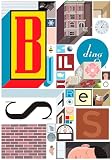
Building Stories
by Chris Ware
Reading Profile
Should I read this?
Building Stories is a slow, close-up reading experience that pieces together the lives of residents in a three‑story Chicago building through fragmented, image-led episodes. What works best is its attention to domestic detail and the way single panels or short sequences accumulate mood and history; the main limitation is that the narrative resists chronology and conventional payoff, so readers expecting a linear plot or fast narrative momentum will find long stretches that feel elliptical or repetitive.
Read this if...
- •comics artist prototyping a long-form graphic novel who’s mid-draft and under deadline to rework pacing — useful now because the book supplies many short, image-first episodes you can study for panel-to-panel transitions and unconventional page shapes as you revise.
- •gallery or small-press curator finalizing an exhibition of urban/domestic illustrations with an opening scheduled in the next month — useful now because the book shows concrete ways to group intimate vignettes and pace a visitor’s experience without relying on a single story arc.
- •architect or interior-designer preparing concept sketches for a residential project over a weekend — useful now because you can read it in short sittings, linger on individual panels to copy small object details, and pull atmospheric references without needing to follow a plot.
Skip this if...
- •you like clear, chronological plots — you'll likely put it down when the story fragments pile up without a single throughline, especially if you pick it up expecting a single-sitting narrative.
- •you prefer fast-paced, dialogue-heavy fiction — the book moves through quiet, visual moments and can feel static or meandering if you're looking for snappy scenes to read between meetings or on short commutes.
- •you want a how-to on comics or a tidy moral lesson — pacing and repetition may feel indulgent, and it lacks prescriptive or instructional content if your goal is to extract step-by-step techniques for a workshop or lesson plan.
After years of sporadic work on other books and projects and following the almost complete loss of his virility, it's here: a new graphic novel by Chris Ware. Building Stories imagines the inhabitants of a threestory Chicago apartment building: a 30something woman who has yet to find someone with whom to spend the rest of her life; a couple, poss...
Before You Buy
Reading Specifications
Difficulty:hard
Audience Fit
- comics artist prototyping a long-form graphic novel who’s mid-draft and under deadline to rework pacing — useful now because the book supplies many short, image-first episodes you can study for panel-to-panel transitions and unconventional page shapes as you revise.
- gallery or small-press curator finalizing an exhibition of urban/domestic illustrations with an opening scheduled in the next month — useful now because the book shows concrete ways to group intimate vignettes and pace a visitor’s experience without relying on a single story arc.
- architect or interior-designer preparing concept sketches for a residential project over a weekend — useful now because you can read it in short sittings, linger on individual panels to copy small object details, and pull atmospheric references without needing to follow a plot.
- you like clear, chronological plots — you'll likely put it down when the story fragments pile up without a single throughline, especially if you pick it up expecting a single-sitting narrative.
- you prefer fast-paced, dialogue-heavy fiction — the book moves through quiet, visual moments and can feel static or meandering if you're looking for snappy scenes to read between meetings or on short commutes.
- you want a how-to on comics or a tidy moral lesson — pacing and repetition may feel indulgent, and it lacks prescriptive or instructional content if your goal is to extract step-by-step techniques for a workshop or lesson plan.
Check formats, pricing, and availability options for Kindle, physical print, or audiobooks directly.
View available editions on AmazonKey themes
Why recommended
appears in About Chicago and Fiction.
Recommendation Signals
Recommendation proof is sourced from public posts, interviews, reading lists, and cited references.
No verified recommendation proof available yet.
Appears In
Not sure if this is the right fit?
Consider The Republic by Plato. Recommended by 13 sources.
“Plato stages an extended Socratic conversation that moves from concrete questions about justice into broad proposals about an ideal city, the structure of the soul, and what counts as reality and knowledge. Reading alternates brisk question-and-answer snippets with long, cumulative demonstrations that reward careful attention and annotation. Main value: a wealth of thought experiments for testing political and ethical intuitions. Main limitation: repetitive refutations, long policy sketches and dense metaphysical passages can feel abstruse and slow; patience and some philosophical background help.”
Similar books
How recommendation signals are reviewed
Each recommendation is collected from a public source — interviews, articles, or curated lists — and linked to its original URL. Books with many verifiable recommendations from respected people rank higher.