
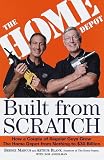
Built from Scratch
How a Couple of Regular Guys Grew The Home Depot from Nothing to $30 Billion
by Bernie Marcus
Reading Profile
Should I read this?
Built from Scratch reads like a founder's blow-by-blow account of launching and scaling a retail business, full of first-hand anecdotes about hiring, vendor deals, and customer focus. The most useful part is the steady stream of concrete war stories that show day-to-day decision making and culture-building choices. The main limitation is a narrow, author-centered view: stories repeat themes, defensive asides surface, and practical frameworks or comparative data are scarce. If you want a tidy playbook or neutral analysis, this will feel uneven.
Read this if...
- •first-time retail founder opening a single storefront who needs morale-boosting, concrete anecdotes about hiring, vendor negotiating, and early customer tactics.
- •operations manager at a growing retail chain trying to persuade leadership to prioritize service and floor-level training, looking for insider stories to illustrate what matters on the shop floor.
- •MBA student or case-writer assembling a narrative on entrepreneurship who wants a primary insider memoir of starting and scaling a retail brand rather than academic analysis.
Skip this if...
- •you'll likely put it down when the same personal anecdotes and victory retellings keep returning without new operational detail; repetitive chapters are the main drop-off point.
- •annoying if you prefer modern startup frameworks, comparative data, or critical distance — this leans toward memoir texture rather than systematic how-to.
- •lose interest if you want a balanced outsider account; the tone tends to be proud and promotional rather than neutral or analytical.
One of the greatest entrepreneurial success stories of the past twenty years. When a friend told Bernie Marcus and Arthur Blank that "you've just been hit in the ass by a golden horseshoe," they thought he was crazy. After all, both had just been fired. What the friend, Ken Langone, meant was that they now had the opportunity to create the kind of ...
Before You Buy
Reading Specifications
Difficulty:easy
Audience Fit
- first-time retail founder opening a single storefront who needs morale-boosting, concrete anecdotes about hiring, vendor negotiating, and early customer tactics.
- operations manager at a growing retail chain trying to persuade leadership to prioritize service and floor-level training, looking for insider stories to illustrate what matters on the shop floor.
- MBA student or case-writer assembling a narrative on entrepreneurship who wants a primary insider memoir of starting and scaling a retail brand rather than academic analysis.
- you'll likely put it down when the same personal anecdotes and victory retellings keep returning without new operational detail; repetitive chapters are the main drop-off point.
- annoying if you prefer modern startup frameworks, comparative data, or critical distance — this leans toward memoir texture rather than systematic how-to.
- lose interest if you want a balanced outsider account; the tone tends to be proud and promotional rather than neutral or analytical.
Check formats, pricing, and availability options for Kindle, physical print, or audiobooks directly.
View available editions on AmazonKey themes
Why recommended
Recommended by 3 sources and appears in Most Recommended Books, Business, and Nonfiction.
Recommended by notable people
People and public figures who have recommended this book.
Recommendation Signals
Recommendation proof is sourced from public posts, interviews, reading lists, and cited references.
Frank Blake
“Very meaningful to me, not only because it’s the story of the founding of the Home Depot, but also because of my start as the CEO of Home Depot.”
Appears In
Not sure if this is the right fit?
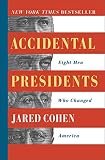
Consider Accidental Presidents by Jared Cohen. Recommended by 10 sources.
“Accidental Presidents offers eight narrative portraits of men who succeeded to the U.S. presidency without election, using anecdote-rich scenes and readable context to show how personality and circumstance interact with office power. It’s strongest as a set of self-contained stories that make succession stakes concrete for non-specialist readers; it does not prioritize dense archival argument or exhaustive methodology, so expect some interpretive generalizations and repeated themes across cases. Use it for fast historical orientation rather than scholarly deep-dives.”
Similar books


How recommendation signals are reviewed
Each recommendation is collected from a public source — interviews, articles, or curated lists — and linked to its original URL. Books with many verifiable recommendations from respected people rank higher.