
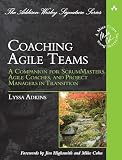
Coaching Agile Teams
A Companion for ScrumMasters, Agile Coaches, and Project Managers in Transition (AddisonWesley Signature Series (Cohn))
by Lyssa Adkins
Reading Profile
Should I read this?
Lyssa Adkins writes in a candid, workshop-like voice aimed at helping ScrumMasters, project managers, and leaders move from telling teams what to do toward coaching them to improve. What works best is scenario-rich, conversational advice on conversations, facilitation moves, and coaching stance you can replicate in meetings. The main limitation is tone and form: it leans on stories and coaching philosophy rather than checklists, rigid templates, or heavy empirical citation, so readers wanting a plug-and-play manual will be frustrated.
Read this if...
- •A ScrumMaster newly charged with coaching two product teams who needs concrete phrases, coaching stances, and facilitation moves to shift daily rituals toward autonomy.
- •A project manager leading an agile transition inside a legacy organization who must influence stakeholders and navigate resistance; useful because it gives language and response patterns for coaching up and across.
- •An engineering manager responsible for multiple scrum teams aiming to reduce manager-driven decisions and foster self-organization; practical guidance on delegation, conflict mediation, and building team norms fits that moment.
Skip this if...
- •You’ll likely put it down when the coaching-mindset chapters keep circling back through long anecdotes—readers who want concise prescriptive steps tend to lose patience there.
- •Annoying if you prefer data, measured outcomes, or templates: the book offers examples and recommended moves but lacks a rigid, checklist-style playbook or hands-on exercises.
- •Not a fit if you’re seeking deep technical agile implementation details (CI/CD, engineering practices, tooling); its focus is on people, conversations, and team dynamics rather than technical process how-tos.
The Provocative and Practical Guide to Coaching Agile Teams As an agile coach, you can help project teams become outstanding at agile, creating products that make them proud and helping organizations reap the powerful benefits of teams that deliver both innovation and excellence. More and more frequently, ScrumMasters and project managers are being...
Before You Buy
Reading Specifications
Difficulty:easy
Audience Fit
- A ScrumMaster newly charged with coaching two product teams who needs concrete phrases, coaching stances, and facilitation moves to shift daily rituals toward autonomy.
- A project manager leading an agile transition inside a legacy organization who must influence stakeholders and navigate resistance; useful because it gives language and response patterns for coaching up and across.
- An engineering manager responsible for multiple scrum teams aiming to reduce manager-driven decisions and foster self-organization; practical guidance on delegation, conflict mediation, and building team norms fits that moment.
- You’ll likely put it down when the coaching-mindset chapters keep circling back through long anecdotes—readers who want concise prescriptive steps tend to lose patience there.
- Annoying if you prefer data, measured outcomes, or templates: the book offers examples and recommended moves but lacks a rigid, checklist-style playbook or hands-on exercises.
- Not a fit if you’re seeking deep technical agile implementation details (CI/CD, engineering practices, tooling); its focus is on people, conversations, and team dynamics rather than technical process how-tos.
Check formats, pricing, and availability options for Kindle, physical print, or audiobooks directly.
View available editions on AmazonKey themes
Why recommended
appears in Project Management, Leadership, and Technology.
Recommendation Signals
Recommendation proof is sourced from public posts, interviews, reading lists, and cited references.
No verified recommendation proof available yet.
Appears In
Not sure if this is the right fit?
Consider Good to Great by Jim Collins. Recommended by 32 sources.
“The book walks you through a multi-year research project, contrasting spectacular performers with mere survivors. The core insight—that sustained greatness hinges on disciplined people, thought, and action—feels sturdy and actionable. But the book’s arguments rely on retrospective selection of companies, and some of its darlings later faltered. You’ll find a methodical, almost monastic tone that rewards patience but may irritate if you want contemporary, tech-savvy lessons.”
Similar books

How recommendation signals are reviewed
Each recommendation is collected from a public source — interviews, articles, or curated lists — and linked to its original URL. Books with many verifiable recommendations from respected people rank higher.