
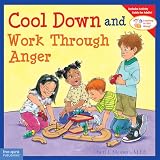
Cool Down and Work Through Anger
by Cheri J. Meiners M. Ed.
Reading Profile
Should I read this?
Plain, short sentences and repeatable lines make this a fast, knock‑out read-aloud: you can open it, find a label or calming phrase, and use it immediately. The most useful element is those ready-made adult scripts — simple, predictable language that helps adults model naming feelings and offering a brief calm-down step. Annoyances pile up: very little variation by age, minimal explanation of why techniques might help, and the same slogans recur often. If you wanted developmental nuance, longer examples, or hands-on activities, this will feel thin.
Read this if...
- •preschool teacher running a five-minute circle-time lesson about emotions — gives short wording and clear steps to read aloud and repeat with the group.
- •parent of a 3–6-year-old who lashes out or struggles to name feelings — supplies simple scripts and calm-down ideas to use right after small incidents.
- •after-school program coordinator standardizing volunteer language for kids — a quick reference to keep adults using consistent, simple phrases.
Skip this if...
- •you'll likely put it down when you want age-specific strategies for older children or richer stories—the book stays very basic and may feel repetitive.
- •annoying if you prefer background about why techniques work or a more nuanced discussion of emotional development.
- •not for readers expecting step-by-step curricula or in-depth, age-varied guidance—the content favors short scripts and simple rules over extended programming.
Everyone gets angry, so it?s never too early for children to learn to recognize feelings of anger, express them, and build skills for coping with anger in helpful, appropriate ways. Children learn that it is okay to feel angry?but not okay to hurt anyone with actions or words. They discover concrete skills for working through anger: selfcalming, t...
Before You Buy
Reading Specifications
Difficulty:easy
Audience Fit
- preschool teacher running a five-minute circle-time lesson about emotions — gives short wording and clear steps to read aloud and repeat with the group.
- parent of a 3–6-year-old who lashes out or struggles to name feelings — supplies simple scripts and calm-down ideas to use right after small incidents.
- after-school program coordinator standardizing volunteer language for kids — a quick reference to keep adults using consistent, simple phrases.
- you'll likely put it down when you want age-specific strategies for older children or richer stories—the book stays very basic and may feel repetitive.
- annoying if you prefer background about why techniques work or a more nuanced discussion of emotional development.
- not for readers expecting step-by-step curricula or in-depth, age-varied guidance—the content favors short scripts and simple rules over extended programming.
Check formats, pricing, and availability options for Kindle, physical print, or audiobooks directly.
View available editions on AmazonKey themes
Why recommended
appears in Anger Management and Fiction.
Recommendation Signals
Recommendation proof is sourced from public posts, interviews, reading lists, and cited references.
No verified recommendation proof available yet.
Appears In
Not sure if this is the right fit?
Consider The Republic by Plato. Recommended by 13 sources.
“Plato stages an extended Socratic conversation that moves from concrete questions about justice into broad proposals about an ideal city, the structure of the soul, and what counts as reality and knowledge. Reading alternates brisk question-and-answer snippets with long, cumulative demonstrations that reward careful attention and annotation. Main value: a wealth of thought experiments for testing political and ethical intuitions. Main limitation: repetitive refutations, long policy sketches and dense metaphysical passages can feel abstruse and slow; patience and some philosophical background help.”
Similar books

How recommendation signals are reviewed
Each recommendation is collected from a public source — interviews, articles, or curated lists — and linked to its original URL. Books with many verifiable recommendations from respected people rank higher.