
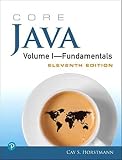
Core Java Volume IFundamentals
by Cay S. Horstmann
Reading Profile
Should I read this?
Reading feels methodical and detail-first: chapters cover syntax, the standard library, and SE 9–11 changes with careful, code-centered examples that assume prior programming fluency. The best parts are clear explanations of tricky corners (generics, concurrency, module-related adjustments) and compact sample code you can adapt. The book's limiting side is its manual-like stretches—long reference passages and few guided, end-to-end projects—so people who learn by building may find momentum stalls.
Read this if...
- •A mid-level Java developer migrating a codebase from Java 8 to 11 who needs clear explanations of the module system, API shifts, and migration pitfalls — useful immediately for planning refactors and avoiding compatibility traps.
- •A backend or systems engineer responsible for multithreaded services who wants precise coverage of concurrency primitives, IO behavior, and standard-library gotchas to reduce runtime bugs in production.
- •A computer-science student studying for internships who wants a rigorous, example-backed reference to tighten up syntax, generics, and core API knowledge alongside coursework.
Skip this if...
- •You'll likely put it down when chapters turn into dense API lists and long reference tables — annoying if you prefer quick, hands-on projects and guided builds.
- •Annoying if you want a modern, opinionated, example-first tutorial; the tone is conservative and explanation-heavy rather than playful or trend-driven.
- •Not for absolute beginners who need interactive exercises or step-by-step labs — the book lacks hands-on exercises and assumes baseline programming experience.
The #1 Java Guide for Serious Programmers: Fully Updated for Java SE 9, 10 & 11 For serious programmers, Core Java, Volume IFundamentals, Eleventh Edition, is the definitive guide to writing robust, maintainable code. Whether you're using Java SE 9, 10, or 11, it will help you achieve a deep and practical understanding of the language and API, an...
Before You Buy
Reading Specifications
Difficulty:hard
Audience Fit
- A mid-level Java developer migrating a codebase from Java 8 to 11 who needs clear explanations of the module system, API shifts, and migration pitfalls — useful immediately for planning refactors and avoiding compatibility traps.
- A backend or systems engineer responsible for multithreaded services who wants precise coverage of concurrency primitives, IO behavior, and standard-library gotchas to reduce runtime bugs in production.
- A computer-science student studying for internships who wants a rigorous, example-backed reference to tighten up syntax, generics, and core API knowledge alongside coursework.
- You'll likely put it down when chapters turn into dense API lists and long reference tables — annoying if you prefer quick, hands-on projects and guided builds.
- Annoying if you want a modern, opinionated, example-first tutorial; the tone is conservative and explanation-heavy rather than playful or trend-driven.
- Not for absolute beginners who need interactive exercises or step-by-step labs — the book lacks hands-on exercises and assumes baseline programming experience.
Check formats, pricing, and availability options for Kindle, physical print, or audiobooks directly.
View available editions on AmazonKey themes
Why recommended
appears in Java, Javascript, and Programming.
Recommendation Signals
Recommendation proof is sourced from public posts, interviews, reading lists, and cited references.
No verified recommendation proof available yet.
Appears In
Not sure if this is the right fit?
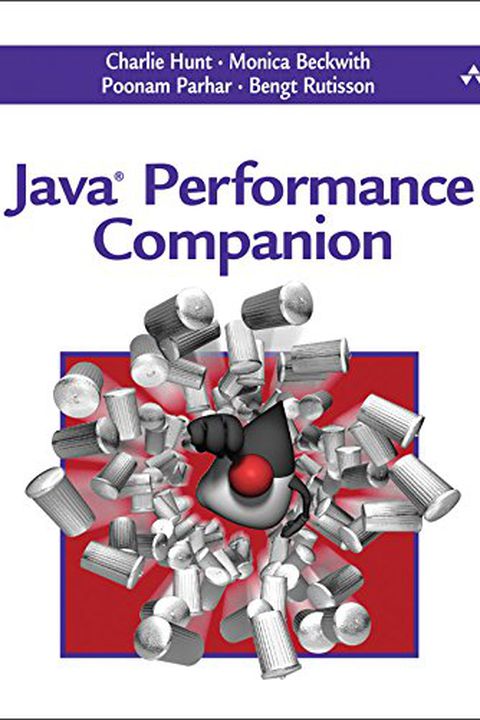
Consider Java Performance Companion by Charlie Hunt, Poonam Parhar, Bengt Rutisson, Monica Beckwith.
Similar books
Java Performance Companion
Charlie Hunt, Poonam Parhar, Bengt Rutisson, Monica Beckwith
Spring Boot in Action
Craig Walls
Core Java SE 9 for the Impatient
Cay S. Horstmann
Java Performance
Scott Oaks
Learn Java in One Day and Learn It Well
Jamie Chan
HighPerformance Java Persistence
Vlad Mihalcea
Murach's Java Servlets and JSP Murach
Joel Murach
Introduction to Java Programming, and Data Structures, Comprehensive Version
Y. Daniel LiangHow recommendation signals are reviewed
Each recommendation is collected from a public source — interviews, articles, or curated lists — and linked to its original URL. Books with many verifiable recommendations from respected people rank higher.