

Das Energi
by Paul Williams
Reading Profile
Should I read this?
A compact, strange little manifesto that reframes value around 'human energy' rather than land or capital, written in a hybrid of aphorism, lyricism, and polemic. Its useful part is imaginative reframing: useful as a provocation or source of rhetorical sparks. Its main limitation is vagueness and repetition—claims are often poetic rather than operational, and the commune-era assumptions feel dated to some readers. Lacks hands-on exercises or concrete policy detail; better as stimulus than as instruction.
Read this if...
- •a graduate student in social sciences writing about 1970s countercultural movements who needs a primary-text style example of commune rhetoric and alternative economic vocabulary
- •a poet or experimental writer trying to model manifesto-like prose and hybrid forms, because the book supplies short, image-rich aphorisms to study and remix
- •a community organizer running a strategy retreat who wants a short provocation to spark debate about values and motivation—useful as a discussion primer, not as policy guidance
Skip this if...
- •you'll likely put it down when the prose shifts into repetitive aphorisms and certainty without workable detail—readers who need clear argumentation often stop here
- •annoying if you prefer evidence, concrete examples, or step-by-step ideas—this is poetic and speculative, not a how-to
- •frustrating if you dislike dated countercultural assumptions or idealism; the 1970s commune perspective and informal tone feel anachronistic to some readers
In this "strange little book" that grew out of the author's experiences living in an experimental commune during the early '70s, "capital" has replaced "land" as the key to human economy. Now is the time for human energy to replace both capital and land as the essential human possession, with which all other things can be achieved....
Before You Buy
Reading Specifications
Difficulty:hard
Audience Fit
- a graduate student in social sciences writing about 1970s countercultural movements who needs a primary-text style example of commune rhetoric and alternative economic vocabulary
- a poet or experimental writer trying to model manifesto-like prose and hybrid forms, because the book supplies short, image-rich aphorisms to study and remix
- a community organizer running a strategy retreat who wants a short provocation to spark debate about values and motivation—useful as a discussion primer, not as policy guidance
- you'll likely put it down when the prose shifts into repetitive aphorisms and certainty without workable detail—readers who need clear argumentation often stop here
- annoying if you prefer evidence, concrete examples, or step-by-step ideas—this is poetic and speculative, not a how-to
- frustrating if you dislike dated countercultural assumptions or idealism; the 1970s commune perspective and informal tone feel anachronistic to some readers
Check formats, pricing, and availability options for Kindle, physical print, or audiobooks directly.
View available editions on AmazonKey themes
Why recommended
Recommended by 2 sources and appears in Most Recommended Books, Philosophy, and Social Sciences.
Recommended by notable people
People and public figures who have recommended this book.
Recommendation Signals
Recommendation proof is sourced from public posts, interviews, reading lists, and cited references.
Appears In
Not sure if this is the right fit?
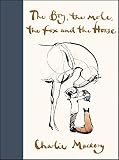
Consider The Boy, the Mole, the Fox and the Horse by Charlie Mackesy. Recommended by 8 sources.
“Soft-spoken, heavily illustrated fable built from short dialogues and watercolor sketches. Each spread pairs a spare line of text with a loose drawing, so the pleasure is visual and aphoristic rather than narrative; readers collect felt-true sentences more than plot. Most useful when you want quick consolations, a prompt for conversation with a child, or a pause during a rough day. Limiting if you want sustained argument, concrete advice, or tightly plotted storytelling: the repetition of gentleness can feel sentimental or thin after a while.”
Similar books
The Boy, the Mole, the Fox and the Horse
Charlie Mackesy
The World as It Is
Ben Rhodes
Out of Control
Kevin Kelly
The Bully Pulpit
Doris Kearns Goodwin
The Seven Spiritual Laws of Success
Deepak Chopra
Billions and Billions
Carl Sagan
Anger
Gary ChapmanFactfulness
Hans RoslingHow recommendation signals are reviewed
Each recommendation is collected from a public source — interviews, articles, or curated lists — and linked to its original URL. Books with many verifiable recommendations from respected people rank higher.