
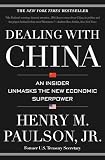
Dealing with China
An Insider Unmasks the New Economic Superpower
by Henry M. Paulson

Reading Profile
Should I read this?
Paulson's account reads like a business‑statesman memoir: close, detail‑rich, and full of negotiation scenes from his years at Goldman Sachs and as Treasury secretary. The most useful parts are concrete descriptions of how economic dialogues, deal‑making, and market‑access talks actually unfolded, including specific policy trade‑offs and the limitations of leverage. The main limitation is a strong insider perspective that sometimes slips into defensiveness and replays of meetings rather than big‑picture analysis. Expect useful operational color for practitioners but fewer broad, critical analyses for scholars or skeptics.
Read this if...
- •a corporate strategist at a multinational planning China market entry—wants granular negotiation anecdotes and real trade‑offs to inform risk memos and board briefings now
- •an economic‑policy staffer at a finance ministry or central bank drafting engagement options—needs inside views of how U.S.‑China economic dialogues function and where leverage has or hasn’t mattered
- •an MBA instructor building a classroom case on market reform—will use first‑hand meeting scenes to show negotiation dynamics and institutional constraints to students
Skip this if...
- •you'll likely put it down when the text shifts into long, minute‑by‑minute meeting replays and defensive justifications; that stretch is slow and detail-heavy
- •annoying if you prefer big‑picture theory or critical distance—this is written from an insider perspective rather than as a skeptical analysis
- •no exercises or practical checklists—annoying if you wanted a how‑to playbook or hands‑on tools for negotiation
Hank Paulson has dealt with China unlike any other foreigner. As head of Goldman Sachs, Paulson had a pivotal role in opening up China to private enterprise. Then, as Treasury secretary, he created the Strategic Economic Dialogue with what is now the world's secondlargest economy. He negotiated with China on needed economic reforms, while safeguar...
Before You Buy
Reading Specifications
Difficulty:hard
Audience Fit
- a corporate strategist at a multinational planning China market entry—wants granular negotiation anecdotes and real trade‑offs to inform risk memos and board briefings now
- an economic‑policy staffer at a finance ministry or central bank drafting engagement options—needs inside views of how U.S.‑China economic dialogues function and where leverage has or hasn’t mattered
- an MBA instructor building a classroom case on market reform—will use first‑hand meeting scenes to show negotiation dynamics and institutional constraints to students
- you'll likely put it down when the text shifts into long, minute‑by‑minute meeting replays and defensive justifications; that stretch is slow and detail-heavy
- annoying if you prefer big‑picture theory or critical distance—this is written from an insider perspective rather than as a skeptical analysis
- no exercises or practical checklists—annoying if you wanted a how‑to playbook or hands‑on tools for negotiation
Check formats, pricing, and availability options for Kindle, physical print, or audiobooks directly.
View available editions on AmazonKey themes
Why recommended
Recommended by 3 sources and appears in Most Recommended Books, Finance, and Politics.
Recommended by notable people
People and public figures who have recommended this book.
Recommendation Signals
Recommendation proof is sourced from public posts, interviews, reading lists, and cited references.
Appears In
Not sure if this is the right fit?
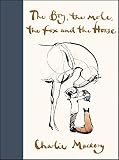
Consider The Boy, the Mole, the Fox and the Horse by Charlie Mackesy. Recommended by 8 sources.
“Soft-spoken, heavily illustrated fable built from short dialogues and watercolor sketches. Each spread pairs a spare line of text with a loose drawing, so the pleasure is visual and aphoristic rather than narrative; readers collect felt-true sentences more than plot. Most useful when you want quick consolations, a prompt for conversation with a child, or a pause during a rough day. Limiting if you want sustained argument, concrete advice, or tightly plotted storytelling: the repetition of gentleness can feel sentimental or thin after a while.”
Similar books
The Boy, the Mole, the Fox and the Horse
Charlie Mackesy
The World as It Is
Ben Rhodes
Out of Control
Kevin Kelly
The Bully Pulpit
Doris Kearns Goodwin
The Seven Spiritual Laws of Success
Deepak Chopra
Billions and Billions
Carl Sagan
Anger
Gary ChapmanFactfulness
Hans RoslingHow recommendation signals are reviewed
Each recommendation is collected from a public source — interviews, articles, or curated lists — and linked to its original URL. Books with many verifiable recommendations from respected people rank higher.