
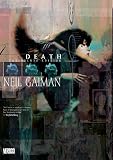
Death
The Deluxe Edition
by Neil Gaiman
Reading Profile
Should I read this?
Reading this feels like spending an hour with a polite, amused guide to mortality: short, illustrated tales that mix wry humor and quiet sorrow. Best use is the way the central character — a perky, likable personification of Death — reframes ordinary moments so small scenes feel quietly strange and humane. Limitation: the episodes are brief and anecdotal, so readers craving sustained plotting or explicit philosophical argument will find it slight; the tone can also feel repeatedly cute around a dark subject.
Read this if...
- •high-school librarian assembling a spring display for sophomores and juniors wrestling with grief or big questions — the book’s short, illustrated vignettes make mortality approachable right now when you need low-barrier titles for reluctant readers.
- •office commuter with two 20–30 minute subway rides daily who wants finishable reading between stops — each self-contained tale fits a single ride, so it’s an easy, low-commitment way to read about a heavy subject during a busy workweek.
- •webcomic creator prepping a four-week update schedule or a small festival submission — the concise, character-driven episodes model how to keep a consistent voice and land emotional beats across short strips, useful during a tight production window.
Skip this if...
- •You’ll likely put it down when the same gently ironic voice keeps returning without deeper plot buildup — if you want narrative momentum, this will feel insubstantial.
- •Annoying if you prefer long-form worldbuilding or action-heavy comics — this is vignette-driven and intimate, not epic or plot-dense.
- •Not for readers seeking rigorous philosophical treatises on death or grief — the tone leans toward anecdote and warmth rather than systematic argument.
From the pages of Newbery Medal winner Neil Gaiman's THE SANDMAN comes fanfavorite character Death in a collection of her solo adventures! The first story introduces the young, pale, perky, and genuinely likable Death. One day in every century, Death walks the Earth to better understand those to whom she will be the final visitor. Today is that da...
Before You Buy
Reading Specifications
Difficulty:hard
Audience Fit
- high-school librarian assembling a spring display for sophomores and juniors wrestling with grief or big questions — the book’s short, illustrated vignettes make mortality approachable right now when you need low-barrier titles for reluctant readers.
- office commuter with two 20–30 minute subway rides daily who wants finishable reading between stops — each self-contained tale fits a single ride, so it’s an easy, low-commitment way to read about a heavy subject during a busy workweek.
- webcomic creator prepping a four-week update schedule or a small festival submission — the concise, character-driven episodes model how to keep a consistent voice and land emotional beats across short strips, useful during a tight production window.
- You’ll likely put it down when the same gently ironic voice keeps returning without deeper plot buildup — if you want narrative momentum, this will feel insubstantial.
- Annoying if you prefer long-form worldbuilding or action-heavy comics — this is vignette-driven and intimate, not epic or plot-dense.
- Not for readers seeking rigorous philosophical treatises on death or grief — the tone leans toward anecdote and warmth rather than systematic argument.
Check formats, pricing, and availability options for Kindle, physical print, or audiobooks directly.
View available editions on AmazonKey themes
Why recommended
Recommended by 2 sources and appears in Most Recommended Books and Fantasy.
Recommended by notable people
People and public figures who have recommended this book.
Recommendation Signals
Recommendation proof is sourced from public posts, interviews, reading lists, and cited references.
Appears In
Not sure if this is the right fit?
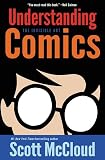
Consider Understanding Comics by Scott Mccloud. Recommended by 8 sources.
“Starts as a comic that teaches comics, using panels and diagrams to name mechanics such as closure and iconography. Its main usefulness is turning visual storytelling moves—spacing, panel shape, simplification—into immediately visible demonstrations you can look back at while making pages. Limits appear in repeated restatements and examples anchored in older comics traditions, which can read chatty or era-bound. Best read slowly and with the illustrated examples open in view rather than skimmed.”
Similar books
How recommendation signals are reviewed
Each recommendation is collected from a public source — interviews, articles, or curated lists — and linked to its original URL. Books with many verifiable recommendations from respected people rank higher.