
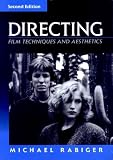
Directing
Film Techniques and Aesthetics, Second Edition
by Michael Rabiger
Reading Profile
Should I read this?
Practical and detail-heavy, this manual reads like a director's classroom condensed into a single volume: preproduction, blocking, camera choices, and postproduction all get explicit, how-to attention. What works best is clear procedural guidance and concrete production language that helps translate creative intention into shootable plans. The main limitation is density—large sections focus on logistics and technique, so readers hoping for a breezy creative manifesto or deep film theory will find it dry and repetitive in places.
Read this if...
- •a film-student preparing a semester directing project who needs step-by-step vocabulary and production checklists to structure rehearsals and shoots
- •an early-career director moving from shorts to a first low-budget feature who wants concrete advice on preproduction planning, shot selection, and editing decisions
- •a university instructor designing a directing syllabus who needs chapter-sized modules covering both aesthetic choices and on-set execution
Skip this if...
- •you prefer film-philosophy or theory-heavy reads — you'll likely put it down when long technical chapters on shot composition and scheduling replace broader conceptual discussion
- •you want a short, motivational primer or memoir-style anecdotes — the pace is methodical and pragmatic, which feels tedious if you expected a light, story-driven book
- •you dislike repetition or procedural detail — annoying if you prefer high-level ideas over step-by-step production logistics
Directing: Film Techniques and Aesthetics is a comprehensive manual that teaches the essentials of filmmaking from the perspective of the director. Ideal for film production and directing classes, as well as for aspiring and current directors, Directing covers all phases of preproduction and production, from idea development to final cut. Thoroughl...
Before You Buy
Reading Specifications
Difficulty:hard
Audience Fit
- a film-student preparing a semester directing project who needs step-by-step vocabulary and production checklists to structure rehearsals and shoots
- an early-career director moving from shorts to a first low-budget feature who wants concrete advice on preproduction planning, shot selection, and editing decisions
- a university instructor designing a directing syllabus who needs chapter-sized modules covering both aesthetic choices and on-set execution
- you prefer film-philosophy or theory-heavy reads — you'll likely put it down when long technical chapters on shot composition and scheduling replace broader conceptual discussion
- you want a short, motivational primer or memoir-style anecdotes — the pace is methodical and pragmatic, which feels tedious if you expected a light, story-driven book
- you dislike repetition or procedural detail — annoying if you prefer high-level ideas over step-by-step production logistics
Check formats, pricing, and availability options for Kindle, physical print, or audiobooks directly.
View available editions on AmazonKey themes
Why recommended
appears in Filmmaking, Art, and Nonfiction.
Recommendation Signals
Recommendation proof is sourced from public posts, interviews, reading lists, and cited references.
No verified recommendation proof available yet.
Appears In
Not sure if this is the right fit?
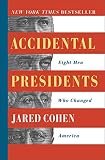
Consider Accidental Presidents by Jared Cohen. Recommended by 10 sources.
“Accidental Presidents offers eight narrative portraits of men who succeeded to the U.S. presidency without election, using anecdote-rich scenes and readable context to show how personality and circumstance interact with office power. It’s strongest as a set of self-contained stories that make succession stakes concrete for non-specialist readers; it does not prioritize dense archival argument or exhaustive methodology, so expect some interpretive generalizations and repeated themes across cases. Use it for fast historical orientation rather than scholarly deep-dives.”
Similar books

How recommendation signals are reviewed
Each recommendation is collected from a public source — interviews, articles, or curated lists — and linked to its original URL. Books with many verifiable recommendations from respected people rank higher.