
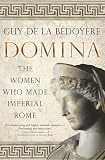
Domina
The Women Who Made Imperial Rome
by Guy de la Bédoyère
Reading Profile
Should I read this?
Domina, by Guy de la Bédoyère, reads as a popular-history narrative that shifts attention from emperors to the Julio-Claudian women who operated behind the throne. Vivid portraits and court anecdotes make personalities and relationships easy to picture and remember. The useful part is its storytelling: memorable scenes and character sketches that work well for teaching or public-facing writing. The main limitation is light engagement with technical source detail—readers wanting tightly sourced, footnote-forward argument may feel shortchanged.
Read this if...
- •an undergraduate prepping for a survey exam on ancient Rome who needs memorable case studies of imperial family dynamics rather than dense primary-source apparatus
- •a book-club leader planning a session on historical women who wants lively, debate-sparking stories to prompt discussion rather than theoretical analysis
- •a museum educator writing short gallery talks on Julio-Claudian portraits who wants humanized anecdotes to make faces and relationships feel immediate
Skip this if...
- •you'll likely put it down when the narrative repeats similar anecdotes without deeper sourcing — stop if you expected heavy footnotes and close source work
- •annoying if you prefer theory-heavy gender studies or structural political analysis rather than individual life stories and court gossip
- •skip it if you want a dense reference volume: this reads as storytelling rather than a technical reference or exhaustive citation record
A captivating popular history that shines a light on the notorious JulioClaudian women who forged an empire?? Augustus, Tiberius, Caligula, Claudius, and Nero?these are the names history associates with the early Roman Empire. Yet, not a single one of these emperors was the blood son of his predecessor. In this captivating history, a prominent sch...
Before You Buy
Reading Specifications
Difficulty:hard
Audience Fit
- an undergraduate prepping for a survey exam on ancient Rome who needs memorable case studies of imperial family dynamics rather than dense primary-source apparatus
- a book-club leader planning a session on historical women who wants lively, debate-sparking stories to prompt discussion rather than theoretical analysis
- a museum educator writing short gallery talks on Julio-Claudian portraits who wants humanized anecdotes to make faces and relationships feel immediate
- you'll likely put it down when the narrative repeats similar anecdotes without deeper sourcing — stop if you expected heavy footnotes and close source work
- annoying if you prefer theory-heavy gender studies or structural political analysis rather than individual life stories and court gossip
- skip it if you want a dense reference volume: this reads as storytelling rather than a technical reference or exhaustive citation record
Check formats, pricing, and availability options for Kindle, physical print, or audiobooks directly.
View available editions on AmazonKey themes
Why recommended
appears in Ancient Rome, History, and Nonfiction.
Recommendation Signals
Recommendation proof is sourced from public posts, interviews, reading lists, and cited references.
No verified recommendation proof available yet.
Appears In
Not sure if this is the right fit?
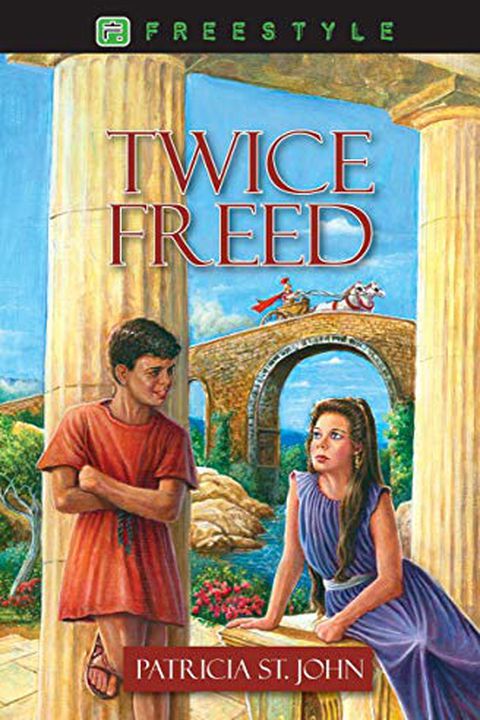
Consider Twice Freed by Patricia St. John.
“Twice Freed is a compact historical novel set in ancient Rome that follows a slave's yearning for liberty alongside household tensions shaped by early Christian belief. The prose stays plain and plot-forward, so scenes move quickly and moral choices are easy to follow. Its useful part is a clear moral focus that sparks reflection about freedom and allegiance without theological complexity. Its main limitation is a didactic tone: characters can feel one-dimensional and preaching moments slow the story for readers wanting more subtle character work.”
Similar books
How recommendation signals are reviewed
Each recommendation is collected from a public source — interviews, articles, or curated lists — and linked to its original URL. Books with many verifiable recommendations from respected people rank higher.