
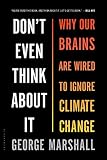
Don't Even Think About It
Why Our Brains Are Wired to Ignore Climate Change
by George Marshall
Reading Profile
Should I read this?
Starts with wry reportage and plain-language psychology, using stories and social‑science summaries to account for the gap between knowledge and action on climate change. Most useful as a diagnostic map of emotional, cultural, and cognitive barriers — handy for anyone who needs to frame expectations about persuasion. Limiting when you want concrete outreach scripts or hands-on tactics: the book favors diagnosis and illustrative anecdote over a toolbox, and some chapters circle back to the same examples for emphasis.
Read this if...
- •a community organizer planning a local climate talk who needs to anticipate why audiences will resist and how to frame messages without overpromising
- •a municipal policy analyst drafting engagement materials for a climate plan who wants realistic expectations about public responses and barriers to behavior change
- •a high-school or college instructor designing a unit on public responses to science who needs readable case studies and language to spark classroom debate
Skip this if...
- •you'll likely put it down when the narrative shifts into repeated anecdote-and-diagnosis sections — readers wanting a faster payoff often lose momentum in the middle
- •annoying if you prefer step-by-step how-to instructions or reproducible outreach templates; this book diagnoses problems but lacks hands-on exercises
- •lose interest if you want value-neutral, purely technical analysis; the voice leans conversational and sometimes moralizes about inaction, which can feel one-sided
A witty, insightful, and groundbreaking take on one of the most urgent questions of our time: Why, despite overwhelming scientific evidence, do we still ignore climate changeMost of us recognize that climate change is real yet we do nothing to stop it. What is the psychological mechanism that allows us to know something is true but act as if it is...
Before You Buy
Reading Specifications
Difficulty:hard
Audience Fit
- a community organizer planning a local climate talk who needs to anticipate why audiences will resist and how to frame messages without overpromising
- a municipal policy analyst drafting engagement materials for a climate plan who wants realistic expectations about public responses and barriers to behavior change
- a high-school or college instructor designing a unit on public responses to science who needs readable case studies and language to spark classroom debate
- you'll likely put it down when the narrative shifts into repeated anecdote-and-diagnosis sections — readers wanting a faster payoff often lose momentum in the middle
- annoying if you prefer step-by-step how-to instructions or reproducible outreach templates; this book diagnoses problems but lacks hands-on exercises
- lose interest if you want value-neutral, purely technical analysis; the voice leans conversational and sometimes moralizes about inaction, which can feel one-sided
Check formats, pricing, and availability options for Kindle, physical print, or audiobooks directly.
View available editions on AmazonKey themes
Why recommended
Recommended by 1 source and appears in Environment, Climate Change, and Politics.
Recommended by notable people
People and public figures who have recommended this book.
Recommendation Signals
Recommendation proof is sourced from public posts, interviews, reading lists, and cited references.
Wolfgang Blau
“@brendonvolpe :) and that book is great, indeed. Such a brave thing George Marshall did there, questioning his own assumptions.”
Appears In
Not sure if this is the right fit?
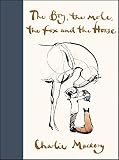
Consider The Boy, the Mole, the Fox and the Horse by Charlie Mackesy. Recommended by 8 sources.
“Soft-spoken, heavily illustrated fable built from short dialogues and watercolor sketches. Each spread pairs a spare line of text with a loose drawing, so the pleasure is visual and aphoristic rather than narrative; readers collect felt-true sentences more than plot. Most useful when you want quick consolations, a prompt for conversation with a child, or a pause during a rough day. Limiting if you want sustained argument, concrete advice, or tightly plotted storytelling: the repetition of gentleness can feel sentimental or thin after a while.”
Similar books
The Boy, the Mole, the Fox and the Horse
Charlie Mackesy
The World as It Is
Ben Rhodes
Out of Control
Kevin Kelly
The Bully Pulpit
Doris Kearns Goodwin
The Seven Spiritual Laws of Success
Deepak Chopra
Billions and Billions
Carl Sagan
Anger
Gary ChapmanFactfulness
Hans RoslingHow recommendation signals are reviewed
Each recommendation is collected from a public source — interviews, articles, or curated lists — and linked to its original URL. Books with many verifiable recommendations from respected people rank higher.