
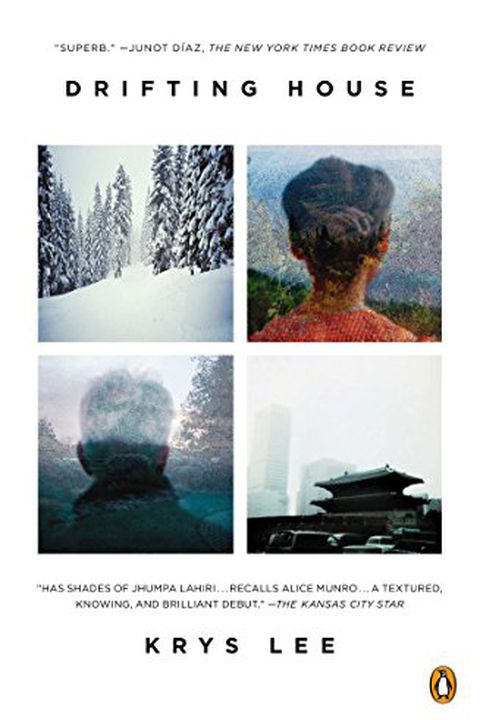
Drifting House
by Krys Lee
Reading Profile
Should I read this?
Quiet, observant fiction that moves between Korea and the United States across decades, centering people wrestling with history and daily survival. Lee's sentences prize detail: cramped apartments, famine-era scarcity, the ripple of financial crisis, and the small moral choices migrants make. What works best is emotional specificity—individual lives connect to large political shifts without sloganeering. The main limitation is a steady melancholic tone and restrained plotting that can feel repetitious; readers expecting fast plots or tidy resolutions may be frustrated.
Read this if...
- •A literature grad student preparing a seminar on migration narratives who needs vivid, text-ready scenes of postwar Korean displacement and diaspora for close reading.
- •A community arts programmer organizing a reading series about Korea who wants short, character-focused pieces that humanize economic and political upheaval for an audience.
- •A commuting professional with limited nightly reading time who prefers short, emotionally dense sections to dip into rather than committing to a long novel.
Skip this if...
- •You'll likely put it down when narrative momentum stalls in quiet, vignette-style scenes — if you need a fast-moving plot, this will frustrate you.
- •Annoying if you prefer upbeat, tidy endings or clear moral closure; the tone stays melancholic and many threads remain unresolved.
- •Annoying if you want hands-on or practical takeaways from fiction; this offers emotional portraiture rather than actionable lessons.
Set in Korea and the United States from the postwar era to contemporary times, Krys Lee's stunning fiction debut illuminates a people struggling to reconcile the turmoil of their collective past with the rewards and challenges of their present. Amid the famine in North Korea, the financial crisis of South Korea, and the cramped apartments and Korea...
Before You Buy
Reading Specifications
Difficulty:hard
Audience Fit
- A literature grad student preparing a seminar on migration narratives who needs vivid, text-ready scenes of postwar Korean displacement and diaspora for close reading.
- A community arts programmer organizing a reading series about Korea who wants short, character-focused pieces that humanize economic and political upheaval for an audience.
- A commuting professional with limited nightly reading time who prefers short, emotionally dense sections to dip into rather than committing to a long novel.
- You'll likely put it down when narrative momentum stalls in quiet, vignette-style scenes — if you need a fast-moving plot, this will frustrate you.
- Annoying if you prefer upbeat, tidy endings or clear moral closure; the tone stays melancholic and many threads remain unresolved.
- Annoying if you want hands-on or practical takeaways from fiction; this offers emotional portraiture rather than actionable lessons.
Check formats, pricing, and availability options for Kindle, physical print, or audiobooks directly.
View available editions on AmazonKey themes
Why recommended
appears in North Korea, About Korea, and Fiction.
Recommendation Signals
Recommendation proof is sourced from public posts, interviews, reading lists, and cited references.
No verified recommendation proof available yet.
Appears In
Not sure if this is the right fit?
Consider The Republic by Plato. Recommended by 13 sources.
“Plato stages an extended Socratic conversation that moves from concrete questions about justice into broad proposals about an ideal city, the structure of the soul, and what counts as reality and knowledge. Reading alternates brisk question-and-answer snippets with long, cumulative demonstrations that reward careful attention and annotation. Main value: a wealth of thought experiments for testing political and ethical intuitions. Main limitation: repetitive refutations, long policy sketches and dense metaphysical passages can feel abstruse and slow; patience and some philosophical background help.”
Similar books
How recommendation signals are reviewed
Each recommendation is collected from a public source — interviews, articles, or curated lists — and linked to its original URL. Books with many verifiable recommendations from respected people rank higher.