
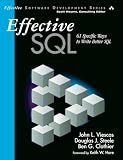
Effective SQL
61 Specific Ways to Write Better SQL (Effective Software Development Series)
by John Viescas
Reading Profile
Should I read this?
Starts as a hands-on toolkit for writing clearer, more reliable SQL and stays intensely practical: expect pattern-focused guidance, concrete query examples, and frequent tips about performance limitations. Most value comes from movable techniques you can apply to real queries and troubleshooting sessions; the main limitation is that the book can get granular—long example walkthroughs and prescriptive tweaks slow the pace and may feel repetitive. Better as a desk reference you return to than as light leisure reading.
Read this if...
- •backend developer at a startup rewriting slow reports who needs focused, code-level fixes to reduce query runtime and complexity right away.
- •data analyst migrating spreadsheet workflows into a SQL-based pipeline who wants concrete query patterns to automate and standardize reporting.
- •database-focused operations engineer maintaining ETL jobs who must interpret, debug, and harden long-running queries and edge-case joins.
Skip this if...
- •You’ll likely put it down when chapters dive into line-by-line tuning and long walkthroughs if you prefer fast, high-level takeaways.
- •Annoying if you prefer visual or GUI-driven instruction—expect text-heavy examples rather than point-and-click tutorials.
- •Not ideal if you want academic theory or a conceptual primer on database internals; this leans practical and sometimes prescriptive rather than deep theory.
"Given the authors' reputations, I expected to be impressed. I was blown away! . . . Most SQL books sit on my shelf. This one will live on my desk." Roger Carlson, Microsoft Access MVP (20062015)"Rather than stumble around reinventing wheels or catching glimpses of the proper approaches, do yourself a favor: Buy this book." Dave Stokes, MySQL C...
Before You Buy
Reading Specifications
Difficulty:hard
Audience Fit
- backend developer at a startup rewriting slow reports who needs focused, code-level fixes to reduce query runtime and complexity right away.
- data analyst migrating spreadsheet workflows into a SQL-based pipeline who wants concrete query patterns to automate and standardize reporting.
- database-focused operations engineer maintaining ETL jobs who must interpret, debug, and harden long-running queries and edge-case joins.
- You’ll likely put it down when chapters dive into line-by-line tuning and long walkthroughs if you prefer fast, high-level takeaways.
- Annoying if you prefer visual or GUI-driven instruction—expect text-heavy examples rather than point-and-click tutorials.
- Not ideal if you want academic theory or a conceptual primer on database internals; this leans practical and sometimes prescriptive rather than deep theory.
Check formats, pricing, and availability options for Kindle, physical print, or audiobooks directly.
View available editions on AmazonKey themes
Why recommended
appears in Sql.
Recommendation Signals
Recommendation proof is sourced from public posts, interviews, reading lists, and cited references.
No verified recommendation proof available yet.
Appears In
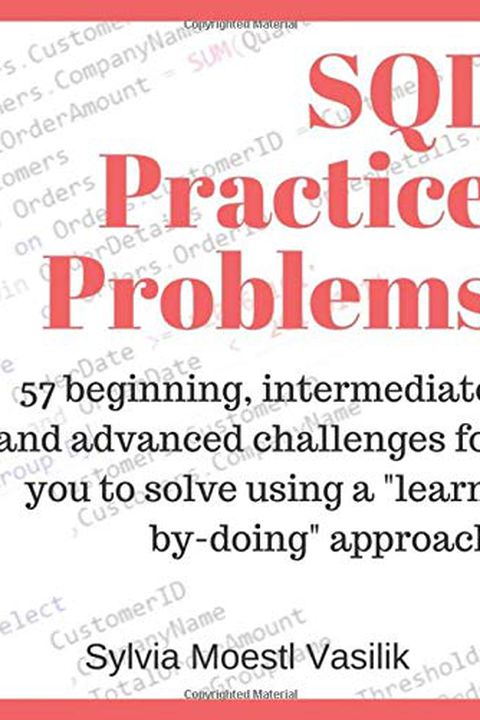
Not sure if this is the right fit?
Consider SQL Practice Problems by Sylvia Moestl Vasilik.
Similar books
How recommendation signals are reviewed
Each recommendation is collected from a public source — interviews, articles, or curated lists — and linked to its original URL. Books with many verifiable recommendations from respected people rank higher.