
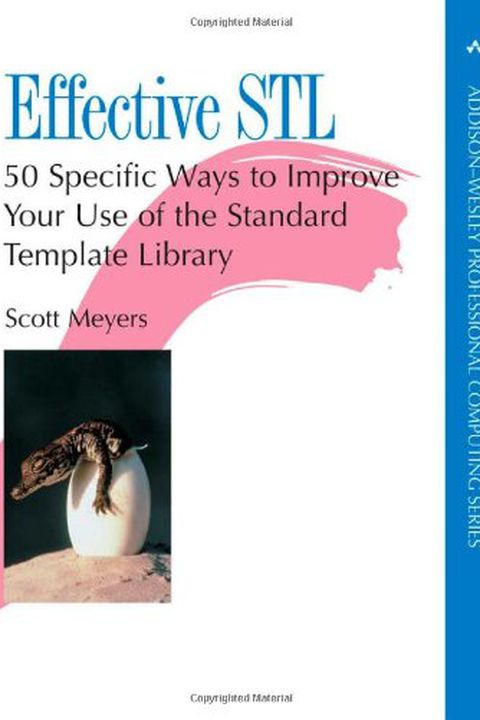
Effective STL
50 Specific Ways to Improve Your Use of the Standard Template Library
by Scott Meyers
Reading Profile
Should I read this?
Scott Meyers delivers short, focused rules-of-thumb for using the C++ Standard Template Library, pairing clear prescriptions with code examples and cautions about common pitfalls. it reads as brisk and pragmatic: each chapter drills a specific usage pattern rather than building formal theory. What works best is practical guidance that helps avoid common STL mistakes; the main limitation is an opinionated, prescriptive tone and dense, template-heavy examples that can feel repetitive or opaque if you lack intermediate C++ experience.
Read this if...
- •mid-level C++ engineer maintaining a performance-sensitive codebase who needs quick, actionable advice on choosing containers, iterators, and algorithms to reduce bugs and subtle inefficiencies.
- •team lead or senior developer writing coding standards and doing code reviews at a systems shop who wants concise rules to point to when enforcing idiomatic STL use across the team.
- •computer-science student or new developer who has basic C++ syntax down and now wants practical, example-led rules to move from hand-rolled loops to STL algorithms correctly.
Skip this if...
- •absolute beginners who only know basic syntax—this is not a gentle onboarding book and assumes familiarity with C++ concepts.
- •readers looking for a language tutorial or step-by-step exercises—no hands-on course structure or progressive exercises are provided.
- •you'll likely put it down when long, template-heavy examples pile up and the same rule is restated across cases; annoying if you prefer conversational, narrative-driven explanations.
C's Standard Template Library is revolutionary, but until now, learning to use it well has been a challenge. In this book, bestselling author Scott Meyers exposes critical rules of thumb experts use to get the most out of STL. Using the same clear, concise approach that made Effective C so successful, he shows developers exactly how to unravel...
Before You Buy
Reading Specifications
Difficulty:hard
Audience Fit
- mid-level C++ engineer maintaining a performance-sensitive codebase who needs quick, actionable advice on choosing containers, iterators, and algorithms to reduce bugs and subtle inefficiencies.
- team lead or senior developer writing coding standards and doing code reviews at a systems shop who wants concise rules to point to when enforcing idiomatic STL use across the team.
- computer-science student or new developer who has basic C++ syntax down and now wants practical, example-led rules to move from hand-rolled loops to STL algorithms correctly.
- absolute beginners who only know basic syntax—this is not a gentle onboarding book and assumes familiarity with C++ concepts.
- readers looking for a language tutorial or step-by-step exercises—no hands-on course structure or progressive exercises are provided.
- you'll likely put it down when long, template-heavy examples pile up and the same rule is restated across cases; annoying if you prefer conversational, narrative-driven explanations.
Check formats, pricing, and availability options for Kindle, physical print, or audiobooks directly.
View available editions on AmazonKey themes
Why recommended
appears in C Plus Plus, Programming, and Technology.
Recommendation Signals
Recommendation proof is sourced from public posts, interviews, reading lists, and cited references.
No verified recommendation proof available yet.
Appears In
Not sure if this is the right fit?
Consider Accidental Presidents by Jared Cohen. Recommended by 10 sources.
“Accidental Presidents offers eight narrative portraits of men who succeeded to the U.S. presidency without election, using anecdote-rich scenes and readable context to show how personality and circumstance interact with office power. It’s strongest as a set of self-contained stories that make succession stakes concrete for non-specialist readers; it does not prioritize dense archival argument or exhaustive methodology, so expect some interpretive generalizations and repeated themes across cases. Use it for fast historical orientation rather than scholarly deep-dives.”
Similar books


How recommendation signals are reviewed
Each recommendation is collected from a public source — interviews, articles, or curated lists — and linked to its original URL. Books with many verifiable recommendations from respected people rank higher.