
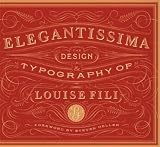
Elegantissima
The Design and Typography of Louise Fili
by Louise Fili
Reading Profile
Should I read this?
Elegantissima is a visually sumptuous walk through Louise Fili’s career, full of high-quality plates of book jackets, restaurant identities and food packaging. What works best is steady visual inspiration: typographic details, color choices and composed spreads that spark design ideas. The main limitation is shallow procedural and critical commentary — readers after hands-on methods, process breakdowns or rigorous historical argument will find the prose spare and the practical guidance minimal. Best used as aesthetic reference rather than a how-to manual.
Read this if...
- •senior graphic designer at a boutique agency updating a client’s food packaging who needs immediate visual precedents for lettering, palette and composition
- •art director assembling a print exhibition or catalogue of graphic design who wants high-resolution examples and sequencing ideas to storyboard a show
- •restaurant or café owner commissioning menus and identity who wants vintage-inspired, typographic references to brief a designer with a clear aesthetic direction
Skip this if...
- •You’ll likely put it down when the glossy image plates keep arriving without detailed process — if you wanted step-by-step techniques or tutorials, this is a mismatch.
- •Annoying if you prefer rigorous critical history or written analysis rather than image-led celebration; the text is often anecdotal and light.
- •Not for learners expecting exercises or templates: the book lacks hands-on exercises, workflows, or reproducible how-to material.
Louise Fili has been an inspiration for designers around the world since the 1980s, when she raised the bar on book cover design, creating close to two thousand jackets as art director for Pantheon Books. In 1989 Fili founded her own graphic design studio, Louise Fili Ltd, and branched out into the fields of restaurant and food packaging design. He...
Before You Buy
Reading Specifications
Difficulty:hard
Audience Fit
- senior graphic designer at a boutique agency updating a client’s food packaging who needs immediate visual precedents for lettering, palette and composition
- art director assembling a print exhibition or catalogue of graphic design who wants high-resolution examples and sequencing ideas to storyboard a show
- restaurant or café owner commissioning menus and identity who wants vintage-inspired, typographic references to brief a designer with a clear aesthetic direction
- You’ll likely put it down when the glossy image plates keep arriving without detailed process — if you wanted step-by-step techniques or tutorials, this is a mismatch.
- Annoying if you prefer rigorous critical history or written analysis rather than image-led celebration; the text is often anecdotal and light.
- Not for learners expecting exercises or templates: the book lacks hands-on exercises, workflows, or reproducible how-to material.
Check formats, pricing, and availability options for Kindle, physical print, or audiobooks directly.
View available editions on AmazonKey themes
Why recommended
appears in Design, Design, and Art.
Recommendation Signals
Recommendation proof is sourced from public posts, interviews, reading lists, and cited references.
No verified recommendation proof available yet.
Appears In
Not sure if this is the right fit?
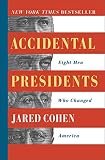
Consider Accidental Presidents by Jared Cohen. Recommended by 10 sources.
“Accidental Presidents offers eight narrative portraits of men who succeeded to the U.S. presidency without election, using anecdote-rich scenes and readable context to show how personality and circumstance interact with office power. It’s strongest as a set of self-contained stories that make succession stakes concrete for non-specialist readers; it does not prioritize dense archival argument or exhaustive methodology, so expect some interpretive generalizations and repeated themes across cases. Use it for fast historical orientation rather than scholarly deep-dives.”
Similar books

How recommendation signals are reviewed
Each recommendation is collected from a public source — interviews, articles, or curated lists — and linked to its original URL. Books with many verifiable recommendations from respected people rank higher.