
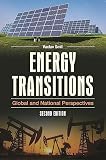
Energy Transitions
Global and National Perspectives
by Vaclav Smil

Reading Profile
Should I read this?
Data-heavy and deliberately sober, this book reads like an extended national-by-national accounting of how energy systems actually changed over decades. Its useful part is the sheer empirical sweep: long historical series, country comparisons, and clear numbers that force you to test optimistic assumptions about timing and scale. Main limitation: the prose can be dry and repetitive, and it offers limited hand-holding for policy or activist next steps. Expect lots of charts, few prescriptive how-to's.
Read this if...
- •energy-policy analyst in government preparing a briefing on realistic decarbonization timelines — needs authoritative historical data and cross-country comparisons to temper targets and inform feasibility discussions.
- •environmental-analyst or PhD student writing a literature-informed chapter on energy system change — wants dense statistics and long-run narratives to cite and compare national cases.
- •long-term infrastructure investor or portfolio manager assessing generation and fuel risks — needs a sober look at energy density, transition rates, and historical inertia to weigh technology timelines.
Skip this if...
- •you'll likely put it down when the author shifts into long stretches of decade-by-decade statistics and tables — the middle chapters can feel like a slow march of numbers.
- •annoying if you prefer storytelling or human-scale case studies rather than national aggregates and charts; the book is heavy on data and light on narrative flourishes.
- •not a fit if you want practical, step-by-step policy tools or exercises — no hands-on exercises and little prescriptive road-mapping for activists or implementers.
Based on the best international and national statistical sources, the second edition of Energy Transitions: Global and National Perspectives supplies an indepth evaluation of how economies and nations around the world are striving to move away from traditional energy sources, the unfolding decarbonization process, and problems with intermittent en...
Before You Buy
Reading Specifications
Difficulty:hard
Audience Fit
- energy-policy analyst in government preparing a briefing on realistic decarbonization timelines — needs authoritative historical data and cross-country comparisons to temper targets and inform feasibility discussions.
- environmental-analyst or PhD student writing a literature-informed chapter on energy system change — wants dense statistics and long-run narratives to cite and compare national cases.
- long-term infrastructure investor or portfolio manager assessing generation and fuel risks — needs a sober look at energy density, transition rates, and historical inertia to weigh technology timelines.
- you'll likely put it down when the author shifts into long stretches of decade-by-decade statistics and tables — the middle chapters can feel like a slow march of numbers.
- annoying if you prefer storytelling or human-scale case studies rather than national aggregates and charts; the book is heavy on data and light on narrative flourishes.
- not a fit if you want practical, step-by-step policy tools or exercises — no hands-on exercises and little prescriptive road-mapping for activists or implementers.
Check formats, pricing, and availability options for Kindle, physical print, or audiobooks directly.
View available editions on AmazonKey themes
Why recommended
Recommended by 2 sources and appears in Energy, Most Recommended Books, and Science.
Recommended by notable people
People and public figures who have recommended this book.
Recommendation Signals
Recommendation proof is sourced from public posts, interviews, reading lists, and cited references.
Bill Gates
Co-founder of Microsoft; co-chair of the Gates Foundation
“Explains the energy transitions that have driven social, economic and technological change worldwide over time.”
Appears In
Not sure if this is the right fit?
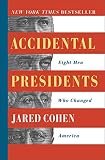
Consider Accidental Presidents by Jared Cohen. Recommended by 10 sources.
“Accidental Presidents offers eight narrative portraits of men who succeeded to the U.S. presidency without election, using anecdote-rich scenes and readable context to show how personality and circumstance interact with office power. It’s strongest as a set of self-contained stories that make succession stakes concrete for non-specialist readers; it does not prioritize dense archival argument or exhaustive methodology, so expect some interpretive generalizations and repeated themes across cases. Use it for fast historical orientation rather than scholarly deep-dives.”
Similar books




How recommendation signals are reviewed
Each recommendation is collected from a public source — interviews, articles, or curated lists — and linked to its original URL. Books with many verifiable recommendations from respected people rank higher.