
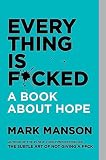
Everything Is F*cked
A Book About Hope
by Mark Manson

1 more
More Recommenders
“Here?s my list for the best books in philosophy, in no particular order. | Here’s my list for the best books in philosophy, in no particular order. | Next three book recommendations: 1. Mark Manson is literally fcking brilliant. Brings in many strands of thought old and new. Reminds me of Bret Easton Ellis’ ”White”. And remember, I am eternal optimist in pursuit of happiness. Be prepared to be shaken, even stirred. 1/3 | Philosophy made relatable. Great points about taking feelings seriously, pain as the speed of light, humanity as an ends not means, and democracy acknowledging human nature. Sections on Nietzsche and Kant are fascinating, not academic. The second half grabbed me the most.”
Source →Recommended by 3 notable people, including Derek Sivers and Mark Manson
Check price on AmazonProof-backed recommendation
Amazon availability
Reading Profile
Should I read this?
Mark Manson mixes blunt, profanity-laced personal essays with pop psychology and philosophy to argue that modern abundance hasn't fixed our emotional crisis of hope. Reading feels like a combative long magazine feature—sharp one-liners, personal anecdotes, and periodic philosophical detours that swing between witty and preachy. Useful when you want candid reframing and provocative challenges to rose-colored optimism; limiting if you prefer balanced sourcing, systematic solutions, or quiet nuance. Repetition of themes and the author's hard-edged confidence are the parts most readers find grating.
Read this if...
- •a mid-level manager at a growth-stage tech company who’s burned out by 60-hour weeks and mandatory optimism workshops—useful now to find blunt language for rejecting performative positivity and reprioritizing what actually matters at work
- •an early-career product designer or junior professional exhausted by doomscrolling and constant comparison—useful now if you want a rude wake-up that reframes hope vs achievement and helps you set sharper boundaries before taking on more unpaid learning projects
- •a freelance creative (copywriter or illustrator) with a thin pipeline deciding between safe retainer work and riskier passion projects—useful now to get tough-love pressure that forces a values-based choice before you sign the next contract out of fear
Skip this if...
- •you'll likely put it down when chapters become long philosophical detours or repeated variations of the same point—those sections feel preachy and slow the momentum
- •annoying if you prefer carefully sourced, academic-style argumentation or quietly empathetic tone; this is loud, opinion-first writing
- •no hands-on exercises or step-by-step program—if you wanted a practical how-to, this lacks hands-on tools and actionable checklists
From the author of the international megabestseller The Subtle Art of Not Giving A Fck comes a counterintuitive guide to the problems of hope. We live in an interesting time. Materially, everything is the best its ever beenwe are freer, healthier and wealthier than any people in human history. Yet, somehow everything seems to be irreparably and h...
Before You Buy
Reading Specifications
Difficulty:medium
Audience Fit
- a mid-level manager at a growth-stage tech company who’s burned out by 60-hour weeks and mandatory optimism workshops—useful now to find blunt language for rejecting performative positivity and reprioritizing what actually matters at work
- an early-career product designer or junior professional exhausted by doomscrolling and constant comparison—useful now if you want a rude wake-up that reframes hope vs achievement and helps you set sharper boundaries before taking on more unpaid learning projects
- a freelance creative (copywriter or illustrator) with a thin pipeline deciding between safe retainer work and riskier passion projects—useful now to get tough-love pressure that forces a values-based choice before you sign the next contract out of fear
- you'll likely put it down when chapters become long philosophical detours or repeated variations of the same point—those sections feel preachy and slow the momentum
- annoying if you prefer carefully sourced, academic-style argumentation or quietly empathetic tone; this is loud, opinion-first writing
- no hands-on exercises or step-by-step program—if you wanted a practical how-to, this lacks hands-on tools and actionable checklists
Check formats, pricing, and availability options for Kindle, physical print, or audiobooks directly.
View available editions on AmazonKey themes
Why recommended
Recommended by 3 sources and appears in Philosophy, Psychology, and Personal Development.
Recommended by notable people
People and public figures who have recommended this book.
Recommendation Signals
Recommendation proof is sourced from public posts, interviews, reading lists, and cited references.
Mark Manson
“Here?s my list for the best books in philosophy, in no particular order. | Here’s my list for the best books in philosophy, in no particular order. | Next three book recommendations: 1. Mark Manson is literally fcking brilliant. Brings in many strands of thought old and new. Reminds me of Bret Easton Ellis’ ”White”. And remember, I am eternal optimist in pursuit of happiness. Be prepared to be shaken, even stirred. 1/3 | Philosophy made relatable. Great points about taking feelings seriously, pain as the speed of light, humanity as an ends not means, and democracy acknowledging human nature. Sections on Nietzsche and Kant are fascinating, not academic. The second half grabbed me the most.”
View sources (3) ▾80%
Appears In
Not sure if this is the right fit?
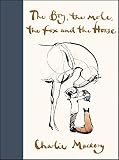
Consider The Boy, the Mole, the Fox and the Horse by Charlie Mackesy. Recommended by 8 sources.
“Soft-spoken, heavily illustrated fable built from short dialogues and watercolor sketches. Each spread pairs a spare line of text with a loose drawing, so the pleasure is visual and aphoristic rather than narrative; readers collect felt-true sentences more than plot. Most useful when you want quick consolations, a prompt for conversation with a child, or a pause during a rough day. Limiting if you want sustained argument, concrete advice, or tightly plotted storytelling: the repetition of gentleness can feel sentimental or thin after a while.”
Similar books
The Boy, the Mole, the Fox and the Horse
Charlie Mackesy
The World as It Is
Ben Rhodes
Out of Control
Kevin Kelly
The Bully Pulpit
Doris Kearns Goodwin
The Seven Spiritual Laws of Success
Deepak Chopra
Billions and Billions
Carl Sagan
Anger
Gary ChapmanFactfulness
Hans RoslingHow recommendation signals are reviewed
Each recommendation is collected from a public source — interviews, articles, or curated lists — and linked to its original URL. Books with many verifiable recommendations from respected people rank higher.