
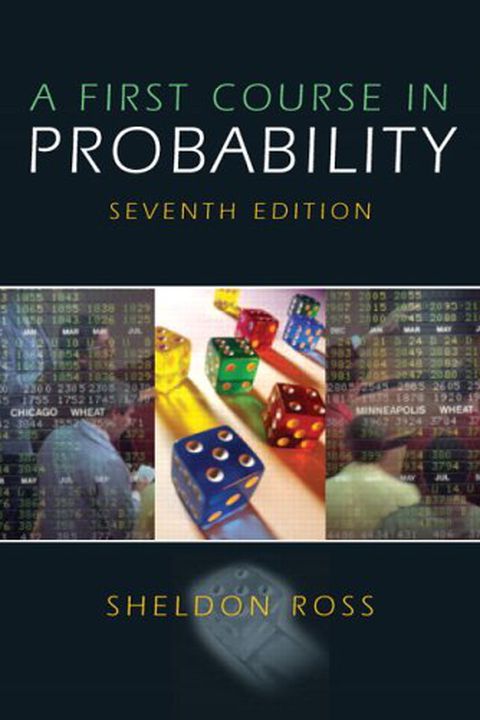
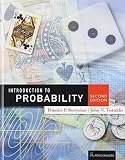
First Course in Probability, A
by Sheldon Ross
Reading Profile
Should I read this?
Sheldon Ross’s First Course in Probability reads like a clear, calculus-based undergraduate textbook: definitions, step-by-step derivations, and many worked examples aimed at building formal comfort with probability. What works best is its mathematical clarity — it pushes you through proofs and algebra so you understand why common distributions and counting arguments work. The main limitation is tone and pacing: chapters can feel terse and formula-heavy, and the bundled diskette/tooling feels dated for readers expecting modern software support.
Read this if...
- •an undergraduate math student taking a first probability course who needs a calculus-grounded text to follow lectures and understand derivations before exams
- •an engineering grad student preparing to build stochastic models who wants precise derivations of distributions and counting techniques before coding simulations
- •a course instructor designing a semester syllabus who needs a compact, proof-focused source of examples and derivations to base lectures on
Skip this if...
- •you’ll likely put it down when chapters pile on algebraic proofs and combinatorial derivations if you prefer intuition-first explanations or visual/simulation methods
- •annoying if you prefer conversational pedagogy, lots of real-world datasets, or step-by-step software notebooks—this edition’s tooling (diskette) feels outdated
- •lose interest if you want light, application-driven reading rather than steady, formal development; pacing can feel terse and dense
This elementary introduction to the mathematical theory of probability is for students in mathematics, engineering, and the sciences who possess the prerequisite knowledge of elementary calculus. A software diskette provides an easytouse tool for students to derive probabilities for binomial....
Before You Buy
Reading Specifications
Difficulty:hard
Audience Fit
- an undergraduate math student taking a first probability course who needs a calculus-grounded text to follow lectures and understand derivations before exams
- an engineering grad student preparing to build stochastic models who wants precise derivations of distributions and counting techniques before coding simulations
- a course instructor designing a semester syllabus who needs a compact, proof-focused source of examples and derivations to base lectures on
- you’ll likely put it down when chapters pile on algebraic proofs and combinatorial derivations if you prefer intuition-first explanations or visual/simulation methods
- annoying if you prefer conversational pedagogy, lots of real-world datasets, or step-by-step software notebooks—this edition’s tooling (diskette) feels outdated
- lose interest if you want light, application-driven reading rather than steady, formal development; pacing can feel terse and dense
Check formats, pricing, and availability options for Kindle, physical print, or audiobooks directly.
View available editions on AmazonKey themes
Why recommended
appears in Statistics.
Recommendation Signals
Recommendation proof is sourced from public posts, interviews, reading lists, and cited references.
No verified recommendation proof available yet.
Appears In
Not sure if this is the right fit?
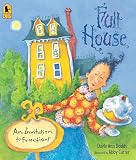
Consider Full House by Dayle Ann Dodds.
“Full House by Dayle Ann Dodds is a bright, sing-song picture book set in the Strawberry Inn where guests arrive until every room is full; the rhyming text and busy, whimsical art make it an easy read-aloud that nudges toward simple fraction ideas through counting and sharing. Its useful part is creating a playful, memorable frame for introducing halves and quarters without heavy exposition. Limitation: math remains implicit and adults looking for precise teaching language or practice prompts will find it thin.”
Similar books
How recommendation signals are reviewed
Each recommendation is collected from a public source — interviews, articles, or curated lists — and linked to its original URL. Books with many verifiable recommendations from respected people rank higher.