
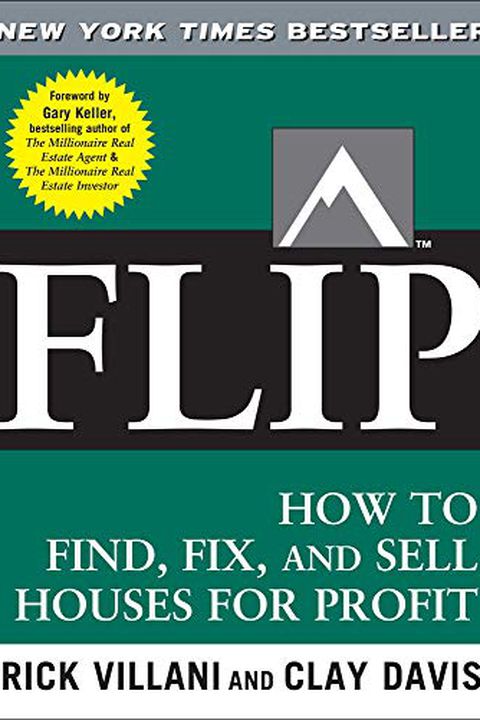
FLIP
How to Find, Fix, and Sell Houses for Profit
by Rick Villani
Reading Profile
Should I read this?
FLIP is a nuts-and-bolts how-to manual for would-be house flippers, focused on budgets, timelines, renovation decisions, and deal math. It gives concrete steps you can try on a single project and field-oriented tips about renovating for resale. The useful core is actionable detail rather than abstract strategy. The main limitation is a tendency toward checklisty repetition and optimistic assumptions about contractor access and local markets, so some examples may feel narrowly applicable or brisk about real-world friction.
Read this if...
- •a first-time real estate investor who just bought a fixer and needs concrete renovation priorities, cost estimates, and a day-by-day sense of what to do first — because the book lays out immediate tasks rather than lofty strategy
- •a small-scale landlord or side-entrepreneur planning one or two flips in a mid-size market who wants practical timelines and negotiation tips for hiring trades and managing contractors
- •a DIY-competent homeowner who plans weekend rehab projects and wants trade-oriented guidance on which upgrades move resale value and where to cut costs without guessing
Skip this if...
- •you'll likely put it down when the middle chapters shift from overview to repetitive contractor-level detail and example-by-example breakdowns — readers wanting an elegant high-level model often lose patience there
- •annoying if you prefer data-driven market analysis and sourcing strategies — the book favors hands-on renovation choices over deep statistical market tools
- •no hands-on exercises: annoying if you expected structured worksheets or step-by-step templates to fill in, because this is instructional prose and checklists rather than an interactive workbook
From HomeFixers, one of the country's leading real estate investment firms, and the people behind the bestselling Millionaire Real Estate series comes a foolproof guide to turning profits by flipping houses, one of the most popular investment techniques in real estate today....
Before You Buy
Reading Specifications
Difficulty:hard
Audience Fit
- a first-time real estate investor who just bought a fixer and needs concrete renovation priorities, cost estimates, and a day-by-day sense of what to do first — because the book lays out immediate tasks rather than lofty strategy
- a small-scale landlord or side-entrepreneur planning one or two flips in a mid-size market who wants practical timelines and negotiation tips for hiring trades and managing contractors
- a DIY-competent homeowner who plans weekend rehab projects and wants trade-oriented guidance on which upgrades move resale value and where to cut costs without guessing
- you'll likely put it down when the middle chapters shift from overview to repetitive contractor-level detail and example-by-example breakdowns — readers wanting an elegant high-level model often lose patience there
- annoying if you prefer data-driven market analysis and sourcing strategies — the book favors hands-on renovation choices over deep statistical market tools
- no hands-on exercises: annoying if you expected structured worksheets or step-by-step templates to fill in, because this is instructional prose and checklists rather than an interactive workbook
Check formats, pricing, and availability options for Kindle, physical print, or audiobooks directly.
View available editions on AmazonKey themes
Why recommended
appears in Real Estate, Business, and Nonfiction.
Recommendation Signals
Recommendation proof is sourced from public posts, interviews, reading lists, and cited references.
No verified recommendation proof available yet.
Appears In
Not sure if this is the right fit?
Consider Accidental Presidents by Jared Cohen. Recommended by 10 sources.
“Accidental Presidents offers eight narrative portraits of men who succeeded to the U.S. presidency without election, using anecdote-rich scenes and readable context to show how personality and circumstance interact with office power. It’s strongest as a set of self-contained stories that make succession stakes concrete for non-specialist readers; it does not prioritize dense archival argument or exhaustive methodology, so expect some interpretive generalizations and repeated themes across cases. Use it for fast historical orientation rather than scholarly deep-dives.”
Similar books


How recommendation signals are reviewed
Each recommendation is collected from a public source — interviews, articles, or curated lists — and linked to its original URL. Books with many verifiable recommendations from respected people rank higher.