
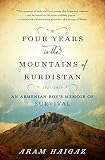
Four Years in the Mountains of Kurdistan
An Armenian Boy?s Memoir of Survival
by Aram Haigaz
Reading Profile
Should I read this?
Haigaz writes from the immediate, teen-eye vantage of loss, hunger, and slow endurance, and the prose tends toward plain, reportorial detail. What works best is its granular, lived testimony: short episodes accumulate into a human record of displacement and everyday care. The book's limitation is its narrow focus and lack of wider analytical framing, so readers seeking political or historical synthesis will feel shortchanged. Repetition of hardship can be exhausting, but the voice remains steady and unadorned throughout.
Read this if...
- •an undergraduate history student researching civilian memoirs of forced displacement who needs direct, quotable eyewitness material to complement academic sources
- •a family historian tracing Armenian diaspora stories who wants a concrete, age-specific account of what deportation felt like for adolescents
- •a librarian or curator assembling a reading list on 20th-century civilian experiences of mass displacement who needs a compact, personal memoir to balance denser historical works
Skip this if...
- •you'll likely put it down when the narrative cycles through repeated scenes of deprivation without broader context or explanatory threads
- •annoying if you prefer interpretive history or clear political analysis rather than an intimate, ground-level testimony
- •annoying if you want lyrical, embellished prose—this is plainspoken and episodic, not ornate or highly stylized
Originally published in Armenian in 1972.Armenian Aram Haigaz was only 15 when he lost his father, brothers, many relatives and neighbors, all killed or dead of starvation when enemy soldiers surrounded their village. He and his mother were put into a forced march and deportation of Armenians into the Turkish desert, part of the systematic destruct...
Before You Buy
Reading Specifications
Difficulty:hard
Audience Fit
- an undergraduate history student researching civilian memoirs of forced displacement who needs direct, quotable eyewitness material to complement academic sources
- a family historian tracing Armenian diaspora stories who wants a concrete, age-specific account of what deportation felt like for adolescents
- a librarian or curator assembling a reading list on 20th-century civilian experiences of mass displacement who needs a compact, personal memoir to balance denser historical works
- you'll likely put it down when the narrative cycles through repeated scenes of deprivation without broader context or explanatory threads
- annoying if you prefer interpretive history or clear political analysis rather than an intimate, ground-level testimony
- annoying if you want lyrical, embellished prose—this is plainspoken and episodic, not ornate or highly stylized
Check formats, pricing, and availability options for Kindle, physical print, or audiobooks directly.
View available editions on AmazonKey themes
Why recommended
appears in About Armenia and Nonfiction.
Recommendation Signals
Recommendation proof is sourced from public posts, interviews, reading lists, and cited references.
No verified recommendation proof available yet.
Appears In
Not sure if this is the right fit?
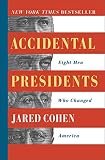
Consider Accidental Presidents by Jared Cohen. Recommended by 10 sources.
“Accidental Presidents offers eight narrative portraits of men who succeeded to the U.S. presidency without election, using anecdote-rich scenes and readable context to show how personality and circumstance interact with office power. It’s strongest as a set of self-contained stories that make succession stakes concrete for non-specialist readers; it does not prioritize dense archival argument or exhaustive methodology, so expect some interpretive generalizations and repeated themes across cases. Use it for fast historical orientation rather than scholarly deep-dives.”
Similar books

How recommendation signals are reviewed
Each recommendation is collected from a public source — interviews, articles, or curated lists — and linked to its original URL. Books with many verifiable recommendations from respected people rank higher.