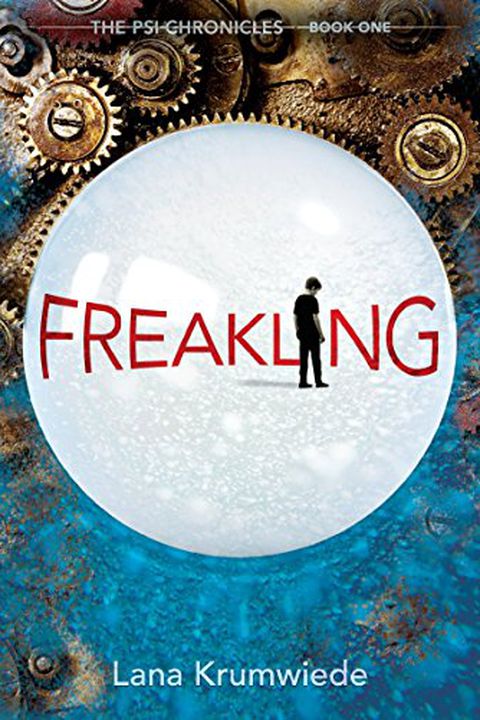
Freakling
by Lana Krumwiede
Reading Profile
Should I read this?
Freakling moves briskly with short chapters, plenty of action, and a clear central dilemma: twelve-year-old Taemon loses his psi and must hide the loss in a society built around powers. The book's useful part is momentum—it pulls you through moral choices and tense set pieces without long detours. Its main limitation is thinner secondary characterization and recurring concealment scenes that can feel repetitive; readers seeking slow emotional development or layered worldbuilding may find it surface-level.
Read this if...
- •middle-school librarian adding quick, engaging dystopia to a reluctant-reader shelf before summer—because its short chapters and fast pace get kids turning pages.
- •parent buying for a 12–14-year-old who likes telekinesis/superpower stories and moral dilemmas—because it’s age-appropriate, accessible, and action-focused.
- •youth-book-club leader planning a single-session discussion on power and belonging with limited meeting time—because the plot sparks concrete ethics questions without demanding prior sci-fi knowledge.
Skip this if...
- •You’ll likely put it down when repeated scenes of hiding the loss of psi pile up and the internal voice stays flat—midbook concealment loops are a common drop-off point.
- •Annoying if you prefer layered secondary characters or slow-burn emotional arcs—the focus stays on plot momentum rather than deep backstories.
- •Not a fit if you want hands-on exercises or reflective prompts—lacks workbook-style activities or guided reflection and leans toward narrative action.
A thrilling, fastpaced dystopian novel about the dangers of unchecked power and the dilemmas facing a boy torn between two ways of life.In twelveyearold Taemon_x0092_s city, everyone has a power called psi _x0097_ the ability to move and manipulate objects with their minds. When Taemon loses his psi in a traumatic accident, he must hide his lack of power by...
Before You Buy
Reading Specifications
Difficulty:hard
Audience Fit
- middle-school librarian adding quick, engaging dystopia to a reluctant-reader shelf before summer—because its short chapters and fast pace get kids turning pages.
- parent buying for a 12–14-year-old who likes telekinesis/superpower stories and moral dilemmas—because it’s age-appropriate, accessible, and action-focused.
- youth-book-club leader planning a single-session discussion on power and belonging with limited meeting time—because the plot sparks concrete ethics questions without demanding prior sci-fi knowledge.
- You’ll likely put it down when repeated scenes of hiding the loss of psi pile up and the internal voice stays flat—midbook concealment loops are a common drop-off point.
- Annoying if you prefer layered secondary characters or slow-burn emotional arcs—the focus stays on plot momentum rather than deep backstories.
- Not a fit if you want hands-on exercises or reflective prompts—lacks workbook-style activities or guided reflection and leans toward narrative action.
Check formats, pricing, and availability options for Kindle, physical print, or audiobooks directly.
View available editions on AmazonKey themes
Why recommended
appears in Dystopian, Science Fiction, and Fantasy.
Recommendation Signals
Recommendation proof is sourced from public posts, interviews, reading lists, and cited references.
No verified recommendation proof available yet.
Appears In
Not sure if this is the right fit?
Consider Cloud Atlas by David Mitchell. Recommended by 8 sources.
“Cloud Atlas launches six distinct narrative strands across eras and registers, showcasing wild genre shifts—from adventure and epistolary memoir to speculative and post‑apocalyptic set pieces—held together by recurring motifs and stylistic bravado. Reading rewards attention: motifs and echoes accumulate into a thematic chorus rather than a single linear plot. Main limitation: the deliberate fragmentation and frequent voice-switching can dilute emotional continuity; sections sometimes feel like sharp pastiche instead of fully rounded narratives, so readers wanting steady immersion may find it frustrating.”
Similar books
How recommendation signals are reviewed
Each recommendation is collected from a public source — interviews, articles, or curated lists — and linked to its original URL. Books with many verifiable recommendations from respected people rank higher.