
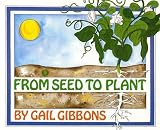
From Seed to Plant
by Gail Gibbons
Reading Profile
Should I read this?
Bright, picture-driven, and firmly aimed at early elementary listeners, this book walks through pollination, seed formation, and germination in clear, child-accessible steps. The strongest value is the combination of simple, age-appropriate vocabulary and colorful diagrams that make basic plant processes memorable during a single read-aloud. Its main limitation is scope: adults or older kids seeking depth or experimental instructions will find the text spare and the explanations high-level rather than detailed. No hands-on exercises are provided.
Read this if...
- •An elementary school teacher planning a first-grade plants unit who needs short, labeled diagrams and simple vocabulary to anchor a class discussion and follow-up activities.
- •A parent reading aloud to a curious preschooler or kindergartner who asks where flowers and fruit come from; the bright illustrations and short explanations keep attention and introduce key words.
- •A homeschooling caregiver preparing a brief nature study who wants a readable text to narrate while children plant seeds—useful as background reading to pair with separate activity guides.
Skip this if...
- •You’ll likely put it down when you realize it’s aimed at very young readers and offers only high-level explanations—older children and adults wanting technical detail will lose interest quickly.
- •Annoying if you prefer hands-on instructions or projects: the book describes processes but lacks step-by-step activities or experiment guides.
- •Frustrating if you want sustained narrative or argumentative structure: the pace is educational and diagram-heavy rather than story-driven, so readers who need a plot or deep analysis may be bored.
Flowers, trees, fruitsplants are all around us, but where do they come from With simple language and bright illustrations, nonfiction master Gail Gibbons introduces young readers to the processes of pollination, seed formation, and germination. Important vocabulary is reinforced with accessible explanation and colorful, clear diagrams showing t...
Before You Buy
Reading Specifications
Difficulty:easy
Audience Fit
- An elementary school teacher planning a first-grade plants unit who needs short, labeled diagrams and simple vocabulary to anchor a class discussion and follow-up activities.
- A parent reading aloud to a curious preschooler or kindergartner who asks where flowers and fruit come from; the bright illustrations and short explanations keep attention and introduce key words.
- A homeschooling caregiver preparing a brief nature study who wants a readable text to narrate while children plant seeds—useful as background reading to pair with separate activity guides.
- You’ll likely put it down when you realize it’s aimed at very young readers and offers only high-level explanations—older children and adults wanting technical detail will lose interest quickly.
- Annoying if you prefer hands-on instructions or projects: the book describes processes but lacks step-by-step activities or experiment guides.
- Frustrating if you want sustained narrative or argumentative structure: the pace is educational and diagram-heavy rather than story-driven, so readers who need a plot or deep analysis may be bored.
Check formats, pricing, and availability options for Kindle, physical print, or audiobooks directly.
View available editions on AmazonKey themes
Why recommended
appears in Nature, Gardening, and Science.
Recommendation Signals
Recommendation proof is sourced from public posts, interviews, reading lists, and cited references.
No verified recommendation proof available yet.
Appears In
Not sure if this is the right fit?
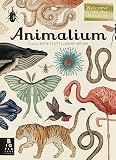
Consider Animalium by Jenny Broom.
“Animalium arranges over 200 full-color specimens on museum-style double-page 'walls,' pairing lush, detailed illustrations with short caption-style labels. Reading it is like wandering a curated gallery: spreads are visually striking and mostly self-contained, easy to dip into or share aloud. The book's strength is visual reference and decorative specimen plates; its limit is the concise, descriptive text, which seldom expands into narratives or deep taxonomic detail. Readers seeking long-form natural history or field-guide precision will likely find it too thin.”
Similar books
How recommendation signals are reviewed
Each recommendation is collected from a public source — interviews, articles, or curated lists — and linked to its original URL. Books with many verifiable recommendations from respected people rank higher.