
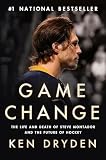
Game Change
The Life and Death of Steve Montador, and the Future of Hockey
by Ken Dryden
Reading Profile
Should I read this?
Game Change links a single player's posthumous CTE diagnosis to a readable history of hockey and a set of proposals aimed at reducing head injuries. The author writes with passionate conviction, delivering narrative moments alongside calls for rule and cultural changes. The book's most useful element is the human entry point that connects lived consequence to policy urgency. Limitation: the author privileges moral argument and anecdote over detached, data-focused analysis, so readers seeking rigorous, chart-heavy treatment or step-by-step implementation may find it repetitive or one-sided.
Read this if...
- •a youth-hockey coach trying to persuade a local league to tighten concussion protocols — the book supplies a human story and policy arguments framed to support local safety conversations.
- •a sports reporter preparing a feature on head injuries in contact sports — the book provides narrative texture, historical context, and reform proposals you can use to shape your angle.
- •a parent deciding whether to keep a teenager in hockey or switch sports — the book's emotional account and safety-focused recommendations help weigh cultural trade-offs.
Skip this if...
- •you'll likely put it down when the narrative pivots from a single player's story into extended policy pleas and moralizing — if you want a detached, data-focused survey, this is the drop-off point.
- •annoying if you prefer terse, data-focused books: the author leans on anecdotes and conviction rather than charts, systematic literature review, or technical detail.
- •not for readers who want practical implementation guides or step-by-step safety programs — the book offers prescriptions and arguments but lacks hands-on exercises or operational toolkits.
From the bestselling author and Hall of Famer Ken Dryden, this is the story of NHLer Steve Montador?who was diagnosed with CTE after his death in 2015?the remarkable evolution of hockey itself, and a passionate prescriptive to counter its greatest risk in the future: head injuries.Ken Dryden's The Game is acknowledged as the best book about hockey,...
Before You Buy
Reading Specifications
Difficulty:hard
Audience Fit
- a youth-hockey coach trying to persuade a local league to tighten concussion protocols — the book supplies a human story and policy arguments framed to support local safety conversations.
- a sports reporter preparing a feature on head injuries in contact sports — the book provides narrative texture, historical context, and reform proposals you can use to shape your angle.
- a parent deciding whether to keep a teenager in hockey or switch sports — the book's emotional account and safety-focused recommendations help weigh cultural trade-offs.
- you'll likely put it down when the narrative pivots from a single player's story into extended policy pleas and moralizing — if you want a detached, data-focused survey, this is the drop-off point.
- annoying if you prefer terse, data-focused books: the author leans on anecdotes and conviction rather than charts, systematic literature review, or technical detail.
- not for readers who want practical implementation guides or step-by-step safety programs — the book offers prescriptions and arguments but lacks hands-on exercises or operational toolkits.
Check formats, pricing, and availability options for Kindle, physical print, or audiobooks directly.
View available editions on AmazonKey themes
Why recommended
appears in Hockey, Sports, and Sports.
Recommendation Signals
Recommendation proof is sourced from public posts, interviews, reading lists, and cited references.
No verified recommendation proof available yet.
Appears In
Not sure if this is the right fit?
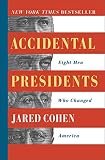
Consider Accidental Presidents by Jared Cohen. Recommended by 10 sources.
“Accidental Presidents offers eight narrative portraits of men who succeeded to the U.S. presidency without election, using anecdote-rich scenes and readable context to show how personality and circumstance interact with office power. It’s strongest as a set of self-contained stories that make succession stakes concrete for non-specialist readers; it does not prioritize dense archival argument or exhaustive methodology, so expect some interpretive generalizations and repeated themes across cases. Use it for fast historical orientation rather than scholarly deep-dives.”
Similar books


How recommendation signals are reviewed
Each recommendation is collected from a public source — interviews, articles, or curated lists — and linked to its original URL. Books with many verifiable recommendations from respected people rank higher.